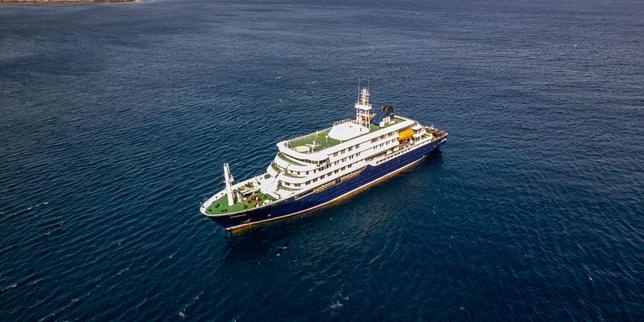
The MV Hondius was marketed as the vanguard of polar exploration, a strengthened vessel designed to pierce through the ice of the Weddell Sea while wrapping its passengers in the comforts of a high-end boutique hotel. Instead, it became a floating petri dish for an old-world killer. In early 2024, an outbreak of Hantavirus aboard the vessel didn't just disrupt a luxury itinerary; it exposed a massive, systemic blind spot in how the adventure travel industry prepares for zoonotic diseases in extreme environments.
For decades, the primary health concern for cruise lines was Norovirus—the relentless "stomach bug" that thrives in buffet lines and shared cabins. The industry perfected the art of the hand sanitizer station and the bleach wipe. But Hantavirus is a different beast entirely. It is not passed from human to human like a common cold. It is a respiratory threat carried by rodents, typically contracted through the inhalation of aerosolized particles from dried droppings, urine, or saliva. Seeing it surface on a multi-million dollar icebreaker in the middle of the Southern Ocean wasn't just a fluke. It was a failure of biological containment.
The Breach on the Hondius
The timeline of the Hondius infection suggests a critical failure in the supply chain or the dry-docking phase. Because Hantavirus is typically associated with the "deer mouse" in North America or specific rodent species in South America and Europe, its appearance on a ship heading toward the most isolated continent on Earth raises immediate red flags. Rodents are the ultimate stowaways. They don't need an invitation; they only need a gap the size of a quarter and a steady source of grain or cardboard.
When the first passengers began reporting fever, severe muscle aches, and fatigue, the initial response followed the standard protocol for respiratory illness. But as the symptoms intensified into pulmonary distress, the reality of the situation shifted. This wasn't a case of "ship flu." The images emerging from the vessel showed a crew in full tactical biohazard gear, a jarring contrast to the teak decks and panoramic observation lounges.
The central problem with Hantavirus in a maritime setting is the ventilation system. Modern vessels like the Hondius use sophisticated HVAC units designed to maintain a comfortable temperature in sub-zero external conditions. However, if a rodent infestation occurs within the ducting or near the primary air intakes, the very system designed to keep passengers alive becomes a delivery mechanism for pathogens. Once the virus-laden dust enters the recycled air stream, every cabin becomes a potential exposure site.
Why the Adventure Industry Was Unprepared
The push for "expedition" travel has led to a gold rush in the Antarctic. Ships are becoming more luxurious, and the season is stretching longer. This expansion has outpaced the medical infrastructure required to support it. Most cruise ships carry a doctor and a nurse, but their facilities are built for stabilizing heart attacks or treating broken bones—not managing a high-mortality zoonotic outbreak.
Hantavirus Pulmonary Syndrome (HPS) has a fatality rate of approximately 38%. It is a brutal, fast-acting disease that fills the lungs with fluid. On a ship ten days away from the nearest advanced hospital in Ushuaia or Punta Arenas, those odds become even grimmer. The Hondius incident revealed that while these ships are "polar class" in terms of their hulls, they are often "economy class" in their epidemiological defenses.
The industry relies heavily on the assumption that the Antarctic environment is sterile. It isn't. While the continent itself lacks indigenous rodents, the ports where these ships refuel and take on provisions—specifically in South America—are hotspots for Hantavirus-carrying species. A single pallet of poorly stored vegetables or a roll of carpeting kept in a damp warehouse can introduce a breeding pair of rodents to a ship's lower decks. Once they are in the "bones" of the vessel, they are nearly impossible to track without a total shutdown of operations.
The Myth of the Sterile Ship
There is a persistent belief among luxury travelers that a high price tag buys protection from the grittier realities of biology. This is a dangerous delusion. In many ways, a luxury expedition ship is more vulnerable than a standard cargo vessel. The complexity of the interior—with its miles of hidden cabling, padded wall panels, and false ceilings—provides infinite nesting grounds that are never seen by the cleaning staff.
The Hondius serves as a case study in the "pathogen of opportunity." The ship wasn't dirty. It was complex. And in that complexity, the virus found a way to bridge the gap between a South American warehouse and a passenger's lungs.
The Economic Pressure of the Quick Turnaround
To understand how this happens, you have to look at the business model of polar cruising. These ships represent hundreds of millions of dollars in capital investment. They only make money when they are moving. The "turnaround day" in port is a frantic race to offload one group of passengers, scrub the ship, take on tons of fuel and food, and welcome the next group within a six-to-eight-hour window.
This speed is the enemy of biosecurity.
A thorough rodent inspection takes time. Setting traps, checking for droppings in the dark corners of the engine room, and verifying the integrity of food storage lockers are often secondary to making sure the champagne is chilled and the linens are crisp. When the industry prioritizes the "guest experience" over the "biological baseline," events like the Hondius outbreak become inevitable.
The fallout from this specific incident goes beyond the medical bills and the lawsuits. It calls into question the "safe" label applied to the entire expedition sector. If a ship as new and technologically advanced as the Hondius can be crippled by a virus typically found in rustic cabins and barns, then no vessel in the fleet is truly safe until the industry changes its intake protocols.
Reengineering the Expedition Protocol
Fixing this requires more than just more hand sanitizer. It requires a fundamental shift in how ships are built and serviced.
- Integrated Pest Management (IPM): Ships must move beyond reactive trapping. Every expedition vessel needs a permanent, tech-enabled pest monitoring system that uses thermal imaging and motion sensors in non-passenger areas to detect intruders the moment they board.
- HEPA-Grade Filtration: The standard for cruise ship HVAC systems needs to be elevated to hospital-grade. If the air isn't being scrubbed of viral particles, the ship is just a closed-loop infection chamber.
- Provisioning "Clean Rooms": All food and supplies must be staged in a controlled environment before being brought aboard. The current method of moving pallets directly from a dusty dockside to the ship's galley is a gaping hole in the defense.
The reality of 21st-century travel is that we are moving more people to more remote places more often than at any point in human history. We are dragging our pathogens with us. The MV Hondius wasn't just a victim of bad luck; it was a victim of a system that treats biosecurity as an afterthought.
The Regulatory Void
Current maritime law is surprisingly thin on zoonotic prevention. Most regulations focus on the "Big Three": Norovirus, Legionnaires' disease, and more recently, COVID-19. Hantavirus falls into a gray area of "emerging threats" that many port authorities aren't even testing for. This regulatory lag allows cruise lines to operate with a degree of complacency. They are meeting the legal requirements, but the legal requirements are twenty years behind the science.
We are seeing a convergence of factors: climate change shifting rodent populations, the expansion of high-end travel into wilderness areas, and a global supply chain that is increasingly porous. This is the perfect storm for "niche" diseases to go global. The Hondius is the warning shot.
The next outbreak might not be a manageable number of cases. It could be a high-mortality event that occurs while a ship is trapped in the ice, hundreds of miles from air-evacuation range. At that point, the "luxury" of the vessel won't matter. The only thing that will matter is whether the air coming out of the vents is clean.
The cruise industry likes to talk about "sustainability" in terms of carbon footprints and plastic straws. It's time they started talking about it in terms of biological sustainability. If you cannot guarantee the exclusion of a deadly virus from your vessel, you shouldn't be taking passengers into the most inhospitable environments on Earth. The adventure is supposed to be on the ice, not in the infirmary.
The response to the Hondius images—the sight of crew members in respirators scrubbed down by chemical showers—should be a permanent inflection point. It is a visual reminder that the wilderness is never truly conquered; it is only temporarily held at bay. When the barrier fails, the price of the ticket becomes irrelevant. The ship is no longer a sanctuary. It is a trap.
Operators must now decide if they will invest in the invisible infrastructure of biosecurity or wait for the next "freak" incident to sink their reputation. The pathogens are already waiting at the dock. Their passage is already paid. Stop looking at the buffet and start looking at the vents.