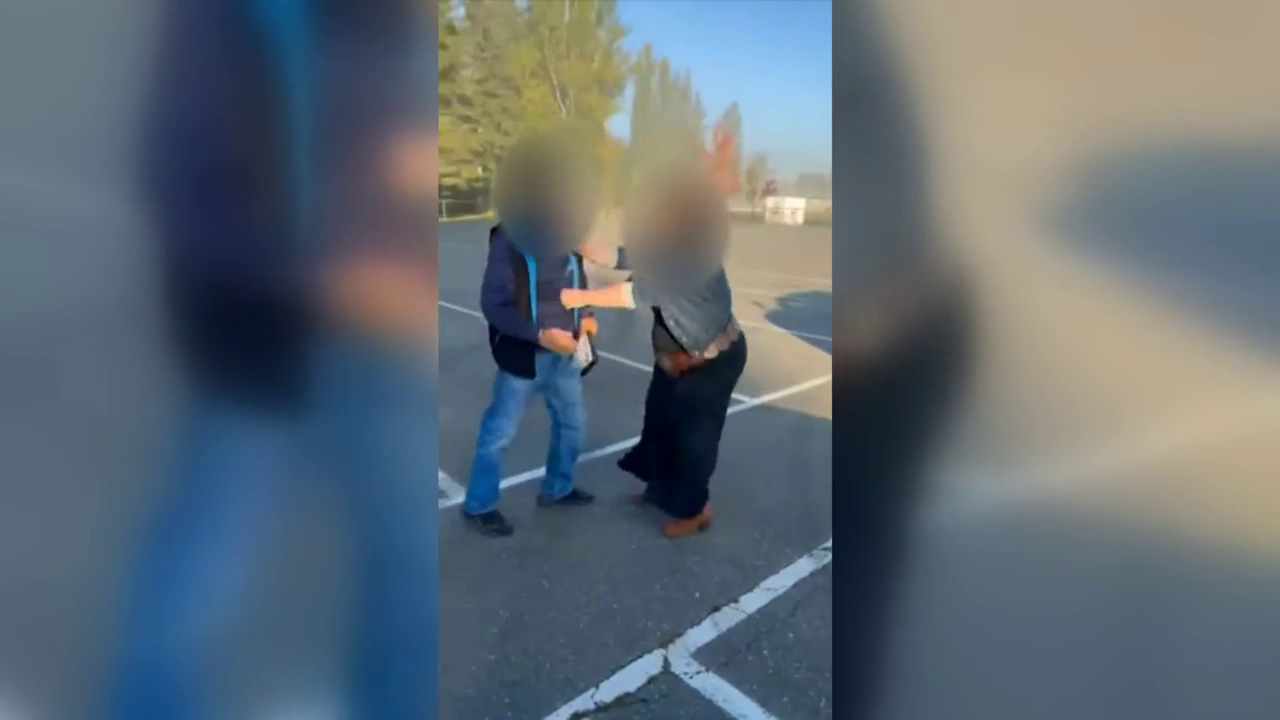
Standard breaking-news reporting treats a viral assault video as a self-contained sequence of spectacle and police confirmation, leaving readers with a fragmented chronology and zero structural insight into why conflict escalates in semi-public spaces or how institutions absorb reputational shock. When a confrontation between a woman and a driving instructor in Langley, British Columbia, on October 21, 2026, circulated online and prompted a Langley RCMP investigation, typical coverage stitched together a brief police statement, a summary of what bystanders claimed on social media, and a corporate condemnation. That approach satisfies immediate curiosity about what happened, yet it misses the underlying operational mechanics: spatial ambiguity in off-street lots, escalation dynamics during frontline instruction, evidentiary friction between raw footage and criminal investigation, and organizational risk management for training providers.
This analysis deconstructs the standard reporting model around the Langley parking lot incident and rebuilds the subject around clear conceptual frameworks. Known facts from public reporting and police statements are separated from educated hypotheses about behavior, spatial friction, and institutional response. Rather than relying on speculation or invented dialogue, this breakdown examines how physical environments, viral distribution loops, frontline service work, and legal procedures interact when a workplace dispute turns physical.
Deconstructing the Standard Reporting Logic
Conventional incident coverage follows a predictable four-beat structure: hook with the viral clip, state the time and location, quote a police spokesperson confirming an arrest or investigation, and add a short statement from the involved business. In the Langley case, public reporting indicates that officers responded around 9 a.m. on Wednesday, October 21, 2026, to a dispute in an empty church parking lot on the 4800 block of 207 Street, arrested a woman on scene, and appealed for witnesses while noting that video had spread across platforms such as Reddit and Instagram. Media accounts and social posts also referenced allegations of racist language and physical strikes during the altercation, while the driving school issued a statement condemning racism and aggression and prioritizing staff and customer safety.
That narrative structure has three clear analytical blind spots. First, it treats "empty parking lot" as a neutral backdrop rather than an active operational variable. Driving instructors routinely use low-traffic or off-peak lots—such as commercial, institutional, or church lots on weekday mornings—to practice maneuvers, low-speed control, and parking without dense municipal traffic. Second, it flattens viral social media framing into verified fact. Online posts frequently attach labels such as racism or context before investigators verify audio, sequence, or motive, creating a gap between public perception and evidentiary proof. Third, it treats the driving school's public statement as an endpoint rather than testing whether that statement addresses actual operational exposures such as lone-worker vulnerability, vehicle custody, and insurance or duty-of-care obligations.
The Four Pillars of Frontline Conflict in Shared Spaces
To move beyond surface-level incident summaries, frontline confrontations involving mobile instructors can be analyzed across four structural pillars: spatial friction, instructional vulnerability, viral amplification, and evidentiary verification.
Spatial Friction and Property Ambiguity
Off-street parking lots sit in a gray zone between public right-of-way and private property. A church lot on a Wednesday morning may appear underutilized, which makes it attractive for practical driving exercises or temporary staging. At the same time, informal use of private or semi-public space can collide with property expectations, access habits, or perceived encroachment.
The first operational bottleneck in such spaces is the absence of clear physical traffic rules and designated staging zones. Unlike a marked municipal lane with right-of-way signage, an open lot relies on implicit norms and line-of-sight negotiation. When two parties misread intent—whether over vehicle positioning, turning space, or right to occupy an area—friction can rise rapidly because neither party has an obvious, neutral cue to yield.
Instructional Vulnerability and Cognitive Load
Driving instruction differs from standard desk or retail work because the instructor operates inside a moving or idling vehicle with a learner whose control inputs can be sudden or unpredictable. Even when stationary in a lot, the instructor carries dual responsibility: managing vehicle safety and guiding a student.
A reasonable hypothesis is that frontline instructors face heightened de-escalation challenges when an external dispute erupts near or around a training vehicle. Unlike a store employee behind a counter or inside a secured facility, a driving instructor working in an open lot often has limited physical barriers, variable bystander presence, and an immediate duty to keep a student safe from both physical harm and psychological distress. When physical contact occurs—such as grabbing clothing or striking an individual during a dispute—the incident shifts from a verbal clash into a personal safety emergency.
Viral Amplification and Framing Distortion
Short-form video changes how local disputes are judged long before charges are tested in court. When clips circulate on Reddit or Instagram, viewers encounter a compressed slice of events stripped of full context, continuous camera angles, or verified audio.
This creates an information asymmetry between the public timeline and the investigative timeline. Social platforms reward rapid moral certainty and strong framing, including claims of bias or hostility. Police investigators, by contrast, must establish elements of an offense, identify witnesses, review any available footage, and account for privacy and ongoing investigative rules. Treating viral captions as settled legal findings risks conflating disturbing behavior with proven criminal elements before evidence is weighed.
Evidentiary Friction in Rapid-Response Investigations
Video evidence is helpful, yet it rarely provides a complete record on its own. A smartphone clip may capture a moment of physical contact or a specific phrase while missing what occurred thirty seconds earlier, outside the frame, or on the opposite side of a vehicle.
Investigators must therefore bridge partial visual records with corroborating accounts. That is why police agencies routinely ask uninvolved witnesses to come forward and reference a specific investigative file number. Until witness statements, scene details, and video records are reconciled, public summaries must keep allegations distinct from established findings.
The Cost Function of Frontline Escalation
When a routine training session collides with an interpersonal assault, the costs extend well beyond a single police report. Thinking in terms of a cost function helps clarify where losses accumulate for the victim, the training operator, and the surrounding community.
- Direct Personal and Psychological Cost: Physical strikes, collar grabs, or verbal hostility create immediate physical risk as well as acute stress for both the instructor and any learner present.
- Operational Disruption Cost: A morning incident halts scheduled lessons, ties up a training vehicle, and forces staff to coordinate with police and management rather than deliver billable instruction.
- Reputational and Brand Cost: Public association of a driving school with a viral altercation—even when the instructor is the target rather than the aggressor—exposes the business to intense online scrutiny and forces reactive public messaging.
- Legal, Compliance, and Insurance Cost: Investigations, potential court proceedings, workplace safety reviews, and insurer inquiries consume management time and may require policy or protocol updates.
The second limitation in standard coverage is its tendency to treat reputational fallout as the primary story because a company statement is easy to quote. In practice, operational and human costs—protecting staff in the field, maintaining continuity for students, and documenting workplace incidents accurately—carry far more weight over time than a single press quote.
Cause-and-Effect Chains Standard Coverage Misses
A rigorous analysis connects triggers to downstream consequences rather than listing isolated facts. Several cause-and-effect chains help explain why incidents like this draw outsized attention and complicate institutional response.
- Low-density space plus unexpected confrontation equals rapid escalation: An empty morning lot reduces third-party deterrence and immediate de-escalation support. If a dispute starts between two individuals in that setting, there are fewer neutral observers nearby to cool tensions or intervene safely before physical contact occurs.
- Smartphone recording plus cross-platform sharing equals accelerated public pressure: Once footage moves from a local device onto high-traffic forums and social feeds, thousands of users can view and debate the clip within hours. That speed pressures businesses and police to comment while facts are still emerging.
- Allegations of bias plus physical aggression equals heightened community sensitivity: When reports or social posts highlight hostile or xenophobic remarks alongside physical assault, the incident resonates beyond traffic or parking etiquette. Community members view it through broader concerns about public safety, respect, and workplace protection.
- Ongoing police investigation plus privacy constraints equals an information vacuum: Because police restrict granular details during an active investigation to protect privacy and evidentiary integrity, the public often sees a gap between intense online discussion and cautious official updates. That vacuum often fuels further speculation unless institutions communicate clear boundaries.
Tactical Playbook for Driving Schools and Frontline Operators
Organizations that run mobile training fleets cannot eliminate unpredictable public behavior, but they can tighten their operating system to reduce exposure and improve response speed.
- Standardize off-street practice site vetting: Establish approved low-risk practice locations and time windows for instructors. Avoid ambiguous spaces where property disputes are likely, and define clear exit and relocation rules if another person challenges vehicle placement.
- Train instructors on disengagement and containment: Equip instructors with practical protocols that prioritize personal distance, locking doors when appropriate, avoiding physical tug-of-war over belongings or space, and moving the vehicle away from escalating disputes whenever safe to do so.
- Define a rapid post-incident checklist: Give instructors a clear sequence after any altercation or threat: check immediate physical safety for themselves and the student, call emergency services, notify dispatch or management, preserve any dashcam or phone footage without altering files, and log objective facts while memories are fresh.
- Separate duty-of-care action from public statements: Ensure management focuses first on medical support, student reassignment or reassurance, and cooperation with investigators before publishing public statements. Public remarks should state clear values and safety commitments without speculating on disputed facts.
- Review lone-worker and vehicle documentation policies: Audit how incidents are recorded internally, how dashcam or mobile recordings are handled under privacy and evidentiary rules, and how supervisors debrief staff after high-stress events.
These measures have clear limitations. No protocol can stop an impulsive physical attack in a parking lot, a dashcam may not capture every angle or audio nuance, and overly rigid scripts can fail when an instructor must react in two seconds. Operational controls lower probability and improve recovery; they do not guarantee zero incidents.
Strategic Action for Operators and Analysts
Driving school operators and local safety analysts should treat viral parking lot altercations as a stress test of frontline field protocols rather than a standalone social media curiosity. The decisive move for any training provider this quarter is to run a tabletop audit of every off-street practice zone, verify how instructors document and preserve video evidence during disputes, and establish a two-track incident response plan that pairs immediate instructor and student care with disciplined, fact-checked public communication.