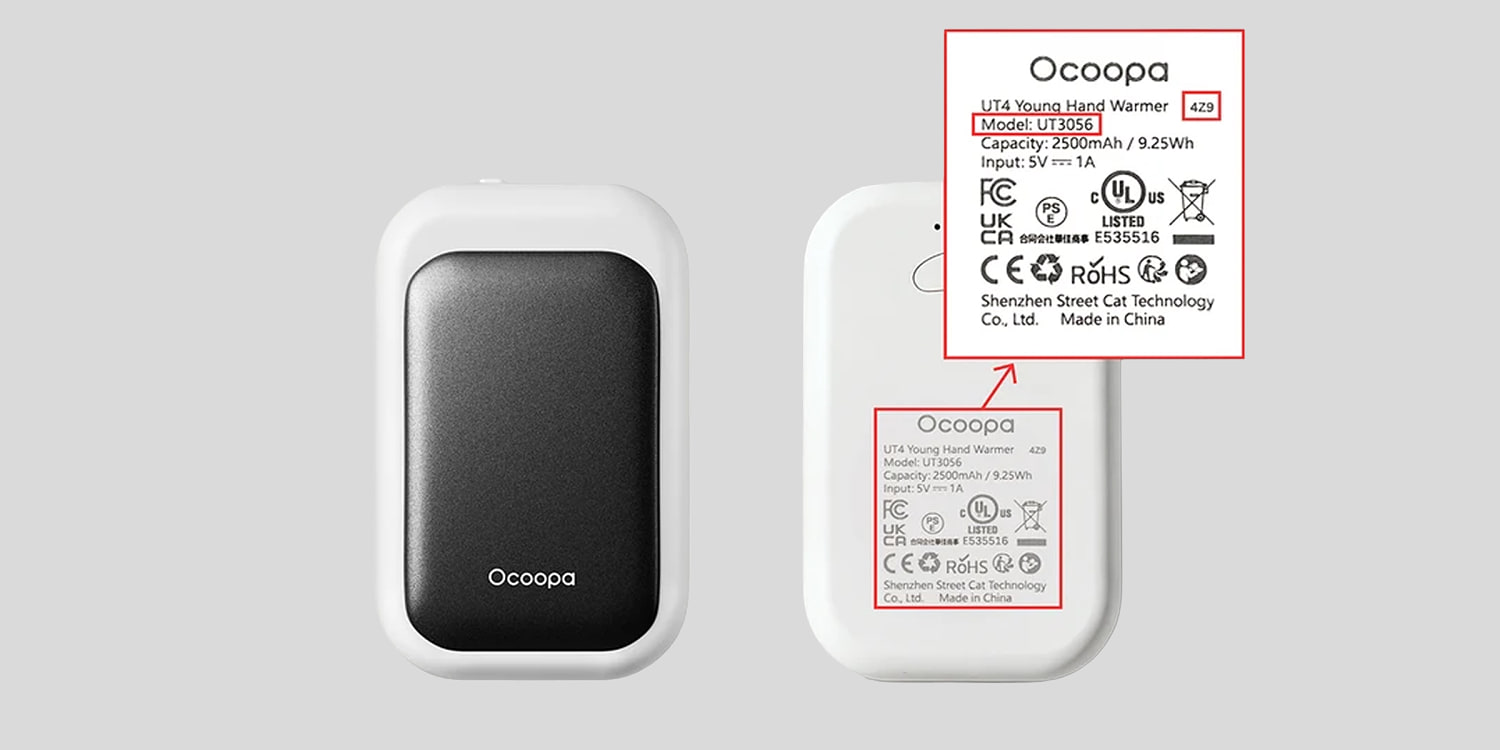
The Mechanics of Lithium Ion Thermal Events in Portable Heating Equipment
Portable consumer heating units rely on high-density energy storage to deliver localized thermal output over extended periods. When these systems fail, the root cause invariably traces back to a breakdown in the internal electrochemical or mechanical architecture. A consumer safety recall is rarely a random occurrence; it is the lagging indicator of a systemic failure mode within the supply chain, cell manufacturing, or thermal management design.
Understanding why a rechargeable heating device requires immediate withdrawal from circulation demands a rigorous look at energy density thresholds, manufacturing tolerances, and circuit protection logic.
[Internal Short Circuit] -> [Uncontrolled Localized Heat] -> [Separator Degradation] -> [Thermal Runaway]
At the core of every rechargeable handwarmer sits a lithium-ion or lithium-polymer battery cell. These cells pack significant energy into minimal volume. The physical separation between the anode and the cathode relies on a microporous polymer separator. When this separator fails—due to mechanical stress, manufacturing contamination, or internal dendrite formation—an internal short circuit occurs.
Unlike an external short circuit, which drains energy through the discharge circuit, an internal short releases stored chemical energy directly within the cell. The resulting localized heat degrades adjacent cell material, triggering a chain reaction known as thermal runaway.
When regulatory agencies and manufacturers issue mass recalls for heating units, they are neutralizing an unchecked variable in this chain reaction. The urgency behind returning these units before winter stems from environmental temperature interaction. Operating a compromised cell in ambient cold conditions places fluctuating demands on internal resistance, exacerbating stress on already fragile component layers.
Supply Chain Anomalies and Quality Control Deficits
Manufacturing consistency determines the safety floor for consumer electronics. When thousands of identical heating units exhibit parallel fault patterns, the failure mode originates upstream in the production line.
Material Impurities in Cell Production
Microscopic metallic contaminants introduced during electrode coating or winding can puncture the polymer separator over time. In a handwarmer subject to physical handling, pocket transport, and variable pressure, these microscopic inclusions act as delayed-fuse triggers.
Inadequate Protection Circuit Modules
Every multi-cell or high-capacity single-cell device requires a robust Protection Circuit Module (PCM). The PCM monitors voltage, discharge current, and temperature thresholds. Recalls frequently stem from a specification mismatch where the PCM fails to interrupt current flow during an anomalous thermal spike. If the software or hardware switch fails to trip, the device continues to draw or supply current into a compromised circuit, accelerating material breakdown.
Mechanical Housing Vulnerabilities
Unlike smartphones, which feature rigid internal framing to protect batteries from torsion, portable handwarmers often utilize lightweight aluminum or plastic enclosures designed for heat dissipation rather than structural rigidity. Drop impacts or external crushing forces transmit directly to the internal battery pouch. Repeated mechanical stress compromises the cell pouch seals, allowing moisture ingress or electrolyte leakage, which degrades internal insulation over time.
The Risk Architecture of Discarding Versus Returning
Consumers evaluate a recall notification through a utility lens: the effort required to process a return versus the perceived probability of failure. This behavioral calculation fundamentally misjudges the probabilistic risk profile of high-energy storage failures.
| Risk Variable | Standard Consumer Perception | Actual Engineering Reality |
|---|---|---|
| Probability of Incident | Treated as near-zero if the device currently functions normally. | Functions as a latent condition; operational status provides zero safety guarantee. |
| Severity of Outcome | Assumed to be minor localized heating or smoke. | Encompasses rapid-onset thermal events capable of destroying surrounding materials. |
| Mitigation Horizon | Deferred until colder weather mandates usage. | Immediate; chemical degradation continues independently of active use. |
Leaving a recalled heating device in a drawer, garage, or storage bin introduces a passive hazard. Lithium cells in a degraded state can undergo spontaneous self-discharge and localized heating even when switched off. The absence of active current draw does not eliminate internal chemical instability if an internal short circuit has already initiated at a microscopic level.
Municipal waste streams handle discarded consumer electronics with standard processing methods that crush or shred incoming materials. Throwing a recalled lithium-ion device into household trash creates an immediate fire hazard in waste collection vehicles or recycling facilities. The mechanical pressure of compaction breaches compromised cell casings in the presence of residual charge and oxygen, yielding predictable thermal incidents.
Strategic Remediation Protocol
Executing a safe withdrawal of defective thermal hardware requires a standardized operational sequence.
- Cease Operation Immediately: Power down the unit and disconnect it from any charging source. Do not attempt to verify if the device still holds a charge or functions properly.
- Isolate the Hardware: Place the unit on a non-combustible surface away from flammable materials, textiles, and living spaces. Never store a recalled battery-powered device near fuel sources or paper products.
- Verify Recall Parameters: Cross-reference the specific serial number, batch code, or purchase channel with the official regulatory remediation portal. Not all manufacturing runs share identical defect profiles, but broad recalls mandate universal compliance.
- Execute Logistics: Utilize authorized manufacturer return channels or certified hazardous waste disposal sites. Standard postal shipping rules for damaged or recalled lithium batteries require specialized labeling and packaging to prevent cargo ignition during transit.
The operational objective remains singular: eliminate the energy source before the latent failure mode transitions from a statistical probability to a physical event. Deferring action until environmental conditions shift toward colder temperatures only increases the cumulative operational hours and stress cycles applied to compromised internal architectures.