The screen flickers in the dim room, casting a pale, bluish glow across tired eyes. In command centers miles away from the dust and the heat, monitors track coordinates that dictate who lives and who vanishes into the dry autumn air. Time has a strange texture in conflict zones. It stretches endlessly during the quiet hum of anticipation, then shatters in a fraction of a second when the metal hits the earth.
For months, the name echoed through intelligence briefings, diplomatic backchannels, and grieving living rooms. It was a name attached to a date that cleaved history in two: October 7, 2023. On that morning, security fences crumbled under coordinated assault, civilian lives were upended in an instant, and an entire region was hurled into a spiral of retaliation and grief from which it has yet to emerge. Behind the planning, behind the intricate maps drawn in subterranean tunnels, stood architects of operations whose faces were known only to a handful of intelligence officers.
Now, the air strike has landed. The commander is gone, reduced to a line in an operational summary. But the architecture of violence remains standing, anchored in the soil and the memory of millions.
The Architecture of the Blueprint
To understand how a single strike alters the trajectory of an ongoing war, one must look past the smoke and examine the machinery of planning. Wars are not merely fought with bullets and armor; they are fought with blueprints. Months, sometimes years, of meticulous logistics precede the opening salvo of any major offensive.
Consider what happens inside a command cell underground. Concrete walls muffle the sounds of the surface. Maps are pinned with color-coded markers. Every road, every patrol schedule, every fence vulnerability is cataloged with chilling precision. The individual who directed the October 7 assault did not do so on an impulse. It was the product of a long-term vision rooted in ideological fervor, strategic calculation, and an absolute disregard for the human collateral that would inevitably follow.
When intelligence agencies finally pin down a target, the pursuit becomes an exercise in infinite patience. Satellites pass overhead in silent orbits. Informants whisper through encrypted channels. Analysts comb through intercepted communications, looking for a break in routine, a misplaced word, a signature electronic footprint.
Then comes the moment of execution.
A jet peels away from a formation. Gravity takes over. The ordinance drops. In the span of a heartbeat, years of tactical planning evaporate in a blinding flash of concussive force and pulverized masonry.
The Weight of the Aftermath
An explosion makes a definitive statement, but it answers very few questions.
When the dust settles over the rubble in Gaza, the immediate reaction is rarely relief. It is a tense holding of breath. In war, the removal of a primary architect rarely halts the machine they built. Organizations structured around asymmetric warfare are designed with redundancy. For every commander eliminated, deputies step forward from the shadows, eager to prove their dedication, often doubling down on the radical positions of their predecessors.
This is the grim reality of modern counter-terrorism and state-on-state combat. The calculus of elimination operates on the belief that cutting off the head disables the body. Yet, history tells a more complicated story. Movements born from deep-seated political grievances, historic trauma, and perpetual conflict are hydra-headed. You can strike one target, but the conditions that allowed that target to rise in the first place remain untouched, festering beneath the surface.
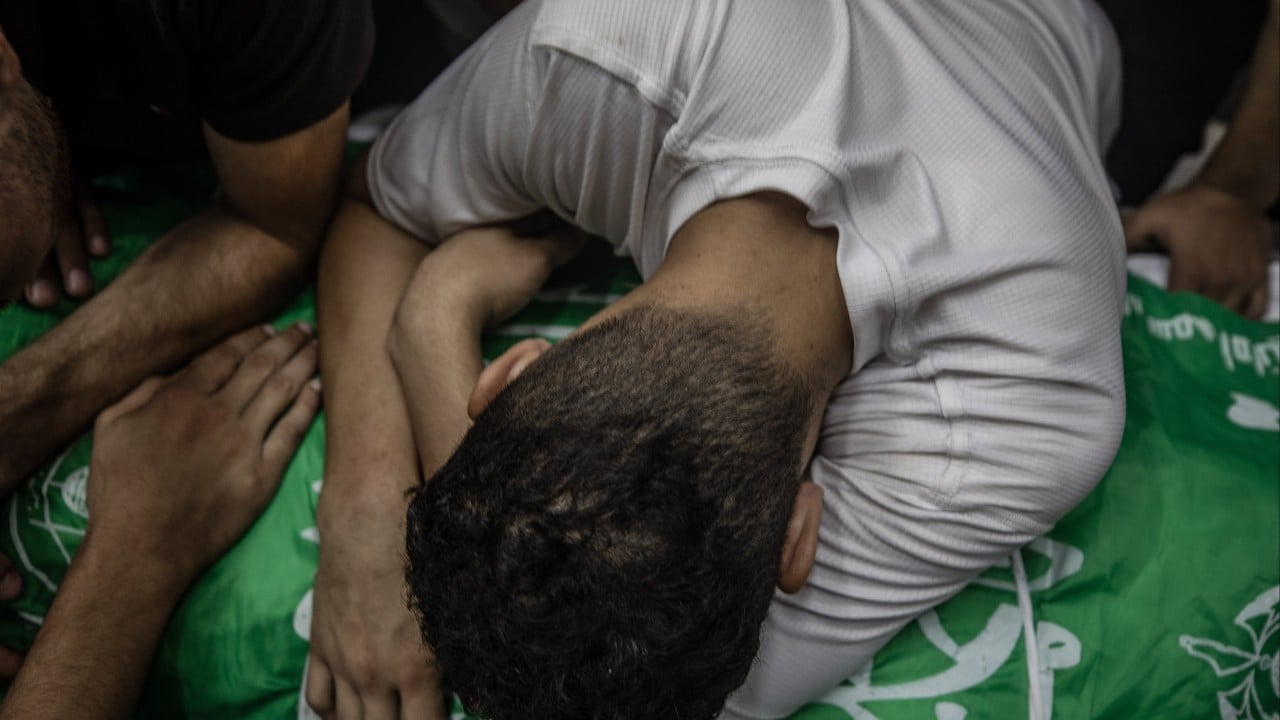
On the other side of the border, families still gather in mourning circles, their grief raw and unyielding. Memorials stand where music festivals once played and quiet neighborhoods thrived. For them, the death of the commander brings a grim closure, yet it does not restore what was lost. An airstrike cannot resurrect the dead, nor can it stitch together the torn fabric of a society traumatized by a morning of unimaginable horror.
The Invisible Stakes
Every headline carries a human cost that gets flattened into statistics. We read numbers—hundreds, thousands, dozens—and our brains struggle to process the magnitude of the loss. We require narratives to anchor our understanding.
Imagine a young mother in Gaza City, her hands trembling as she collects shards of glass from her kitchen floor after the shockwave rattles her building. She knows nothing of the military rank of the man targeted a few streets away; she knows only that the ceiling shook, her children screamed, and the fragile sanctuary of home was violated once again.
Now imagine a reservist in Tel Aviv, staring at a photograph of a friend who did not return from the southern border months ago. The news flash on his phone announces the death of the mastermind behind the attack that took his friend's life. He feels a cold surge of vindication, mixed instantly with the hollow realization that his friend is still gone, and the sirens could start wailing again at any moment.
These two lives, separated by miles of concrete, barbed wire, and bitter enmity, are bound together by the same invisible stakes. They are both trapped in a cycle dictated by men who plan wars in the dark and execute them from the sky.
The Mechanics of Retribution
Military strategists often speak of deterrence. The theory is clinical: if the cost of an action is made high enough, rational actors will refrain from taking it. But rationality is a rare commodity when ideology, existential fear, and historical grievance take the wheel.
When a commander who orchestrated a historic atrocity is hunted down and killed, governments present it as a restoration of deterrence. It sends a message across borders that time does not dilute accountability. Those who plan mass violence will be tracked across decades if necessary.
Yet, deterrence often acts as a mirror reflecting back the very violence it seeks to prevent. Each strike validates the narrative of resistance for the surviving faction. Each funeral becomes a recruitment poster. The mathematics of retribution are unforgiving. One strike leads to retaliation, retaliation demands a response, and the escalation spiral climbs higher, fueled by the combustible mixture of pride, grief, and political survival.
We stand at a precarious juncture in human history where technology allows for precision strikes with terrifying accuracy, yet our political imagination remains trapped in the stone age. We can drop a missile through a specific window on the third floor of a building, but we cannot engineer a pathway toward coexistence.
The Long Road Ahead
There is a temptation in journalism to wrap complex tragedies in neat narrative bows, to offer a tidy conclusion that makes sense of the senseless. But reality refuses to cooperate.
The elimination of the commander behind the October 7 attack closes a significant chapter in this ongoing conflict, but it does not write the final one. The ruins of Gaza will need to be cleared. The hostages and their families await an elusive peace. The political landscapes in both Israel and the Palestinian territories remain deeply fractured, led by figures whose political survival depends on the continuation of the struggle rather than its resolution.
When night falls over the region, the sky is quiet once more. The drones have returned to their bases; the commanders have retired to their secure bunkers; the civilians pull their blankets tight against the chill, listening to the wind through the broken frames of their windows.
Nothing has been solved. Everything has changed.
The smoke clears slowly over the Mediterranean coast, leaving behind the stark silhouette of a broken city and an unyielding horizon.