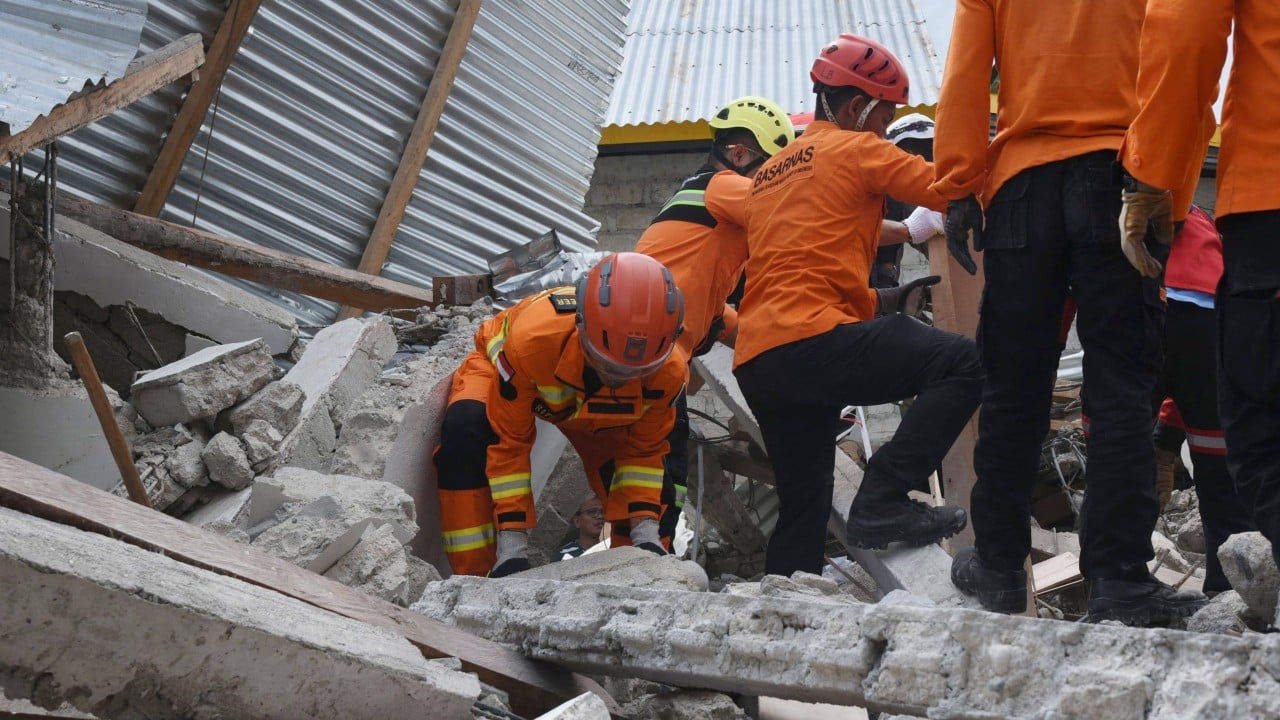
Natural disaster resilience depends entirely on how quickly decentralized populations can transition from passive victims to autonomous operators during infrastructure collapse. When a high-magnitude tectonic event strikes, institutional emergency response structures experience a predictable operational lag. Centralized command nodes cannot deploy resources instantly across fragmented topography. Consequently, survival outcomes rest almost exclusively on immediate self-rescue protocols and the cognitive resilience of survivors during sustained aftershock sequences.
Analyzing major tectonic disruptions reveals a stark operational reality. Formal search and rescue teams face severe clearance bottlenecks due to blocked arterial routes, compromised bridges, and communication blackouts. During the initial operational window, which typically spans the first seventy-two hours, communities function as isolated economic and logistical cells. Understanding this dynamic requires moving past generalized disaster narratives and examining the structural mechanics of immediate post-earthquake behavior, trauma processing, and localized triage.
The Temporal Mechanics of Tectonic Aftershocks
A primary seismic event delivers a massive, instantaneous kinetic shock, but the subsequent psychological and physical degradation of a population is driven by continuous aftershocks. These secondary tremors introduce a unique operational friction. While the main rupture alters the structural integrity of buildings, repetitive aftershocks test the residual stability of compromised infrastructure and compound the psychological load on survivors.
The human nervous system is optimized for acute threat response, not chronic, unpredictable environmental instability. When aftershocks persist for days at high frequencies, cognitive degradation sets in. Decision-making shifts from calculated risk assessment to hyper-reactive panic patterns. This transition introduces critical operational errors during self-rescue operations, such as re-entering structurally compromised enclosures to retrieve non-essential assets or failing to secure safe perimeters before administering first aid.
Operational planning must account for this decay in cognitive performance. Disaster response frameworks that assume rational actor behavior under continuous seismic threat consistently fail. Mitigation strategies must instead pre-empt cognitive overload by establishing rigid behavioral checklists and pre-configured safe zones before a disaster occurs.
The Economics of Spontaneous Self-Rescue
In the immediate aftermath of a tectonic collapse, formal supply chains disintegrate. Resources such as potable water, medical supplies, and heavy lifting equipment are scarce. The speed of self-rescue operations depends on three distinct variables: local tool availability, communal social cohesion, and the density of uninjured functional adults.
When municipal infrastructure fails, resource distribution ceases to be a logistical challenge managed by algorithms or state agencies; it becomes a localized negotiation governed by proximity and immediate capacity.
- The Equipment Deficit: Most residential structures lack pre-positioned extraction tools such as hydraulic jacks, pry bars, or heavy-duty cutting gear. Survivors rely on improvised implements, which drastically reduces excavation efficiency and increases the physical injury rate among rescuers.
- The Triage Void: Without trained medical personnel, local groups routinely misallocate attention. Treating minor soft-tissue injuries while ignoring occult internal hemorrhaging leads to preventable mortality within the first twelve hours.
- Spatial Fragmentation: Displaced populations tend to cluster haphazardly in open areas, often blocking potential access corridors for heavy machinery once municipal routes are finally cleared.
Addressing these structural failures requires a shift in public safety policy. Communities cannot rely solely on post-disaster aid delivery. Resilience engineering mandates distributed micro-caches of extraction equipment and basic medical supplies within residential zones, paired with mandatory baseline training for civilian populations on structural stabilization and basic triage.
Psychological Attrition and Cognitive Load
The trauma associated with surviving an intense tectonic event and subsequent continuous aftershocks manifests as acute stress reactions that degrade operational effectiveness. Unlike sudden industrial accidents, earthquakes alter the physical earth beneath a person, removing the foundational baseline of physical security. This environmental betrayal triggers profound disorientation.
Survivors frequently report a temporal distortion effect, where hours of aftershocks feel compressed or protracted, impairing their ability to sequence survival priorities accurately. Adrenaline spikes enhance physical strength temporarily but impair long-term strategic planning. Once the chemical surge subsides, systemic exhaustion sets in, leading to tactical paralysis where groups stop clearing rubble, securing water sources, or tending to the wounded.
To counteract this attrition, command structures must introduce external rhythmic stability as soon as communication lines are re-established. Even basic situational updates broadcasted via localized radio frequencies reduce ambiguity, lower cortisol levels among survivors, and re-establish a sense of operational predictability.
Strategic Resource Allocation and Systemic Redundancy
Urban planners often model disaster resilience around single-point failure containment, assuming that backup generators, redundant water mains, and emergency shelters will function autonomously. Tectonic events invalidate these assumptions by severing interconnected lifelines simultaneously. Water mains snap concurrently with electrical grids and fiber-optic cables, creating systemic failure loops.
A rigorous approach to disaster mitigation demands decentralized redundancy. Micro-grids for power, independent rainwater catchment and filtration systems at the neighborhood level, and localized communication relays that operate independently of cellular towers are mandatory investments.
Implementing these systems requires shifting capital expenditure from centralized response agencies toward community-level preparedness infrastructure. Municipalities must transition from viewing citizens as passive recipients of post-disaster charity to treating them as the primary operational units of initial disaster response. Pre-positioning assets, decentralizing medical reserves, and designing buildings with inherent seismic ductility reduce the reliance on external rescue operations, fundamentally altering the survival calculus when the next major fault line ruptures.