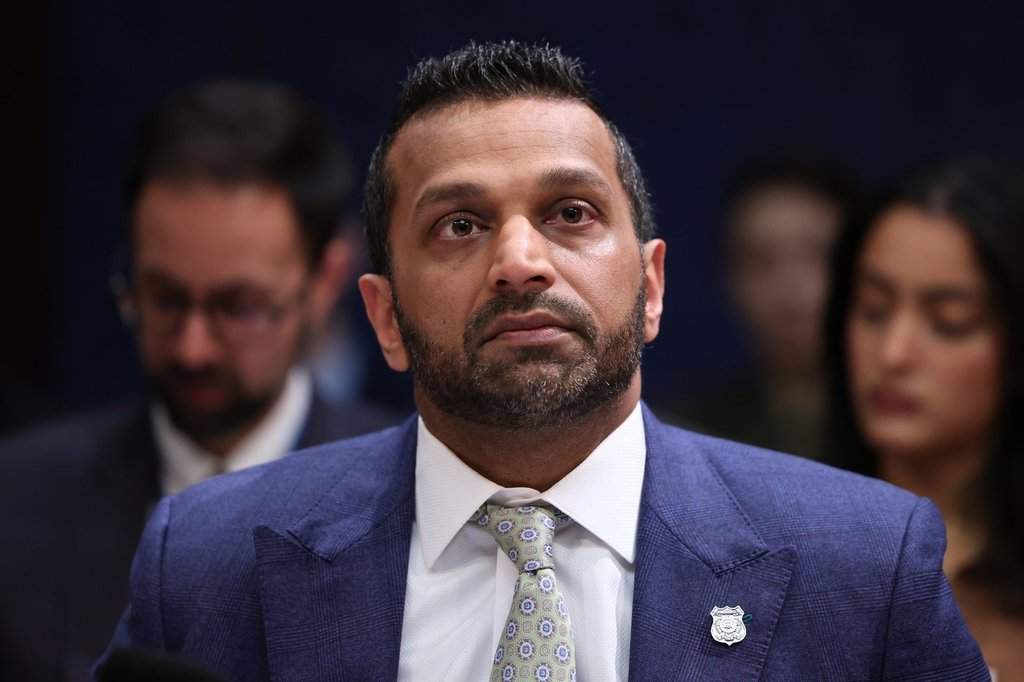
The reported compromise of FBI Director Kash Patel’s personal accounts by Iranian-backed actors represents a fundamental failure in the "Personal-Professional Partition," a security doctrine intended to isolate high-value government targets from their less-secure private digital footprints. This breach is not a singular event of technical brilliance; it is the logical outcome of a persistent asymmetric advantage where state-sponsored entities exploit the friction between user convenience and rigorous defensive protocols. When a top-tier intelligence official is compromised, the failure occurs at the intersection of credential hygiene, secondary authentication bypass, and the structural inability of private platforms to provide the same hardening as government-issued systems.
The Triad of State Sponsored Intrusion
To evaluate the mechanics of the Patel breach, we must categorize the offensive strategy into three distinct operational pillars. State actors do not "hack" in the cinematic sense; they orchestrate systematic failures across these specific domains: Discover more on a similar subject: this related article.
- Information Asymmetry through Pre-Operational Surveillance: The attackers likely spent months mapping Patel's digital ecosystem. This involves identifying every "unhardened" node—personal emails, legacy social media accounts, and third-party services that do not support hardware-based security keys.
- Credential Harvesting via Socio-Technical Engineering: Rather than attacking the FBI's encrypted infrastructure, the adversary targets the human element. This includes sophisticated spear-phishing or "Man-in-the-Middle" (AiTM) attacks that mimic login portals to capture session cookies, effectively bypassing standard multi-factor authentication (MFA).
- Lateral Movement and Persistence: Once initial access is achieved in a personal account, the objective shifts to data exfiltration and the discovery of "bridge" information—passwords, recovery emails, or calendar invites that could lead to more sensitive professional networks.
The Failure of SMS and App-Based MFA
The breach highlights a critical vulnerability in the current security landscape: the reliance on "soft" MFA. Most high-profile individuals still utilize SMS-based codes or mobile push notifications. These are susceptible to:
- SIM Swapping: Diverting the target’s cellular signal to an attacker-controlled device to intercept recovery codes.
- Prompt Fatigue: Bombarding a target with push notifications until they inadvertently click "Approve" to stop the disruption.
- Session Token Theft: Using malware to steal the "Remember this browser" cookie, which allows the attacker to bypass the MFA prompt entirely.
For an FBI Director, the only acceptable defense is a FIDO2-compliant hardware security key (e.g., YubiKey). Any system that allows a fallback to SMS or a password reset via a personal "recovery email" is fundamentally compromised from the start. The "Cost Function of Defense" for a state actor is significantly lower than the "Cost of Failure" for the target. Additional journalism by Gizmodo explores related views on this issue.
Geopolitical Signaling and the PsyOp Component
The timing and public claim of the breach by Iranian groups suggest an objective beyond mere intelligence gathering. In the realm of cyber warfare, "Access as a Signal" serves to undermine the perceived competence of a nation’s security apparatus. By targeting the head of the primary domestic intelligence agency, the adversary achieves two psychological objectives:
- Erosion of Institutional Trust: If the Director of the FBI cannot secure his own inbox, the implication is that the broader citizenry is entirely defenseless.
- Strategic Deterrence: This acts as a "shot across the bow," signaling that the adversary has the capability to reach into the private lives of any high-ranking official, potentially accessing private communications, financial records, or location history.
The "Signal Strength" of this breach is measured not by the sensitivity of the emails accessed, but by the proximity of the breach to the center of executive power.
The Structural Bottleneck of Personal Digital Footprints
A significant limitation in protecting officials like Patel is the "Legacy Data Exhaust." Even if an individual adopts perfect security today, their digital footprint from 10 or 15 years ago remains a liability.
- Inactive Accounts: Forgotten accounts on defunct services often use the same passwords or security questions as modern ones.
- Data Broker Exposure: Aggregated data from previous breaches (e.g., the OPM hack or LinkedIn leaks) provides a roadmap for attackers to guess current security answers or identify family members used in recovery protocols.
- Third-Party Interconnects: Personal accounts are often linked to fitness trackers, smart home devices, or retail platforms. Each link represents a potential entry point where security standards may be significantly lower than those of a primary email provider.
This creates a "Security Debt" that is nearly impossible to fully liquidate without a total digital reset—a task few public figures are willing or able to perform.
Operational Recommendations for High Value Targets
To mitigate the risks exposed by this incident, organizations and high-ranking individuals must move toward a "Zero Trust Personal Environment." This requires a shift in the fundamental architecture of how personal data is managed:
- Elimination of SMS and Voice Fallbacks: All accounts must be locked down to hardware-only MFA. The option to "recover via phone number" must be disabled at the carrier and service provider level.
- Email Stratification: Using a "Burner Email" strategy for non-essential services while reserving a highly hardened, non-indexed email for essential communication.
- Hardware Isolation: Utilizing dedicated, "air-gapped" or limited-use devices for personal browsing that are never connected to the same networks or accounts as professional equipment.
- Professional Monitoring of Personal Assets: Implementing managed detection and response (MDR) services that monitor the personal digital footprints of high-value targets for signs of credential exposure or unauthorized login attempts.
The breach of a Director-level official is a reminder that in the modern era, the boundary between the "private person" and the "public office" is an illusion that adversaries no longer respect. The security of the state is now inextricably linked to the security of the individual's smartphone and home Wi-Fi.
Establish a mandatory, hardware-enforced security audit for all executive-branch nominees and their immediate families. This must include the retroactive purging of legacy accounts and the implementation of a "Security Concierge" service to manage the ongoing digital hygiene of individuals whose personal lives are now legitimate theaters of war.
Would you like me to develop a specific protocol for hardware-based MFA deployment in high-turnover executive environments?