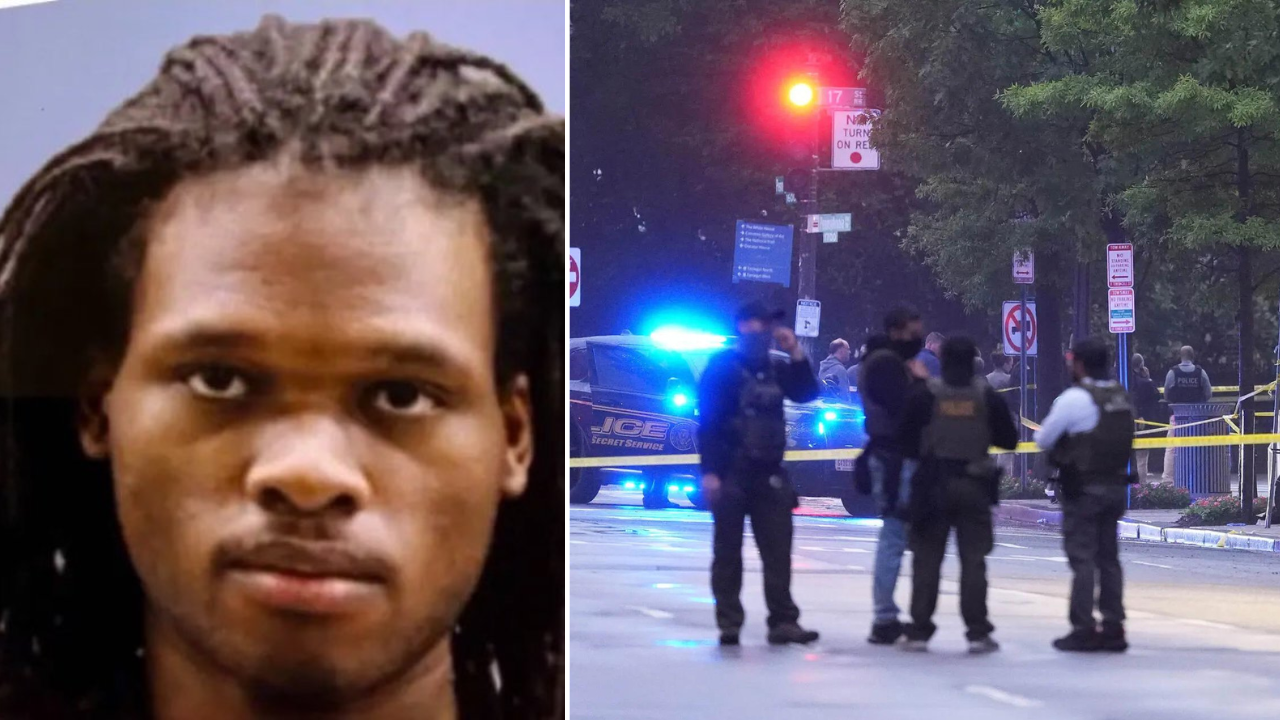
The fatal engagement at the 17th Street and Pennsylvania Avenue NW security checkpoint exposed systemic vulnerabilities in federal threat mitigation protocols rather than a sudden, unpredictable security failure. When 21-year-old Nasire Best pulled a revolver from a bag and fired multiple rounds toward United States Secret Service Uniformed Division officers, it marked the lethal culmination of a documented, multi-stage failure in threat-tracking and intervention infrastructure. This event represents a recurring operational breakdown: a known, high-risk individual with escalating psychological markers and prior perimeter interventions slipping through the gaps between law enforcement databases, the judicial system, and mental health containment infrastructure.
To prevent similar perimeter attacks, security agencies must move away from reactive tactical responses toward a proactive, closed-loop behavioral threat lifecycle model. This requires analyzing the precise mechanisms that allowed an individual with a history of federal arrests, non-compliance warrants, and severe psychiatric delusions to return to the exact restricted area he was legally and medically barred from approaching.
The Three Pillars of Threat Lifecycle Breakdown
An evaluation of court records and law enforcement contacts reveals that the subject moved through three distinct behavioral phases over an 11-month period. Each phase offered an intervention window that failed due to structural systemic fragmentation.
1. Psychiatric De-escalation and Early Intercept Failure (June 2025)
The subject first entered the federal threat matrix after obstructing vehicular traffic near 15th Street and E Street NW. During this encounter, he presented severe psychiatric symptoms, claiming to be "God." He was involuntarily committed to the Psychiatric Institute of Washington for a mental health evaluation.
The primary structural bottleneck during this phase is the legal and clinical limitation of short-term involuntary psychiatric holds. Mental health facilities operate under strict legal criteria that prioritize rapid stabilization and civil liberties over long-term threat monitoring. Once an individual is deemed no longer an imminent danger to themselves or others within a clinical setting, they are discharged. The critical system failure here is the absence of a warm handoff or formal data pipeline linking clinical discharge conditions back to protective intelligence agencies.
2. Physical Perimeter Penetration and Judicial Non-enforcement (July–August 2025)
One month after his initial psychiatric commitment, the subject escalated from disrupting traffic to executing a physical perimeter breach. He bypassed a restricted pedestrian control point via an exit turnstile lane at a White House complex driveway, ignored direct law enforcement commands, and stated he "wanted to get arrested" while claiming to be "Jesus Christ."
This action resulted in a formal arrest and the issuance of a Pretrial Stay Away Order. This judicial mechanism is designed to act as a legal deterrent by explicitly banning a defendant from entering a specific geographic zone. However, a stay-away order lacks an active enforcement mechanism. It relies entirely on voluntary compliance or chance recognition by field officers, functioning as a passive legal instrument rather than an active barrier.
The failure compounded in August 2025 when a notice of non-compliance was filed, and a subsequent bench warrant was issued after the subject failed to appear for a scheduled court hearing. At this point, the subject transitioned from a passive mental health concern to an active fugitive with an explicit history of targeted interest in the White House complex.
3. Lethal Kinetic Escalation (May 2026)
The transition from non-violent perimeter testing to an active shooter engagement occurred over a multi-month period of zero enforcement. The subject's online activity escalated, including public statements claiming to be "the real Osama bin Laden." Despite this visible progression along the pathway to violence, the lack of active tracking allowed him to approach the 17th Street security booth with a concealed firearm, executing a kinetic assault that resulted in his death and critical injuries to a bystander.
The Threat Multiplication Function
The breakdown of the threat lifecycle can be analyzed through a basic predictive model. The total risk posture ($R$) of a targeted site is a function of Threat Intent ($I$), Vulnerability of the Perimeter ($V$), and the systemic Time-to-Intervention ($T_i$) against a known actor:
$$R = f(I \times V \times T_i)$$
In this specific scenario, Threat Intent ($I$) escalated continuously as the subject shifted from passive traffic obstruction to an active shooter posture. Perimeter Vulnerability ($V$) remained relatively constant due to hard physical barriers and armed personnel at the checkpoints. Therefore, the critical operational variable was the Time-to-Intervention ($T_i$). Because the judicial and protective apparatus failed to execute the outstanding August 2025 bench warrant, $T_i$ stretched to nearly nine months. This delay allowed the subject to dictate the timing, location, and method of the final kinetic engagement.
The tactical response by the Secret Service Uniformed Division was executed with high operational efficiency; officers returned fire and neutralized the threat within seconds, ensuring the President and the core executive mansion remained unimpacted. However, relying on a kinetic response at a security checkpoint means the outer perimeter has already failed. True defense-in-depth requires neutralizing the threat long before an actor reaches weapon-deployment range.
Interagency Data Silos and Surveillance Gaps
The operational blind spots that permitted this attack stem from technical and structural barriers across three distinct sectors of governance.
| Sector | Institutional Node | Primary System Failure |
|---|---|---|
| Medical | Psychiatric Institute of Washington | HIPAA restrictions and lack of mandatory reporting protocols for protective asset threats prevent clinical data from entering law enforcement databases. |
| Judicial | District of Columbia Court System | Bench warrants for pretrial non-compliance are treated as standard administrative failures rather than critical security alerts, leaving them unprioritized by fugitive recovery teams. |
| Tactical | U.S. Secret Service Protective Intelligence | Relies heavily on static watchlists and physical recognition at checkpoints rather than active, geo-fenced tracking of high-risk individuals with open warrants. |
The first bottleneck is the wall between clinical psychiatry and protective intelligence. While healthcare providers can breach confidentiality under the "Tarasoff duty to protect" directive if a patient names a specific, identifiable victim, generalized delusions focused on federal landmarks or political figures often do not trigger mandatory law enforcement notifications. Consequently, when the subject was discharged in 2025, protective agencies received no data regarding his clinical prognosis, medication adherence, or structural stability.
The second bottleneck is the administrative handling of bench warrants. In a dense municipal environment, thousands of low-level bench warrants are issued monthly. The system processes a warrant for violating a White House stay-away order through the same administrative channels as a standard failure-to-appear for a minor property crime. Without an automated algorithmic prioritization model that flags warrants based on proximity to high-value targets, the warrant remained unexecuted.
Operational Blueprint for Integrated Threat Mitigation
Resolving these vulnerabilities requires moving away from fragmented, reactive security measures toward an integrated, data-driven protective intelligence model.
Establish a Federal Protective Clinical Exception
Legislative frameworks must be updated to create a narrow, well-defined clinical reporting exception for individuals detained by federal protective agencies who exhibit targeted delusions. When an individual is committed following a breach of a high-security zone, the treating psychiatric facility must be legally required to provide automated status updates—including admission, discharge dates, and treatment compliance vectors—directly to the federal protective database. This replaces an absolute informational void with structured, actionable behavioral metrics.
Implement Algorithmic Warrant Prioritization
The judicial branch and federal law enforcement must deploy an automated tiering system for all outstanding warrants within the National Crime Information Center (NCIC) database. Any warrant involving a defendant with a history of entering restricted government sectors, violating stay-away orders for federal properties, or making threats against protectees must automatically be escalated to a "Tier 1 Protective Intercept" status. This designation mandates immediate assignment to regional fugitive task forces, shortening the time-to-intervention before an individual can plan a return to the target area.
Deploy Automated Outer-Perimeter Recognition
Relying on personnel at a final checkpoint to recognize a known threat from a static watchlist creates an unacceptable cognitive load. Outer perimeters must be reinforced with passive, automated intelligence-gathering systems, including advanced license plate readers and facial recognition nodes deployed at a multi-block radius around secure zones. If an individual with an active Tier 1 Protective Intercept warrant trips an outer sensor, the system must trigger an immediate tactical dispatch to intercept the subject before they can reach a high-traffic pedestrian checkpoint.
The shooting of Nasire Best confirms that the tactical ability to neutralize an active shooter at a security booth is an insufficient metric for total security success. True protection depends on systemic integration: closing the loop between the psychiatric facility, the courtroom, and the perimeter fence line. Until these administrative and technical gaps are closed, security agencies will remain trapped in a reactive posture, forced to resolve systemic intelligence failures through lethal force at the checkpoint door.
To better understand how federal protective agencies handle these high-stakes scenarios, you can watch this technical breakdown of Secret Service perimeter security protocols which illustrates the exact physical layout and rapid response measures deployed during a checkpoint breach.