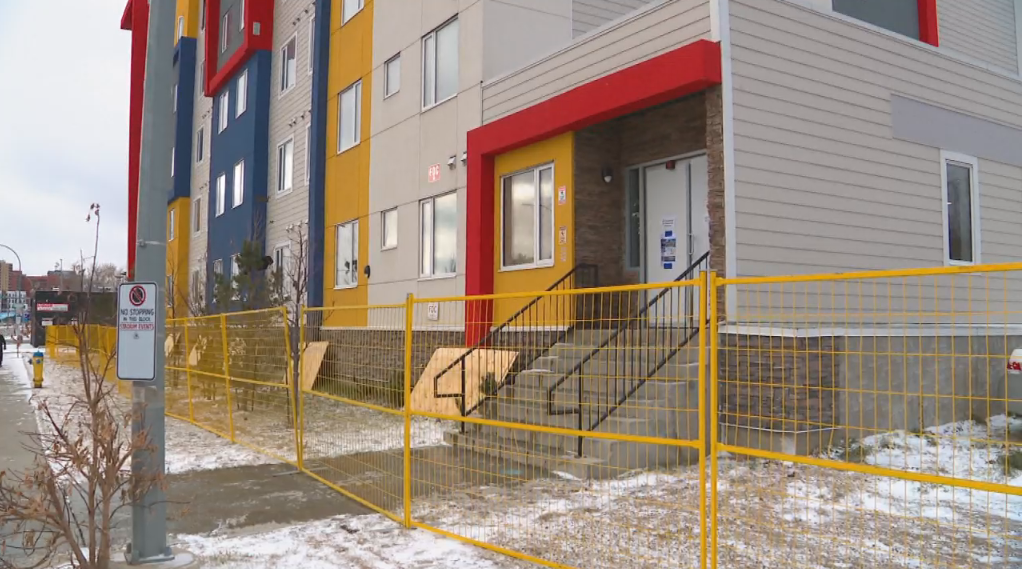
Forced residential evacuations do not happen overnight; they represent the terminal phase of a predictable, compounding operational failure. When municipal authorities order tenants to vacate a central Edmonton apartment building due to a "state of chaos," the surface-level narrative typically focuses on immediate public safety hazards, property crime, and tenant displacement. A rigorous operational analysis reveals a deeper systemic breakdown: the intersection of deferred capital maintenance, asymmetric regulatory enforcement, and the breakdown of physical security perimeters. Understanding this failure requires stripping away sensationalist reporting and examining the asset through the lenses of urban economics, property management mechanics, and municipal liability thresholds.
The Mechanics of Accelerated Asset Decay
Residential real estate operates on a strict capital expenditure (CapEx) and operating expense (OpEx) equilibrium. When a property owner or management entity fails to reinvest rental cash flow into baseline structural and mechanical systems, the building enters a negative feedback loop known in urban economics as the filtering-down trap. In central Edmonton, where older wood-frame and low-rise concrete walk-ups constitute a significant portion of the affordable housing stock, this decay accelerates rapidly once critical thresholds are breached.
The deterioration follows a clear causal chain:
- Perimeter Breach: The initial failure is almost always physical access control. Broken exterior door latches, compromised intercom systems, and unmonitored ground-floor windows eliminate the boundary between public street-level disorder and private residential space.
- Unauthorized Occupancy: Once the perimeter fails, non-residents gain access to common areas, stairwells, and vacant units. This introduces acute liability risks, including unauthorized utility tapping, open-flame heating methods, and illicit substance use within enclosed spaces.
- Life-Safety System Compromise: Unauthorized occupants frequently tamper with fire suppression infrastructure. Smoke detectors are disabled, fire extinguishers are discharged or stolen, and fire doors are propped open to facilitate movement. At this stage, the building transitions from a poorly managed asset to an active life-safety hazard.
- Legitimate Tenant Attrition: Paying, rule-abiding tenants vacate the premises as security and habitability decline. The property loses its stable revenue base, leaving the landlord with high vacancy rates and non-performing leases.
- Capital Starvation: With net operating income (NOI) collapsing, the owner either lacks the liquidity to execute repairs or makes a rational—albeit destructive—financial calculation to extract remaining cash flow without reinvesting, effectively abandoning the asset to municipal intervention.
Standard reporting characterizes the resulting environment as "chaos." In operational terms, it is the total collapse of property-level governance. Without active on-site management and secured ingress points, a multi-unit residential structure ceases to function as a controlled environment and becomes an extension of the surrounding streetscape.
The Regulatory Threshold for Forced Vacate Orders
Municipal governments and provincial health authorities operate under strict statutory mandates when intervening in private property. Ordering the immediate evacuation of a residential building is an administrative measure of last resort, as it triggers acute social costs, displaces vulnerable populations, and shifts the burden of emergency sheltering onto public infrastructure.
In Alberta, the authority to issue a vacate order rests primarily with Alberta Health Services (AHS) under the Public Health Act and municipal fire prevention officers under the Safety Codes Act. Regulators do not intervene based on aesthetic blight, minor lease disputes, or isolated criminal incidents. Intervention occurs only when inspectors document objective, quantifiable violations of minimum housing and fire safety standards that pose an imminent threat to human life.
The specific triggers that force an immediate vacate order include:
- Compromised Egress Routes: Blocked hallways, locked or obstructed fire exits, and structurally unsound stairwells that prevent rapid evacuation during an emergency.
- Non-Functional Fire Suppression and Detection: Inoperable central fire alarm panels, missing smoke alarms across multiple units, or tampered sprinkler systems.
- Severe Biohazard and Sanitation Failures: Raw sewage backups, widespread accumulation of human waste, discarded needles in common areas, and severe pest infestations (such as bedbugs or cockroaches) that render units uninhabitable under the Minimum Housing and Health Standards.
- Structural and Utility Hazards: Exposed live electrical wiring, lack of running water, or heating system failures during sub-zero temperatures.
When an inspector documents a convergence of these factors, the regulatory calculus shifts. Leaving tenants in place exposes the municipality and the health authority to unacceptable catastrophic risk—specifically, a multi-fatality fire or structural collapse. The vacate order is therefore a risk-transfer mechanism: the state removes the immediate threat to human life by neutralizing the building's occupancy, transferring the crisis from an internal structural hazard to an external housing displacement problem.
The Asymmetric Incentives of Distressed Property Ownership
To understand why a central Edmonton apartment building reaches the point of condemnation, one must examine the financial incentives governing distressed real estate. In a functional market, property owners protect their equity by maintaining habitability and compliance. However, specific market conditions in central urban cores distort this incentive structure.
First, consider the asset valuation dynamic. Many older, low-rise apartment buildings in central Edmonton carry low land-to-building value ratios when in severe disrepair. If the cost of bringing a 40-year-old building up to modern fire and building codes exceeds the capitalized value of the projected net rental income, the building is functionally obsolete. A rational owner facing a negative equity position—where remediation costs surpass market value—has zero financial incentive to fund major capital improvements.
Second, enforcement lag creates a moral hazard. Municipal bylaw enforcement, health inspections, and fire code compliance operate on reactive, complaint-driven timelines. Between the initial issuance of a work order and the final execution of a vacate notice, months or even years can elapse. During this window, an unscrupulous operator can continue collecting rent—often directly from government social assistance disbursements—while spending virtually nothing on maintenance, security, or debt service.
Third, corporate veil protections insulate decision-makers. Distressed properties are frequently held within single-purpose limited liability corporations. When the municipal authority finally condemns the building and places liens on the title for emergency boarding, security, and remediation costs, the holding entity can simply default on the mortgage and surrender the asset to the lender or the municipality via tax forfeiture. The operational losses are externalized onto the tenants, the surrounding neighborhood, and the municipal taxpayer.
Operational Blind Spots in Municipal Intervention
While a vacate order resolves the immediate life-safety threat inside the building, it routinely fails to solve the broader urban system failure. Municipal responses to condemned properties suffer from three structural blind spots.
The Displacement Vacuum
Issuing a vacate order legally compels tenants to leave, but it does not automatically generate replacement housing inventory. Central Edmonton faces persistent constraints in deeply affordable, supportive housing. When a building is evacuated, legitimate low-income tenants are thrust into an emergency shelter system already operating near capacity, while unauthorized occupants simply migrate to the nearest unsecured structure. The disorder is not eliminated; it is spatially redistributed across the immediate neighborhood.
The Security of Vacant Structures
An evacuated building is exponentially harder to secure than an occupied one. Once legitimate residents are removed, natural surveillance disappears entirely. Standard remediation involves boarding up ground-floor windows and doors with plywood. However, without continuous, round-the-clock private security patrols or steel perimeter fencing, determined trespassers routinely breach plywood barriers within hours. Vacant, condemned buildings rapidly become targets for copper wire stripping, arson, and illegal encampments, escalating the fire risk to adjacent occupied properties.
Reactive vs. Predictive Enforcement
Municipal agencies track code violations, police dispatch calls, and fire incidents in siloed databases. A sharp spike in police calls for disturbances, combined with an increase in false fire alarms and unpaid municipal utility bills, serves as a leading indicator of impending building failure. Because these data streams are rarely integrated into a unified risk-scoring model, authorities remain reactive, intervening only after the building has already deteriorated into a state of irreversible chaos.
Limitations of Current Regulatory Remedies
No municipal policy offers a friction-free solution to the condemnation of private residential assets. Every intervention carries severe trade-offs that constrain policymakers:
- Aggressive Receivership: The city or province can petition the courts to place a severely neglected building into receivership, appointing a third-party manager to execute repairs and bill the owner. However, receivership is legally complex, slow to execute, and requires upfront public capital that may never be recovered if the property's market value is lower than the remediation debt.
- Substantial Fines and Liens: Levying daily financial penalties against non-compliant landlords fails when the owner is already insolvent or intentionally abandoning the asset. Fines cannot extract liquidity from a bankrupt entity.
- Strict Landlord Licensing: Implementing mandatory residential rental licensing requires massive administrative overhead to inspect thousands of compliant properties just to identify the small fraction of bad actors. Furthermore, strict enforcement without parallel subsidies for capital repairs can force marginal, low-cost housing providers out of the market, further shrinking the affordable housing supply.
Strategic Framework for Systemic Intervention
Preventing the recurrence of residential condemnations in central Edmonton requires shifting from reactive crisis management to proactive asset governance. Municipal authorities, urban planners, and institutional stakeholders must execute a coordinated operational strategy targeting the root causes of building failure.
1. Integrate Cross-Agency Data for Early Warning
The municipality must merge dispatch data from Edmonton Police Service, Edmonton Fire Rescue Services, municipal bylaw enforcement, and Alberta Health Services into a centralized property risk index. Properties exhibiting a concurrent rise in emergency calls, unaddressed work orders, and utility arrears must be flagged for mandatory, joint-agency inspections before life-safety systems fail. Early intervention allows authorities to enforce perimeter security repairs while the building still retains a viable base of paying tenants.
2. Enforce Mandatory Perimeter Hardening Standards
Municipal bylaws must establish strict, rapid-turnaround enforcement timelines specifically for exterior access control. A broken lobby door or compromised ground-floor window in a high-risk zone cannot be treated as a routine 30-day maintenance notice; it must be classified as an immediate security hazard requiring remediation within 24 to 48 hours. If the owner fails to act, the city must deploy contracted vendors to install commercial-grade steel doors and access-control hardware immediately, adding the direct cost to the property tax roll.
3. Establish a Rapid-Response Stabilization Fund
To prevent the total collapse of marginally distressed properties, the municipality should establish a revolving capital fund dedicated to emergency life-safety repairs. Rather than allowing a building to deteriorate to the point of a full vacate order—which incurs massive public costs for emergency sheltering and vacant-building security—the city can fund targeted interventions (such as fire panel restoration and perimeter hardening) in exchange for super-priority liens on the property title and mandatory third-party property management oversight.
4. Mandate Post-Vacate Steel Encapsulation
When a vacate order is unavoidable, standard plywood boarding must be abandoned for high-risk central properties. Municipal safety codes must require immediate encapsulation using perforated steel security screens over all ground- and second-floor openings, paired with monitored motion-detection systems. Securing the shell immediately prevents the secondary wave of arson and structural stripping that typically follows an evacuation, protecting surrounding properties while the asset awaits demolition or redevelopment.