The Federal Reserve’s mandate to maintain price stability and maximum employment has hit a logical bottleneck where the data no longer supports a dovish pivot. While market sentiment often treats interest rate cuts as an inevitable response to time, monetary policy is not a function of the calendar; it is a function of clear, disinflationary momentum that has stalled. Three distinct variables—sticky services inflation, a resilient labor market, and the rising "neutral rate"—have created a policy environment where the risk of cutting too early far outweighs the cost of holding rates steady.
The Persistence of Services Inflation
Inflation is not a monolithic metric. When we strip away volatile food and energy prices, we find that the deflationary trend in goods has largely played out. The remaining hurdle is Services Less Rent of Shelter—often referred to as "supercore" inflation. This segment is driven primarily by wages and domestic demand rather than global supply chains.
The mechanics of supercore inflation are difficult to break because they are tied to high-touch industries like healthcare, education, and professional services. Unlike electronics or automobiles, these services do not benefit from rapid technological deflation. If wage growth remains above 4%, the mathematical path to a 2% inflation target becomes narrow. The Fed cannot justify lowering the cost of capital when the largest component of the Consumer Price Index (CPI) is still accelerating or plateauing well above the target.
The Feedback Loop of Wage-Push Pressure
Labor costs represent the primary input for the service sector. We are currently observing a feedback loop where:
- Low unemployment gives workers leverage to demand higher nominal wages.
- Firms, experiencing strong consumer demand, pass these costs through to the final price.
- Elevated prices reinforce the need for further wage increases.
Until the unemployment rate rises toward its natural level or productivity gains offset wage increases, the Federal Open Market Committee (FOMC) risks reigniting an inflationary spiral by easing financial conditions too soon.
The Resilience of the Transmission Mechanism
One of the primary reasons for the current policy stasis is that the economy has proven less sensitive to interest rates than historical models suggested. This "lagged effect" has been dampened by several structural changes in the private sector.
Corporate Terming Out
During the low-interest-rate environment of 2020 and 2021, a significant portion of the corporate world "termed out" their debt. By issuing long-term bonds at record-low yields, these companies insulated themselves from the Fed’s hiking cycle. As a result, the higher federal funds rate has not translated into a proportional increase in interest expenses for many large-cap firms. The "pain" required to slow the economy is being deferred until these debts require refinancing, which for many is not a 2024 or 2025 event.
The Housing Lock-In Effect
The transmission of monetary policy through the housing market—traditionally the most sensitive sector—is currently broken. Homeowners who secured 3% mortgage rates are unwilling to sell and move into a new mortgage at 7%. This has caused a collapse in the supply of existing homes, keeping prices artificially high despite high rates. Because home equity remains a major component of household wealth, the "wealth effect" continues to support consumer spending, effectively neutralizing the Fed’s attempt to cool the economy through higher borrowing costs.
Recalibrating the Neutral Rate (R-Star)
A fundamental concept in central banking is $R^$, the real short-term interest rate that is neither expansionary nor restrictive. For a decade following the 2008 financial crisis, it was assumed that $R^$ was near zero. However, evidence suggests that the neutral rate has shifted upward due to fiscal deficits, the energy transition, and shifting demographics.
If the neutral rate is now 1.5% or 2% instead of 0.5%, then a federal funds rate of 5.25% is not as restrictive as it appears on the surface. If the "brakes" are not actually being applied that hard, the economy will continue to run hot. The Fed is currently in a period of discovery, trying to determine where the neutral rate actually sits. Cutting rates before confirming this location could lead to an accidental return to an accommodative stance, which would be a catastrophic policy error.
The Asymmetry of Risk
The FOMC operates under a framework of risk management where two types of errors are possible:
- Type I Error (The 1970s Mistake): Cutting rates too early, allowing inflation to become entrenched, and being forced to hike even higher later.
- Type II Error: Keeping rates high for too long and causing an unnecessary recession.
Current Fed leadership is clearly more concerned with Type I errors. The institutional memory of the 1970s, where the Fed eased too early and faced a decade of stagflation, is the primary driver of the current "higher for longer" stance. A recession can be managed with traditional tools (rate cuts and quantitative easing), but entrenched inflation expectations require a generational reset that is far more painful to implement.
Fiscal Headwinds to Monetary Policy
The effectiveness of the Federal Reserve is currently being undermined by expansionary fiscal policy. While the Fed is attempting to contract the economy by tightening the money supply, the federal government is running significant deficits, effectively injecting liquidity back into the system. This "fiscal-monetary tug-of-war" means the Fed must keep rates higher than they otherwise would to offset the inflationary impact of government spending.
The deficit currently sits at a level historically reserved for deep recessions or world wars, yet the economy is in an expansionary phase. This fiscal stimulus increases the demand for loanable funds, putting upward pressure on long-term yields (the 10-year Treasury) regardless of what the Fed does with the short-term fed funds rate.
The Statistical Reality of the Labor Market
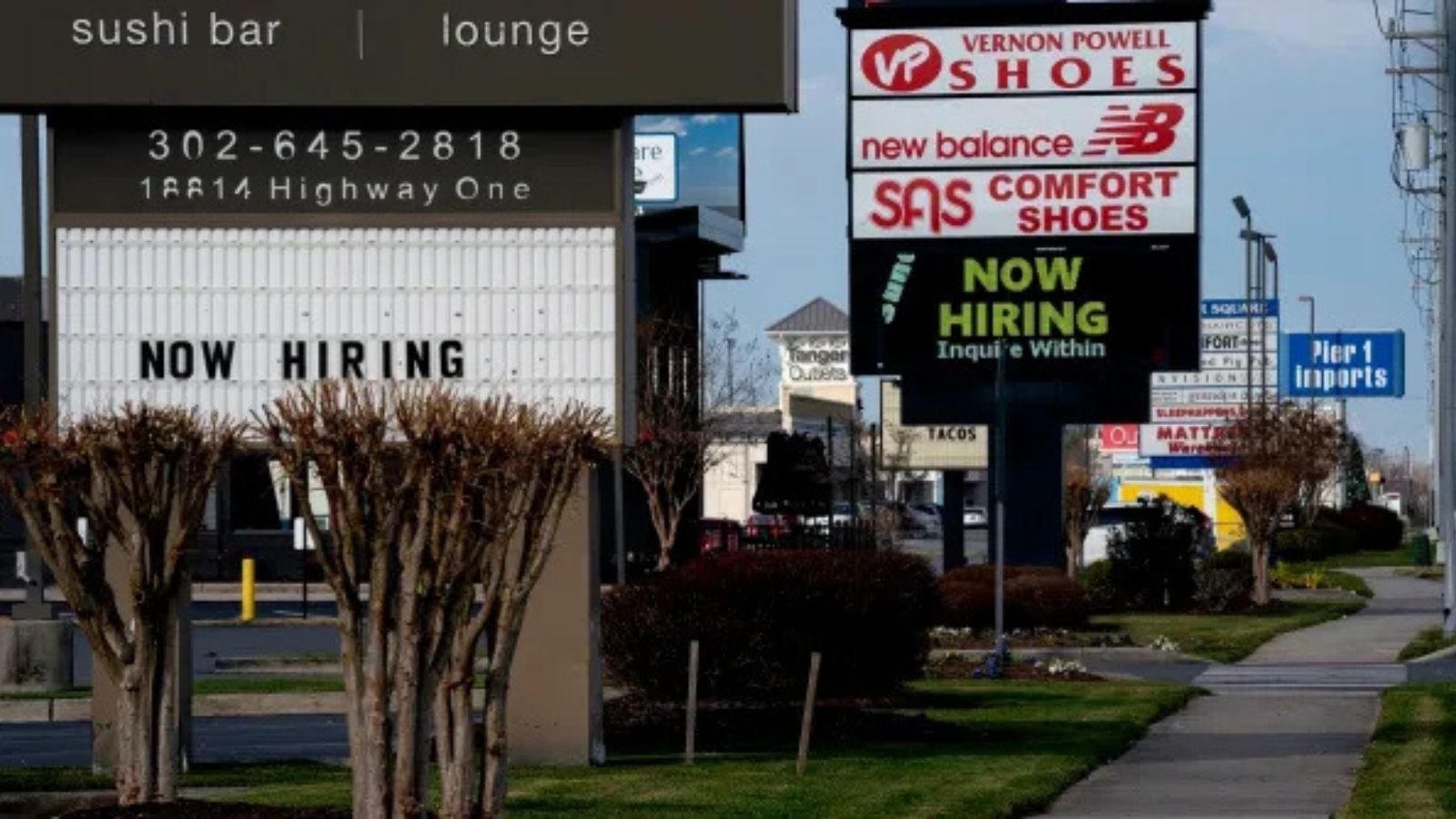
The "reasons to cut" usually center on a weakening labor market. However, the data remains stubbornly robust. Job openings still exceed the number of unemployed persons, and the unemployment rate remains below 4%—a level that was once considered "full employment."
We must also account for the shift in labor participation. As the "Baby Boomer" generation retires, the structural supply of labor is shrinking. This creates a floor for wage growth that is independent of economic cycles. In this environment, the Fed does not see a "cracking" labor market that would necessitate an emergency or even a preventative cut.
Strategic Position for Asset Allocation
Given the structural resistance to rate cuts, the primary strategic move is to pivot away from the "pivot trade." Market participants who have positioned their portfolios for a rapid return to 2% or 3% interest rates are misaligned with the underlying mechanics of the current economy.
- Duration Risk Management: Avoid over-exposure to long-dated bonds in the anticipation of capital gains from falling rates. The upward pressure on the neutral rate suggests that the long end of the curve will remain elevated even if the Fed eventually trims the front end.
- Focus on Real Yields: With inflation remaining sticky, nominal returns are a secondary metric. Investors should prioritize assets that provide a spread over CPI, such as high-quality corporate credit with strong pricing power.
- Cash as a Strategic Asset: When the risk of a "Type I" policy error is high, the optionality of cash and short-term equivalents is undervalued. Earning a 5% risk-free return while the Fed navigates the "last mile" of inflation is a superior risk-adjusted play compared to chasing equity valuations that assume aggressive easing.
The Fed is not "running out of reasons" to cut; it simply hasn't been given a compelling reason to start. Until the supercore inflation trend breaks or the labor market experiences a non-linear contraction, the path of least resistance is maintaining the current restrictive stance. Any deviation from this would require a significant, unexpected shock to the financial system that outweighs the current mandate for price stability.