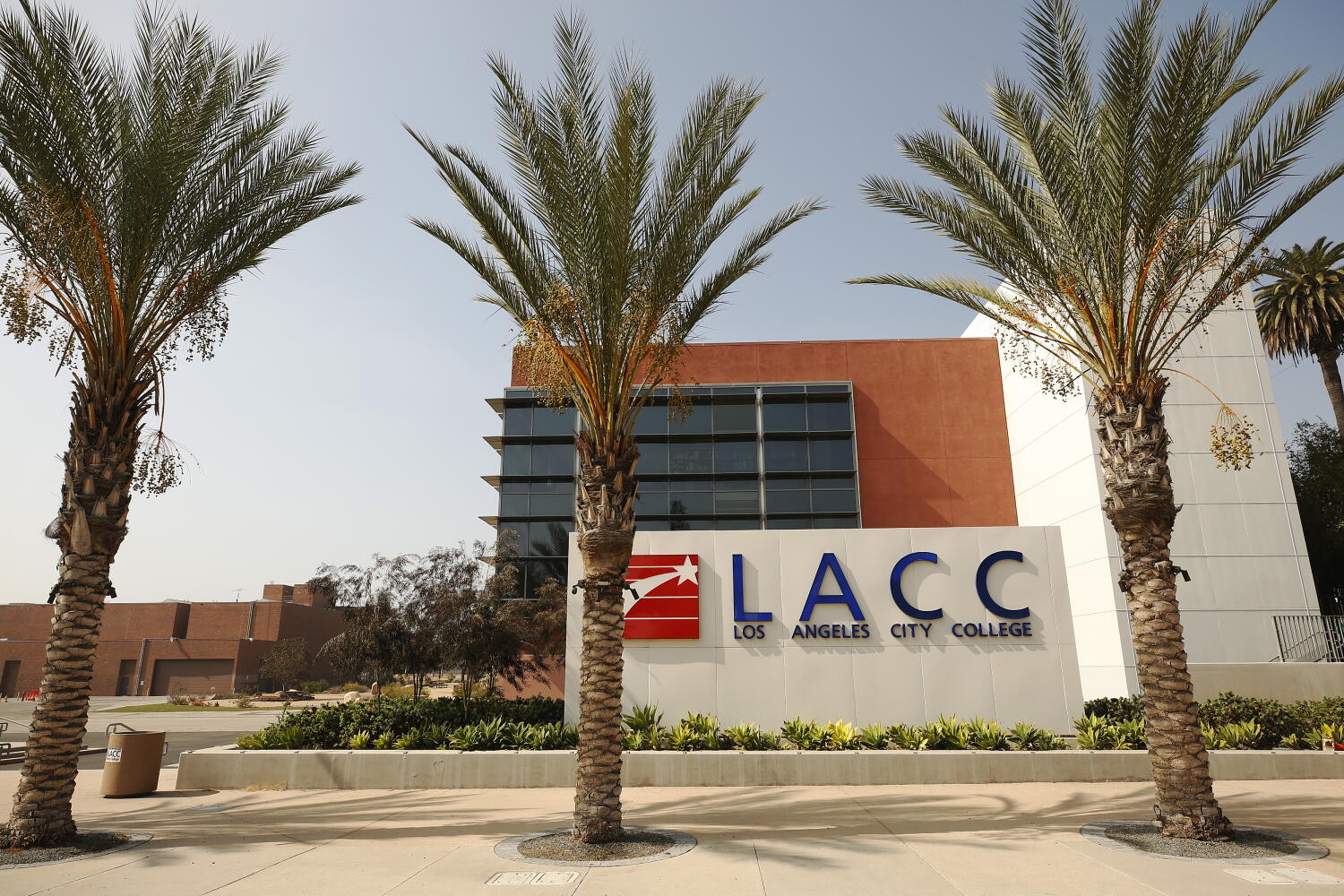
Early electoral returns in the Los Angeles Community College District (LACCD) Board of Trustees races—specifically showing early leads for Steven Veres, Kelsey Iino, Nichelle Henderson, and candidates such as Harris and Winston depending on the specific election cycle and seat—do not merely reflect isolated candidate popularity; they expose the structural mechanics of low-information, at-large municipal governance. To understand why specific candidates surge in initial ballot drops while others stall, analysts must bypass surface-level horse-race journalism and examine the underlying institutional variables: district-wide scale, ballot fatigue, organized labor endorsements, and the temporal sequencing of vote-by-mail tabulation.
The Structural Economics of At-Large Scale
The Los Angeles Community College District is the largest community college district in the United States, encompassing nine colleges and serving a geographic footprint that stretches across more than 882 square miles, including the City of Los Angeles and dozens of surrounding municipalities. Unlike single-member district elections—where a candidate can win by walking precincts and building hyper-local name recognition among a few thousand voters—LACCD trustees are elected at-large across the entire district boundary, even though each seat is numbered (Seats 1 through 7). For another look, consider: this related article.
This creates a massive capital barrier to entry and distorts the mechanics of voter decision-making:
- Prohibitive Earned Media Costs: Reaching over two million registered voters across the Los Angeles media basin through direct mail or broadcast advertising requires seven-figure budgets that down-ballot community college candidates almost never possess.
- Information Asymmetry: Most voters enter the booth or complete their mail-in ballots with high information regarding top-of-ticket races (presidential, gubernatorial, or mayoral) and near-zero information regarding specific LACCD trustee candidates.
- Heuristic Voting: Deprived of candidate-specific policy knowledge, voters rely on cognitive shortcuts—primarily ballot designations (such as "Incumbent," "Community College Trustee," or "Educator"), slate mailers, and institutional endorsements.
When early returns show candidates like Steven Veres, Harris, or Winston holding early advantages, those numbers are a direct measurement of institutional infrastructure rather than grassroots persuasion. Related insight on this trend has been provided by NPR.
The Temporal Mechanics of California Ballot Tabulation
Standard reporting treats "early returns" as a static snapshot of voter sentiment. In California election administration, early returns are actually a skewed sample representing a distinct demographic and behavioral cohort.
Under California's universal vote-by-mail system, the Los Angeles County Registrar-Recorder/County Clerk releases initial results immediately after polls close at 8:00 PM on Election Night. These initial batches consist almost exclusively of Vote-by-Mail (VBM) ballots received and processed prior to Election Day.
The Three Waves of Ballot Counting
- Wave One (Pre-Election Day VBM): Dominated by high-propensity, older, and organizationally connected voters. These voters frequently consult union voter guides (such as the Los Angeles County Federation of Labor or the Los Angeles College Faculty Guild, AFT Local 1521) while filling out their ballots at their kitchen tables. Candidates backed by entrenched institutional networks consistently overperform in this wave.
- Wave Two (Election Day In-Person and Drop-Box VBM): Captures voters who delay their decision until the final 48 hours. This cohort exhibits higher rates of ballot drop-off in down-ballot races or relies heavily on ballot designations printed directly next to the candidate's name.
- Wave Three (Late-Arriving VBM and Provisional Ballots): Processed over the subsequent days and weeks. This cohort skews younger, more working-class, and less aligned with traditional party or union machinery.
An early lead for an incumbent like Veres or well-positioned challengers like Harris and Winston reflects dominance in Wave One. However, in multi-candidate open seats without an incumbent, Wave One leads are statistically fragile if the margin separates candidates by less than five percentage points, because Wave Three voters often distribute their votes differently based on surname recognition or ballot title phrasing.
The Endorsement Cartel and Ballot Designation Arbitrage
Because direct voter contact at scale is financially impossible for LACCD candidates, campaigns operate as business-to-business sales operations targeting institutional gatekeepers rather than retail political campaigns targeting individual citizens.
The Institutional Endorsement Stack
Securing the trifecta of the Los Angeles County Democratic Party, the LA County Federation of Labor, and AFT Local 1521 (the faculty union) functions as the primary victory condition. These organizations fund and distribute millions of slate mailers and digital ads targeted precisely at the Wave One VBM electorate. When a candidate secures this stack, their name appears on the exact piece of paper the high-propensity voter holds while marking their ballot.
Ballot Designation Arbitrage
For voters who do not use a union guide, the three-word ballot designation governed by California Elections Code Section 13107 becomes the decisive variable. Candidates aggressively litigate these three words prior to the ballot printing deadline:
- "Incumbent" / "Member, Board of Trustees": Carries a documented structural advantage in low-information elections, frequently worth a baseline 5% to 10% boost among undecided voters who default to continuity.
- "Community College Educator" / "Professor": Signals domain expertise to voters who equate teaching experience with governance capability, even though the fiduciary responsibilities of a trustee—managing a multi-billion-dollar bond program, negotiating collective bargaining agreements, and setting district-wide policy—differ fundamentally from classroom instruction.
- Generic Occupational Titles: Candidates forced to use titles like "Businesswoman" or "Attorney" suffer severe conversion losses in LACCD races unless they compensate with massive self-funding or superior slate-mailer placement.
Governance Stakes Behind the Vote Totals
The outcomes in these specific seats determine operational control over a massive public enterprise. The LACCD Board of Trustees oversees an annual operating budget exceeding $1 billion, alongside multi-billion-dollar facilities bond measures (such as Measure LA) dedicated to campus construction and modernization.
The policy tension within the board centers on three operational bottlenecks:
- Enrollment Recovery and Funding Formulas: California's Student Centered Funding Formula ties state appropriations not just to full-time equivalent students (FTES), but to supplemental equity metrics and student completion outcomes (degrees, certificates, and transfers). Trustees must decide how to allocate shrinking general funds across nine campuses with wildly divergent demographic profiles—from West Los Angeles College to East Los Angeles College.
- Labor Relations and Cost Structure: Personnel costs consume over 80% of the district's unrestricted general fund. Because faculty and classified unions are the primary campaign financiers and field operators in trustee elections, newly elected board members face an inherent principal-agent conflict when negotiating salary schedules and workload rules with the very organizations that engineered their election.
- Capital Project Execution: Managing billions in bond-funded construction requires rigorous oversight of change orders, project labor agreements, and environmental reviews. Board majorities dictate procurement standards and contractor selection criteria.
Limitations of Early Return Extrapolation
Analysts and campaign operatives frequently misread early Election Night spreads by failing to account for ballot drop-off and multi-candidate vote splitting.
- Down-Ballot Drop-Off: In any Los Angeles County election, between 15% and 25% of voters who cast a ballot for President, Governor, or Mayor leave the LACCD trustee races completely blank. Early returns sometimes over-represent voters who complete the entire ballot, masking the true denominator of active votes in the race.
- Vote-Splitting Dynamics: In open seats lacking an incumbent—where candidates like Harris or Winston compete in crowded fields—multiple candidates sharing similar ideological or occupational profiles cannibalize the same voter bloc. An early lead of 3,000 votes across a district of two million voters represents a fraction of a single percent of registered electors and can evaporate within two registrar updates.
Operational Imperatives for Down-Ballot Campaigns
Future candidates and institutional stakeholders seeking to alter the outcome of LACCD elections must abandon traditional retail campaigning and execute a strictly capital-efficient, structural strategy:
- Prioritize Ballot Designation Engineering: Treat the filing of the Candidate Intention Statement and ballot designation worksheet as the single highest-ROI activity of the campaign, budgeting legal counsel early to defend titles that convey direct educational or fiscal oversight authority.
- Concentrate Capital on Wave One Gatekeepers: Allocate campaign resources toward winning the endorsement of AFT Local 1521 and the County Federation of Labor six to nine months prior to the primary or general election, rather than saving funds for late-October mailers that arrive after Wave One voters have already returned their ballots.
- Target High-Density VBM Precincts: Rather than attempting to blanket all 882 square miles, deploy targeted digital and mail impressions exclusively to the top 20% of precincts ranked by historical down-ballot completion rates, eliminating wasted spend on low-propensity or high-dropoff voter segments.