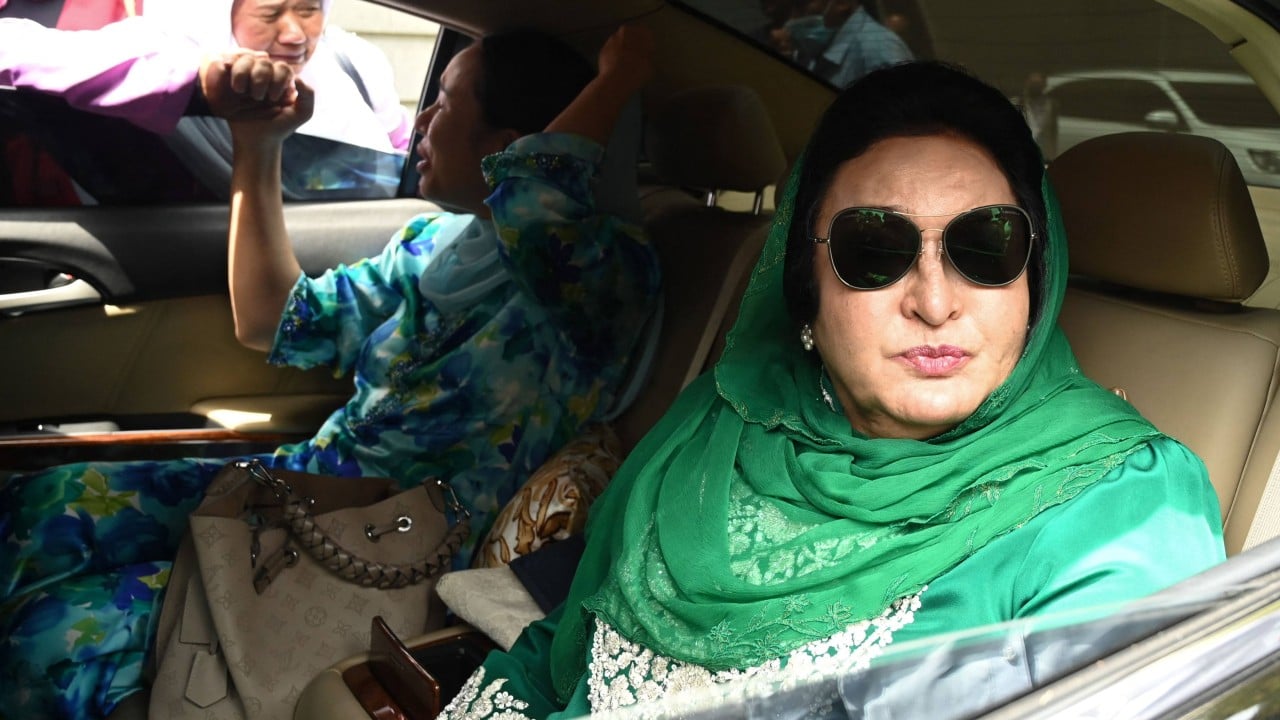
The boundary between actionable defamation and protected comedic expression is undergoing a severe stress test in the High Court of Kuala Lumpur. The RM10 million defamation lawsuit filed by Datin Seri Rosmah Mansor against veteran comedian Harith Iskander exposes a fundamental friction point in modern media law: the tension between a public figure’s reputational capital and the performance parameters of live comedy.
At its core, the dispute arises from a segment of Harith's "The Outspoken Comedy Tour," performed on January 17, at the Swiss-Garden Hotel in Melaka. The plaintiff alleges that the performance, which incorporated visual comparisons between her likeness and supernatural creatures from Malaysian folklore, crossed the line from social commentary into tortious defamation and body shaming.
To evaluate the strength of this litigation and understand its broader implications for public-interest satire, we must systematically deconstruct the legal elements of Malaysian defamation law, the mechanics of comedic defense, and the impact of third-party distribution channels.
The Legal Framework of Defamation in Public-Interest Satire
For any defamation action to succeed under Malaysian law, the plaintiff must establish three fundamental criteria. First, the statement must carry a defamatory meaning. Second, it must refer to the plaintiff. Third, it must be published to a third party. While the second and third criteria are readily met—given that Rosmah’s photograph was directly displayed to an audience—the entire legal battle hinges on the first criterion: whether the performance conveyed an actionable defamatory meaning, or if it constitutes non-actionable parody.
In assessing defamatory meaning, courts apply the standard of the "reasonable, ordinary right-thinking member of society." The legal test does not evaluate how a highly sensitive individual perceives the words, but rather how an average person, using general knowledge and common sense, would interpret them in their native context.
The Anatomy of the Alleged Defamatory Statement
The plaintiff's statement of claim, filed on June 9 through Messrs Hafarizam & Aisha Mubarak, points to two specific elements within the performance:
- The Folklore Comparison: The presentation of local mythical entities—specifically the toyol (a goblin-like creature), pontianak (a female vampire ghost), and pocong (a shrouded spirit)—directly preceding the projection of the plaintiff's image.
- The Rearview Mirror Narrative: A spoken bit suggesting that a driver looking into a rearview mirror on a dark road would see something terrifying, followed immediately by the display of the plaintiff's photograph.
The plaintiff argues these elements construct a direct implication: that she is frightening, repulsive, inhuman, and an object deserving of public ridicule. By categorizing the joke as "body shaming," the plaintiff's legal team is attempting to establish that the routine went beyond political satire and targeted her intrinsic physical appearance, thereby causing severe emotional distress and actionable damage to her public standing.
The Defense Mechanics: Context, Consent, and the Stand-Up Environment
In his statement of defense filed on July 9, Harith Iskander’s legal team, led by Sangeet Kaur Deo, structured their opposition around three key pillars: contextual integrity, the lack of publication authority, and explicit venue disclaimers.
+-----------------------------------------------------------------------------------+
|                           THE COMEDIC DEFENSE MATRIX                              |
+-----------------------------------------------------------------------------------+
|  1. CONTEXTUAL INTEGRITY          2. UNAUTHORIZED PUBLICATION    3. VENUE DISCLAIMERS |
|  - 5-second slide in a 90m show   - Filmed without consent       - Bilateral rules    |
|  - Satirical exaggeration         - Uploaded by third party      - Audience consent   |
+-----------------------------------------------------------------------------------+
1. The Contextual Integrity Defense
The defense argues that a single joke cannot be analyzed in isolation. Under Malaysian jurisprudence, the sting of an allegedly defamatory statement must be evaluated within the context of the entire publication—in this case, a 90-minute stand-up comedy special.
Comedic exaggeration is a universally recognized rhetorical device. In stand-up comedy, the audience enters a cognitive space where literal truth is suspended in favor of hyperbole. By demonstrating that the image of the plaintiff was displayed momentarily (reportedly for less than five seconds) within an extensive, multi-topic routine, the defense aims to show that a reasonable audience member would understand the comparison as a caricature of public perception rather than a statement of objective, physical, or moral fact.
2. The Bottleneck of Unauthorized Distribution
A critical vulnerability in the plaintiff's case is the medium through which the wider public consumed the material. The lawsuit references two TikTok videos uploaded by an unrelated user under the handle @mayychan0303, which garnered approximately 219,700 and 12,500 views respectively.
Under the law of defamation, the initiator of a statement is generally held liable for its republication if that republication was the natural and probable consequence of the original act. However, Harith's defense asserts that:
- The performance was a private, ticketed event.
- Strict house rules prohibiting audio and video recording were announced in both English and Bahasa Malaysia prior to the show.
- The recordings were captured and uploaded without his knowledge, consent, or authorization.
By establishing that the defendant took active measures to prevent recording, the defense seeks to sever the causal chain of liability for the viral distribution. If the court accepts that the viral spread was a result of an illicit recording by a third party, the scale of damages attributed directly to Harith's actions could be significantly mitigated.
Assessing the Reputation of Public Figures under Legal Scrutiny
The court must also weigh the pre-existing reputation of the plaintiff. In defamation proceedings, the court evaluates the extent to which a plaintiff's reputation could actually be damaged by the statements in question.
Datin Seri Rosmah Mansor is a highly prominent public figure whose legacy is inextricably linked with the political history of Malaysia. As the wife of former Prime Minister Najib Razak, her public profile has been subject to intense media coverage and legal scrutiny for over a decade. While she was acquitted of several tax evasion charges in late 2024, she remains on bail pending an appeal of her 2022 corruption conviction related to a solar hybrid energy project.
The defense will likely argue that public figures of this stature must tolerate a higher threshold of public scrutiny, satire, and even harsh criticism than private citizens. In democratic societies, satire serves as an informal mechanism of public accountability. If the law penalizes comedians for mocking the public perception of controversial figures, it risks creating a chilling effect on the entire creative industry.
Strategic Playbook: The Impending Legal Ruling
As the High Court prepares for case management on July 31, the outcome will likely depend on how the judge defines the limits of comedic license in Malaysia.
If the court rules in favor of the plaintiff, it will set a highly restrictive precedent. It would signal that visual parody targeting a public figure's appearance or public persona can be legally classified as defamation, irrespective of the performance context. This would force live performers to sanitize their routines, fundamentally altering the landscape of Malaysian political commentary.
Conversely, a ruling for the defense will reinforce the protective boundaries of creative performance. It will recognize that stand-up comedy venues operate under an implicit contract between the performer and the audience, where exaggerated humor is understood as non-literal commentary. To secure this outcome, the defense must successfully demonstrate that the reasonable, right-thinking audience member at a show titled "The Outspoken Comedy Tour" would leave the venue understanding the routine as a fleeting piece of political caricature, not an assertion of fact.