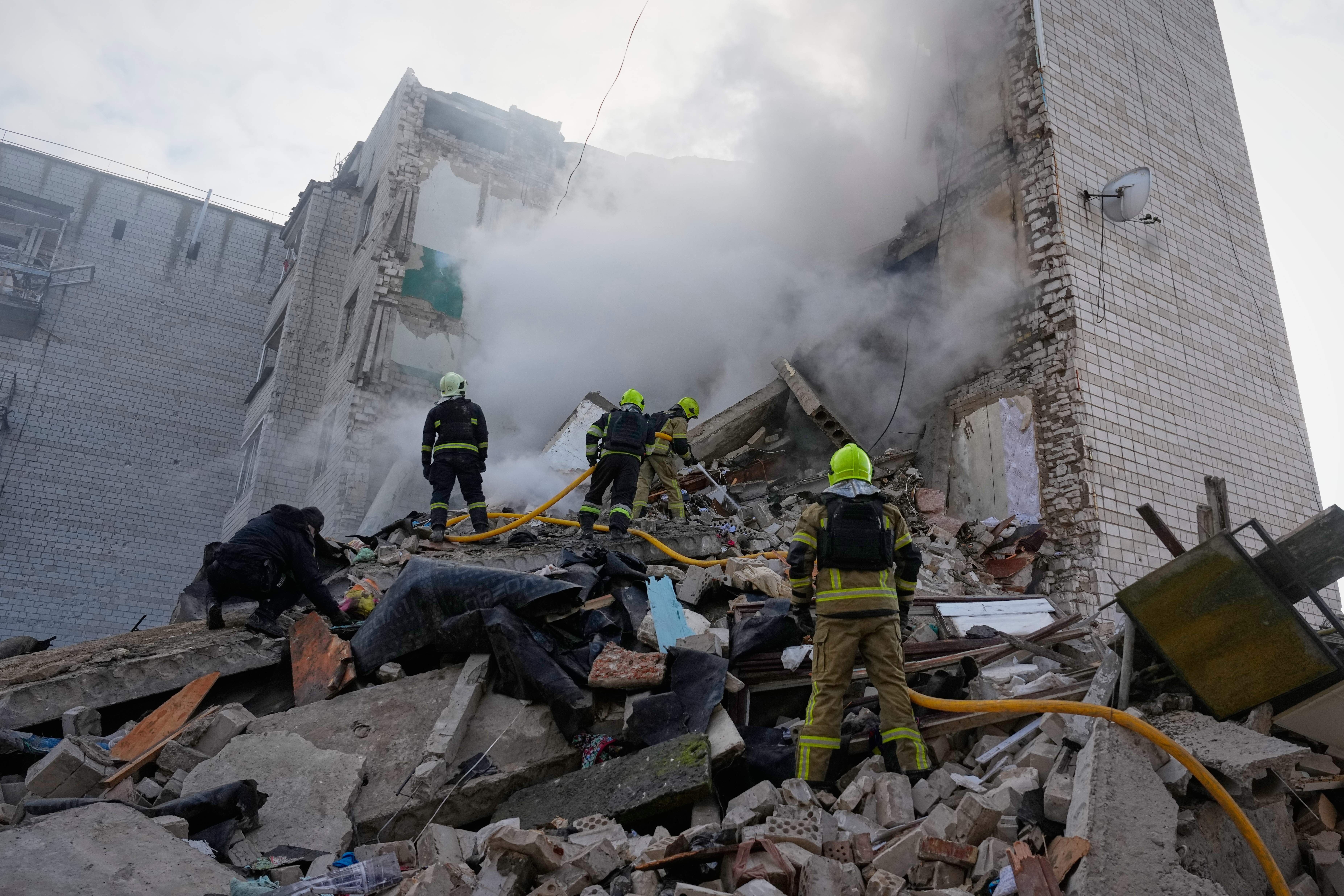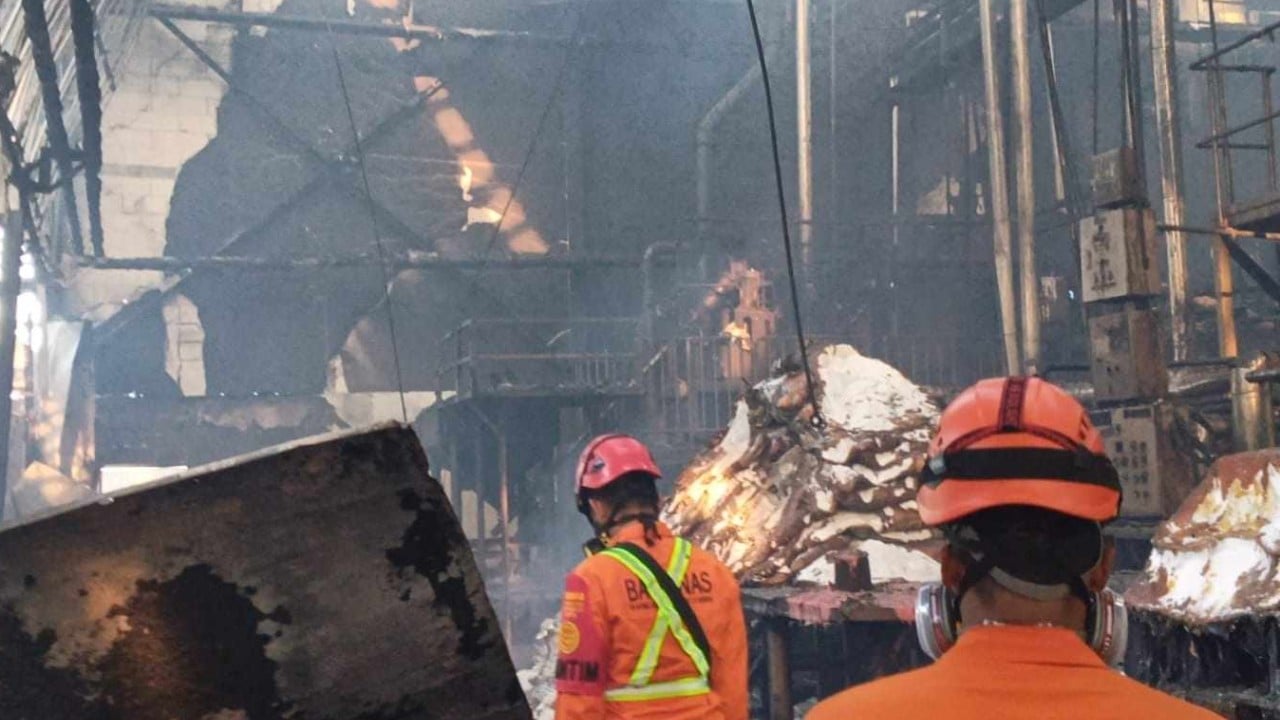
The recovery of seven body bags alongside fifty unaccounted personnel following an Indonesian factory fire exposes a severe structural failure in industrial risk management, rescue logistics, and post-incident accounting. Standard news dispatches treat these figures as static tragedy metrics. Operational reality dictates otherwise. A seven-to-fifty ratio between recovered remains and missing individuals signals an active, unresolved emergency defined by extreme thermal degradation, structural instability, and fragmented workforce manifest systems.
To understand the mechanics of this event, one must deconstruct the causal chain from initial ignition through search-and-recovery bottlenecks. Industrial fires in developing manufacturing hubs rarely stem from a single point of failure. They represent the convergence of combustible inventory density, compromised egress routes, and delayed suppression response. When fifty individuals vanish inside a commercial structure, the primary analytical focus shifts from fire causation to the physics of survivability and the mathematics of urban search and rescue.
The Three Failure Vectors of High-Density Manufacturing Fires
Industrial fatalities at this scale require the simultaneous breakdown of three distinct protective layers. When any single layer holds, casualties remain localized. When all three collapse, entrapment becomes inevitable.
Fuel Load and Compartmentalization Breakdown
Manufacturing facilities processing textiles, plastics, chemicals, or assembled electronics house dense concentrations of hydrocarbon-based materials. Without functional fire-rated partitioning walls or automatic fire dampers, a localized ignition transitions to flashover within minutes. Flashover occurs when thermal radiation heats all combustible surfaces in an enclosed space to their autoignition temperature simultaneously. Once a production floor reaches flashover, survivability drops to zero for anyone still inside, and structural steel begins losing load-bearing capacity.Egress Capacity vs. Occupancy Load
Building codes mandate specific exit widths based on maximum occupancy. In practice, manufacturing floors frequently violate these ratios through unrecorded shift overlaps, locked security doors meant to prevent inventory shrinkage, or pallets obstructing access corridors. Under panic conditions, human movement follows fluid dynamics principles. When an exit bottleneck narrows below the critical flow threshold, crowd crush occurs long before smoke inhalation or thermal injury claims victims.Detection and Suppression Latency
Automatic sprinkler systems and addressable smoke detectors exist to arrest fire growth during its incipient phase. In facilities where maintenance budgets are deferred, isolated sprinkler valves, disabled alarms, or inadequate municipal water pressure neutralize these systems. Relying on manual notification delays fire service dispatch by critical minutes. Every sixty seconds of unmitigated industrial fire growth exponentially increases the thermal energy output, forcing responding crews into defensive exterior operations rather than interior rescue.
The Accounting Gap in Post-Incident Casualty Tracking
The disparity between fifty missing persons and seven recovered body bags illustrates a fundamental friction in disaster response: the gap between administrative headcounts and physical recovery.
Initial missing-person tallies derive from three imperfect data streams:
- Shift Rosters and Biometric Logs: Electronic punch clocks often burn alongside the facility's server room. Paper manifests rely on floor supervisors who may themselves be casualties.
- Subcontractor Opacity: Tier-two and tier-three factories routinely utilize day laborers, seasonal contractors, or informal logistics personnel excluded from primary payroll databases.
- Family and Community Reporting: Relatives reporting unaccounted workers introduce duplicate entries, phonetic spelling variations, and unverified presence claims.
Simultaneously, the recovery figure of seven body bags does not equal seven identified victims. In high-heat industrial fires fueled by synthetic polymers or industrial solvents, temperatures routinely exceed 1,000 degrees Celsius. At these temperatures, soft tissue is consumed and skeletal remains fragment. Emergency responders collect commingled remains within single containment units, meaning seven body bags may represent fewer than seven individuals or, conversely, the fragmented remains of a larger group. Forensic odontologists and DNA analysts must process these recoveries before authorities can reconcile the missing list against confirmed fatalities.
Operational Bottlenecks in Urban Search and Rescue
Deploying search teams into a burned industrial shell involves strict adherence to structural triage. Commanders cannot send personnel into an active collapse zone simply because fifty people remain unaccounted for.
The sequence of post-fire recovery follows a rigid operational hierarchy:
Thermal Stabilization and Off-Gassing Control
Even after visible flames are extinguished, deep-seated smoldering persists beneath collapsed roofing and compressed raw materials. Pouring water onto superheated metal and burning plastics generates toxic plumes containing hydrogen cyanide, carbon monoxide, and phosgene. Teams must establish continuous atmospheric monitoring and localized cooling before entry.Structural Shoring and Heavy Debris Removal
Heat-warped steel trusses and spalled concrete columns lose up to fifty percent of their compressive strength. Heavy machinery—excavators, cranes, and hydraulic cutters—must systematically peel back the collapsed roof structure from the perimeter inward. This deliberate pace frustrates public expectations for rapid rescue, yet rushing the extraction risks secondary collapses that kill rescue personnel.Grid Search and Forensic Documentation
Once a sector is deemed structurally stable, canine units and grid teams sweep the floor plan. Every recovery requires photographic documentation, GPS or grid-coordinate mapping, and chain-of-custody logging. Mapping the exact location of remains helps investigators reconstruct crowd movement patterns, identifying which exits were used, which were blocked, and where workers attempted to shelter.
The Economic Mechanics of Regulatory Arbitrage
Recurring industrial fires across Southeast Asian manufacturing corridors are not random accidents. They are the predictable output of regulatory arbitrage and fragmented supply chain accountability.
Global brands and domestic distributors pressure contract manufacturers to compress unit costs and accelerate turnaround times. Factory operators operating on thin single-digit margins face a capital allocation dilemma: invest in non-revenue-generating compliance infrastructure—such as UL-listed fire suppression systems, fire-resistant cladding, and third-party safety audits—or direct capital toward production machinery and raw materials.
Enforcement mechanisms frequently fail to penalize this trade-off. Municipal fire marshals and labor inspectors often lack the staffing ratios required to conduct unannounced inspections across sprawling industrial zones. When inspections do occur, administrative fines are typically priced below the capital cost of full code remediation. Rational economic actors operating without strict liability enforcement treat safety compliance as an optional variable cost rather than a fixed operational prerequisite.
Limitations of Standard Post-Disaster Reforms
Following high-casualty factory fires, government agencies and industry associations routinely announce sweeping inspection sweeps and regulatory overhauls. Historical precedent across global manufacturing hubs demonstrates that these reactive measures fail to prevent recurrence due to three structural limitations:
- Paper Compliance vs. Operational Reality: Factories pass scheduled audits by temporarily unlocking fire doors, staging fire extinguishers, and clearing aisles. Within forty-eight hours of inspector departure, operational habits revert to baseline to maximize floor space and inventory security.
- Jurisdictional Fragmentation: Industrial zoning permits, building occupancy certificates, environmental clearances, and labor safety standards are administered by separate ministries. A facility can legally operate with valid business licenses while lacking an active fire safety certificate.
- Liability Insulation: Parent companies and international buyers shield themselves from legal and financial liability through multi-tiered subcontracting agreements. When a tier-two supplier burns down, the commercial buyer simply shifts purchase orders to an adjacent facility, leaving the underlying economic incentives untouched.
Strategic Risk Mitigation for Supply Chain Operators
Organizations sourcing from or operating within high-risk manufacturing regions cannot rely on municipal regulatory enforcement or annual self-reported audits to prevent catastrophic loss. Eliminating mass-casualty fire risk requires shifting from compliance checklists to continuous engineering and financial controls.
First, supply chain procurement teams must mandate unannounced, third-party structural and fire-engineering audits conducted by accredited fire protection engineers rather than general social compliance auditors. These assessments must verify physical water supply pressure, test sprinkler riser valves under flow conditions, and audit fire-wall integrity against original architectural blueprints.
Second, facility operators must implement cloud-based biometric access control synchronized in real time with off-site servers. Knowing the exact headcount and physical zone location of every employee and contractor inside a facility at any given second eliminates the post-incident accounting gap and directs rescue teams to high-probability entrapment zones immediately upon arrival.
Finally, commercial contracts must tie payment terms and order volume directly to automated safety telemetry. Requiring facilities to stream live data from fire alarm control panels, sprinkler pressure switches, and emergency exit door sensors to a centralized risk-monitoring platform converts fire safety from an annual inspection event into a continuous, verifiable condition of doing business.