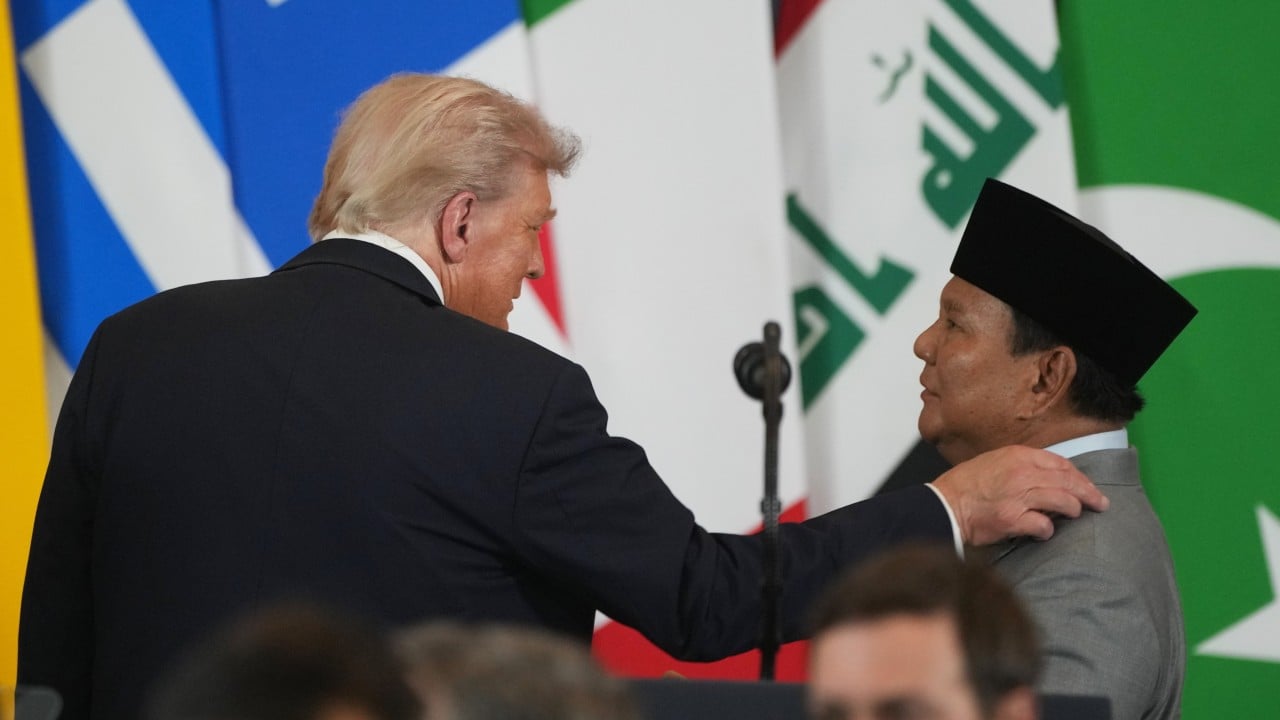
Western commentary frequently misinterprets personal chemistry between global leaders as structural geopolitical realignments. A prime example is the characterization of Indonesian President Prabowo Subianto’s interactions with US President Donald Trump—specifically their February 2026 engagement at the Board of Peace forum in Washington and an earlier hot mic encounter in late 2025—as a sign that Jakarta is abandoning its deep economic ties with Beijing. This analytical framework is fundamentally flawed. It mistakes tactical diplomatic posturing for a structural shift in Indonesia's long-standing foreign policy framework. To accurately assess whether China is losing its primary partner in Southeast Asia, analysts must look past the superficial optics of diplomatic summits and evaluate the hard economic, military, and domestic factors that drive Indonesian foreign policy.
Indonesia’s foreign policy operates under a doctrine known as bebas dan aktif (independent and active). This framework is not a passive stance of neutrality; rather, it is a calculated strategy designed to maximize national sovereignty and economic growth by avoiding formal alliances with major world powers. Under the Prabowo administration, this doctrine has evolved into a hyper-rational transaction system. The state leverages competition between the United States and China to secure capital injection, infrastructure development, and defense assets. The strategic reality is clear: Indonesia treats the US and China as distinct resource providers. It balances the utility of each power against the constraints they impose on its sovereign goals. Don't forget to check out our recent coverage on this related article.
The Dual Pivot Framework
To evaluate the stability of Indonesia's geopolitical positioning, its foreign policy can be broken down into two distinct, non-overlapping pillars: the Economic Capital Optimization function and the Sovereign Security Shield function.
The Economic Capital Optimization Function
China remains the primary source of capital for Indonesia’s ambitious domestic development programs. The Prabowo administration's domestic legitimacy relies heavily on achieving high economic growth and funding massive social initiatives, such as the Makan Bergizi Gratis (free nutritious meals) program. This initiative alone presents a massive fiscal challenge, requiring an estimated annual budget that strains domestic revenues. Beijing has directly integrated itself into this domestic priority, signing 10 billion dollars in financing agreements during Prabowo’s initial state visit to Beijing. These funds are explicitly tied to the free-meals program, green energy infrastructure, and biotechnology sectors. To read more about the background here, BBC News offers an informative breakdown.
China's position as Indonesia's largest trading partner—with bilateral trade hitting 135 billion dollars—and a leading source of foreign direct investment (FDI) creating infrastructure projects like the Jakarta-Bandung high-speed rail, makes an economic break impossible. Prabowo's public admiration for Deng Xiaoping's model of state-led economic growth underscores a deep alignment with Chinese capital structures. The state simply cannot replace Chinese infrastructure financing with Western alternatives, which carry high regulatory hurdles, environmental, social, and governance (ESG) compliance costs, and lengthy approval timelines.
The Sovereign Security Shield Function
Conversely, Indonesia looks to the United States and its regional allies for security cooperation and defense modernization. Jakarta does not view Washington as an economic savior, but rather as a critical counterweight to Beijing’s maritime assertiveness in the South China Sea.
Despite signing a controversial joint statement with Beijing regarding joint development in "overlapping claims"—a move that caused concern among domestic defense officials—Indonesia maintains that it does not recognize China's sweeping maritime claims. To balance its position, Jakarta has pursued a series of defense upgrades with Western partners:
- The implementation of a bilateral trade and defense framework with the United States, aimed at securing tariff reductions and security guarantees.
- The signing of the Australia-Indonesia Treaty of Common Security, upgrading defense cooperation with a key Western ally in the southern hemisphere.
- Active formalization of its application to join the Organisation for Economic Co-operation and Development (OECD), aligning its regulatory and financial institutions with Western standards.
The state’s participation in the US-initiated Board of Peace forum in Washington, where Trump praised Prabowo's leadership, serves as a clear signal to Beijing: while Indonesia's economic development relies on Chinese capital, its territorial sovereignty is backed by Western defense relationships.
The Operational Limits of Trilateral Balance
The primary risk of this strategy is the potential for economic or security dependencies to cross critical thresholds, triggering retaliatory actions from either Washington or Beijing. This friction is highly apparent in two main areas:
[Chinese Economic Input: $135B Trade / $8.1B FDI] --> [INDONESIA] <-- [US Security Input: Defense Accords / Board of Peace]
                                                           |
                                        [Strategic Output: Non-Aligned Equilibrium]
Critical Mineral Asymmetry and the Industrial Bottleneck
Indonesia holds the world’s largest reserves of nickel, a critical component for the global electric vehicle (EV) supply chain. Under its industrial downstreaming policy, Jakarta banned the export of raw nickel ore, forcing foreign firms to build domestic smelting facilities. Chinese companies moved quickly, investing billions into Indonesian processing plants and gaining dominant control over the country's nickel output.
This high concentration of Chinese capital creates a major economic obstacle. Under the United States Inflation Reduction Act (IRA), electric vehicles utilizing critical minerals processed by a "Foreign Entity of Concern" (which includes Chinese-owned firms) do not qualify for lucrative US consumer tax credits. Consequently, Indonesia's nickel sector faces a structural barrier to entering the American market unless it can attract non-Chinese investment to build parallel, IRA-compliant supply chains.
The Prabowo administration’s signing of a major trade pact with Washington aims to address this bottleneck by reducing non-tariff barriers. However, the domestic structural reality remains: because Chinese firms own the core smelting infrastructure, Indonesia cannot quickly pivot its mineral exports to the West without risking a sharp drop in industrial output and capital flight from its largest investors.
Institutional Multi-Alignment and Tariff Exposure
Indonesia's formal accession to BRICS and increased engagement with the Shanghai Cooperation Organisation (SCO) Plus format reflect a clear desire to deepen ties with the Global South. However, this multi-lateral expansion carries significant economic risks. The US administration has repeatedly threatened to impose heavy tariffs, potentially up to 100%, on countries that actively seek to bypass or replace the US dollar in international trade.
Because Indonesia uses the US dollar for a significant portion of its non-China trade, any moves within BRICS toward alternative payment systems could trigger severe financial friction with Washington. The state's strategy depends on keeping these multi-lateral memberships strictly focused on economic cooperation, avoiding any steps toward anti-Western political alignment that could provoke US trade penalties.
Strategic Outlook
The idea that China is "losing" Indonesia to a "Trump moment" misinterprets the fundamental drivers of Southeast Asian diplomacy. Indonesia is not shifting toward either superpower; instead, it is optimizing a dual-track strategy that extracts economic capital from Beijing while leveraging security partnerships with Washington. This approach is highly pragmatic and comes with clear operational limits:
- Capital Diversification: To reduce its vulnerability to US trade penalties and clean energy restrictions, Indonesia must actively seek non-Chinese capital for its high-value infrastructure and mineral-processing sectors. Securing investments from sovereign wealth funds in the Middle East or G7 nations is essential to balancing Chinese dominance in its domestic economy.
- Sovereignty Safeguards: Jakarta must maintain clear and firm boundaries regarding its exclusive economic zone (EEZ) in the Natuna Sea. Any joint development projects with Beijing must be strictly commercial and structured to avoid giving any legal weight to China's maritime claims.
- Institutional Hedging: While expanding its role in Global South forums like BRICS, Indonesia must move quickly to finalize its OECD membership. This twin-track institutional approach ensures the country retains broad access to both Western markets and emerging economies.
Indonesia's foreign policy will continue to be driven by hard national interest rather than personal diplomatic relationships. As long as Jakarta successfully balances its economic needs against its security requirements, it will remain an independent player in the region—acting not as a pawn for either major power, but as a neutral hub for global trade and diplomacy.