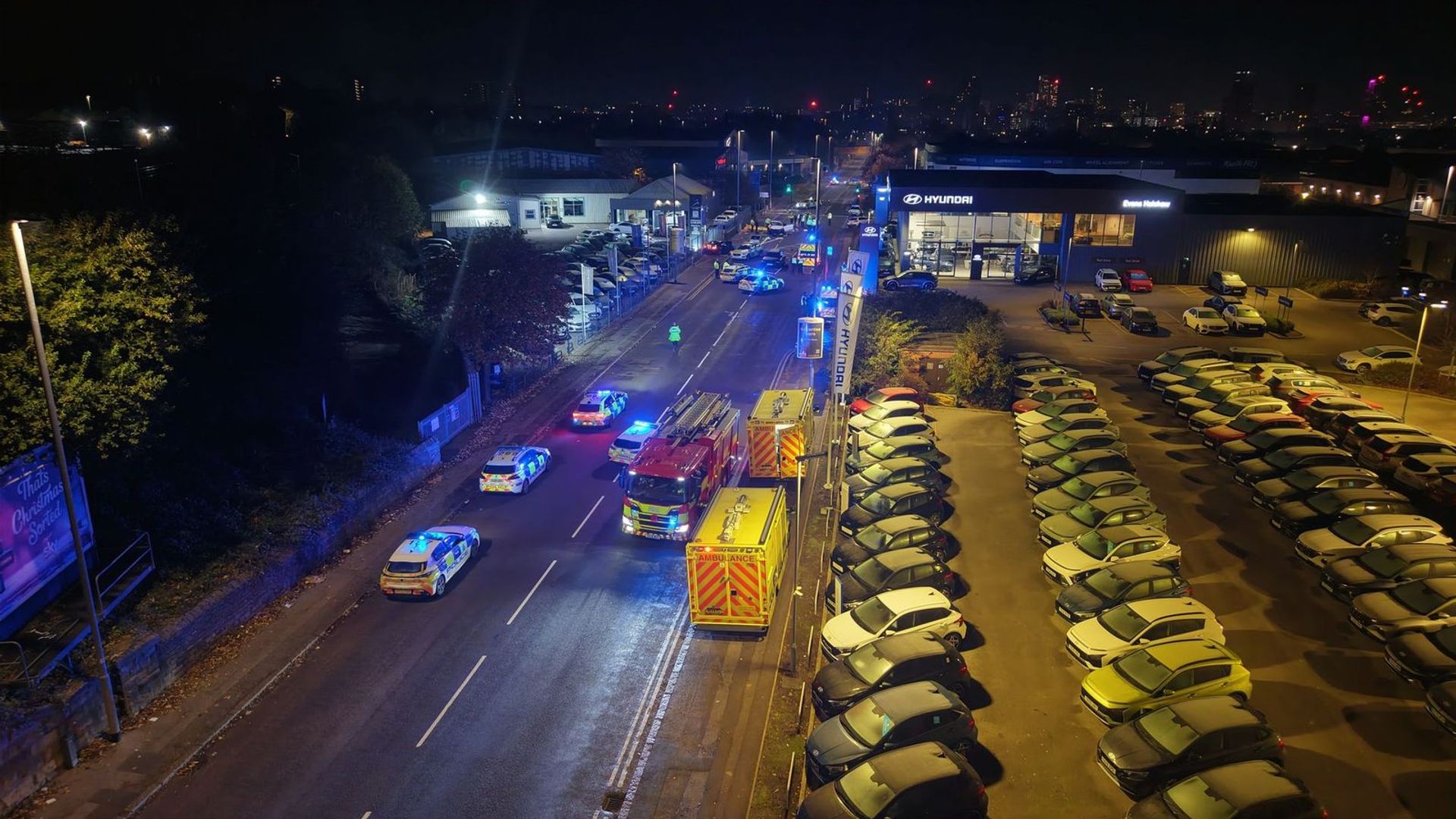
Fatal collisions during law enforcement pursuits expose a sharp collision between split-second street dynamics and slow-moving legal accountability. When a chase ends in two deaths and criminal charges against a driver, standard news reporting usually stops at the sequence of events: a traffic stop refused, a pursuit initiated, a crash occurred, and charges filed. That surface-level narrative leaves out the structural mechanics that turn a fleeing motorist into a criminal defendant facing severe felony exposure, as well as the operational trade-offs that govern every pursuit before impact. This analysis maps the causal chain behind fatal pursuit crashes, separates established legal and physical mechanisms from case-specific unknowns, and evaluates how pursuit policies, driver behavior, and charging decisions interact.
To understand why two fatalities during a pursuit produce criminal charges without inventing unverified facts about a single unlinked incident, the subject must be broken down into four interlocking systems: kinetic escalation, causation and culpability, pursuit governance, and evidentiary reconstruction. No single headline captures how those layers reinforce one another. A driver's decision to flee sets off a feedback loop where speed, traffic density, and reaction windows compress simultaneously, while prosecutors evaluate whether the fleeing driver's conduct crossed the statutory line from reckless evasion into homicide or manslaughter.
Kinetic Escalation and the Physics of High-Speed Flight
High-speed flight alters the physical environment faster than human perception can adapt. Standard traffic assumes predictable speeds, signaled intentions, and braking distances proportional to ordinary roadway flow. A fleeing driver breaks those assumptions immediately by accelerating past surrounding traffic, running controls, and trading margin for distance.
Kinetic energy rises with the square of velocity. Doubling speed quadruples kinetic energy, meaning braking distance and crash severity expand non-linearly long before a speedometer reaches extreme numbers. When a pursuing officer matches or approaches that pace, visual scanning narrows, peripheral hazards shrink, and closing speeds between vehicles spike at intersections or lane shifts.
Compression of Reaction and Stopping Windows
Human perception-reaction time under acute stress does not improve; it often degrades due to tunnel vision and autonomic arousal. At highway or arterial speeds, a one-second delay covers dozens of feet before brakes even engage. Once a vehicle enters an intersection against a signal or crosses into opposing lanes, evasive options for innocent motorists and pursuing units drop sharply.
The physical mechanism behind multi-fatality pursuit crashes usually involves high closing velocity combined with lateral or angled impact. Side-impact and head-on collisions transfer energy directly into occupant compartments with minimal crumple buffer compared with controlled rear-end deceleration. Two deaths in a single crash commonly reflect either two occupants in a struck vehicle, occupants across more than one affected car, or severe structural intrusion where survival space is eliminated.
Why Standard Headlines Flatten Cause and Effect
Conventional reporting often treats a pursuit crash as a linear chain: police chased, driver crashed, two died. In practice, cause and effect operate through coupling and feedback. The fleeing driver initiates the flight and controls the throttle, steering, and decision to stop or continue. Pursuit presence, road geometry, traffic volume, and surface conditions shape the environment in which those choices play out.
Separating known general mechanisms from case-specific facts prevents overreach. In any individual case where only a headline is available, the exact speed at impact, whether the deceased were innocent bystanders or occupants of the fleeing vehicle, the exact traffic signal states, and the specific charging statutes remain unverified facts until charging documents or official reports are examined. What is well established is how courts, crash investigators, and agencies analyze those variables once evidence is gathered.
Legal Causation and Why Criminal Charges Follow Fatal Pursuits
Charging a driver after deaths occur in a police pursuit hinges on proximate cause and mens rea (the mental state required by statute). Defense arguments in pursuit cases frequently try to sever the causal link by arguing that police initiation or continuation of the chase caused the dangerous condition. Prosecutors counter by focusing on the voluntary act of fleeing and driving with extreme disregard for human life.
Under settled criminal law principles across most jurisdictions, a fleeing driver generally remains legally responsible for foreseeable harms flowing from unlawful flight, even when police are pursuing. The law treats a suspect's choice to speed away and endanger others as an active, ongoing danger rather than a passive reaction. Only when police conduct becomes so extreme, unforeseeable, or superseding that it breaks the chain of legal causation does a proximate-cause challenge gain traction.
Charging Tiers and Mental States
When two people die during or immediately after a pursuit, prosecutors typically evaluate charges along a spectrum defined by culpability and statutory structure:
- Felony evasion or fleeing causing death: Many jurisdictions carry specific enhanced offenses when flight from a law enforcement officer results in serious bodily injury or death.
- Manslaughter or criminally negligent homicide: Often pursued when conduct reflects gross deviation from a reasonable standard of care, such as extreme speeding in populated areas or disregarding red lights.
- Second-degree or depraved-heart murder theories: Available in select jurisdictions where facts show extreme indifference to human life, though evidentiary thresholds are higher and outcomes vary by state law.
- Independent traffic and vehicle offenses: Charges such as reckless driving, driving with a suspended license, or driving under the influence may be filed alongside homicide counts depending on the underlying facts.
Two fatalities rather than one do not automatically change the mental state required for each count, but they directly affect charging structure and sentencing exposure. Prosecutors commonly file separate counts corresponding to each victim, multiplying potential statutory penalties and strengthening leverage during plea negotiations or trial presentation.
The Prosecutor's Evidentiary Hurdle
Filing charges is an initial prosecutorial step based on probable cause, not a final adjudication of guilt. To secure a conviction beyond a reasonable doubt, the state must prove both the actus reus (the unlawful driving and flight) and the required level of recklessness or indifference, while overcoming reasonable doubt regarding alternative crash triggers such as mechanical failure, sudden medical emergency, or third-party actions.
Pursuit Governance and the Agency Cost Function
Every police pursuit sits inside an institutional trade-off that police executives and policy analysts treat as an operational cost function. Agencies weigh the immediate public-safety risk of the chase against the long-term risk of letting a potentially dangerous suspect escape unapprehended.
Restrictive pursuit policies—often called tight or "violent-felony-only" policies—limit chases to severe offenses where the threat of leaving the suspect at large is judged greater than the danger of high-speed pursuit. Permissive policies allow pursuits for a broader set of traffic or misdemeanor offenses, aiming to deter flight and enforce compliance immediately.
Asymmetric Risk and Policy Friction
The core tension in pursuit governance is asymmetric visibility. When an agency terminates a pursuit and a suspect later commits another crime, the missed apprehension can draw criticism. When an agency continues a pursuit and innocent bystanders die in a collision, the tragedy is immediate, visible, and severe.
Policy rules also face street-level friction. An officer making a decision in seconds cannot always verify whether a driver fleeing a routine stop is wanted for a violent crime, carrying contraband, driving impaired, or simply panicking over a suspended license or warrant. Information lag between dispatch, license plate checks, and visual observation creates real uncertainty at the moment a pursuit begins.
Limits of Policy Controls
Even strict pursuit policies have practical boundaries. A driver who refuses to pull over may still accelerate away at dangerous speeds even after officers disengage or deactivate lights and sirens. Conversely, when officers remain engaged, their presence can increase perceived urgency for a fleeing driver while providing real-time routing and hazard warnings to other units. Neither a blanket ban nor unrestricted pursuit eliminates crashes; each shifts where risk concentrates.
Reconstruction, Telemetry, and How Facts Are Established
After a fatal pursuit crash, investigators rebuild the event across physical, electronic, and documentary layers. Relying on a single witness account is rarely enough because stress, distance, and speed distort human time perception.
Crash reconstruction combines scene evidence (tire marks, gouges, debris fields, final rest positions, traffic signal timing) with vehicle and agency data. Modern vehicles often store event data recorder (EDR) metrics—such as speed, throttle position, braking, and seatbelt status in the seconds before impact—while police vehicles may log GPS telemetry, dash-camera video, body-worn camera audio, and radio dispatch timestamps.
Separating Probable Cause From Trial Proof
Early news coverage often appears right around arrest or initial court appearance, when probable cause affidavits summarize preliminary findings. Those early summaries are useful for identifying the allegations and basic posture of the case, but they are snapshots rather than complete records.
Subsequent stages—grand jury review, discovery of video and telemetry, independent accident reconstruction, and motions practice—frequently refine or contest early assumptions. Understanding that distinction keeps analysis grounded: what is charged reflects the prosecution's initial legal theory supported by probable cause, whereas what is proven depends on admissible evidence tested in court.
Strategic Actions for Agencies, Policymakers, and Analysts
For law enforcement leaders and municipal policymakers examining fatal pursuit collisions, the highest-leverage response is tightening objective initiation and continuation thresholds tied to real-time risk indicators. Policies should require continuous reassessment of road conditions, traffic density, speeds, and offense severity—treating continuation as a distinct decision rather than an automatic default once a pursuit starts.
Analysts and observers covering or evaluating these cases should audit every claim against primary evidentiary tiers before drawing conclusions. Separate confirmed procedural milestones (arrests, formal charges, court dates) from contested causal narratives, verify whether fatalities involved bystanders or occupants, and track both the fleeing driver's criminal proceedings and any separate administrative review of agency pursuit compliance. Treating pursuit crashes as systems problems rather than isolated moral dramas yields sharper insight into why two lives were lost and how the legal system responds.