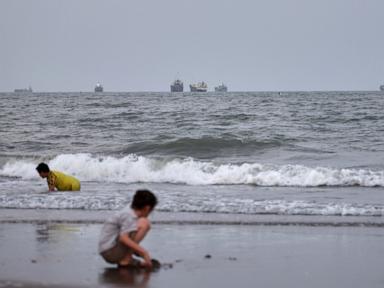
Strategic miscalculation often reveals itself not in the initial tactical success of an offensive campaign, but in the widening chasm between operational objectives and structural endurance. Six months after the initiation of military operations against Iran, regional intermediaries, energy markets, and sovereign states find themselves trapped in an escalating feedback loop of maritime attrition and diplomatic paralysis. The initial calculus projected a conflict lasting four to five weeks; instead, it has calcified into a protracted war of economic friction centered on maritime geography. Understanding the trajectory of this conflict requires deconstructing the structural mechanisms governing energy chokepoints, diplomatic mediation failures, and macroeconomic feedback loops.
The Maritime Chokepoint Cost Function
The primary economic variable dictating the duration and pain threshold of the conflict is the closure of the Strait of Hormuz. Prior to the outbreak of hostilities, approximately 15 million barrels of crude oil and refined products transited the narrow waterway daily, representing roughly twenty percent of global petroleum consumption.
When military operations commenced, Iran leveraged its geographic placement along the northern coast of the strait to establish an anti-access and area-denial posture. Although naval forces have successfully degraded conventional military infrastructure and cleared subsurface mines from international shipping lanes, the persistence of asymmetric threats—including drone strikes, shore-launched missiles, and fast-attack craft—maintains a high risk premium on maritime transit.
- Throughput Collapse: Actual oil and gas transit volumes remain heavily depressed compared to pre-war baselines. While U.S. Central Command asserts that international lanes are open and up to 9 million barrels per day move intermittently, independent commodity analysts and ship-tracking agencies estimate functional throughput between 2 and 6 million barrels per day.
- Insurance and Freight Multipliers: Marine underwriters price transit risk through the Persian Gulf using wartime hull and machinery surge rates. This structurally elevates global energy costs, feeding inflation cycles across industrialized economies dependent on Middle Eastern hydrocarbons.
- Agricultural Disruption: The constraint on petrochemical and fertilizer shipping through the strait creates secondary agricultural supply shocks, expanding the conflict's economic footprint far beyond petroleum markets.
The Mechanics of Diplomatic Failure
Asymmetric conflicts of this magnitude typically generate multiple overlapping mediation efforts. In this theater, secondary powers such as Qatar and Pakistan have attempted to engineer off-ramps by reviving frameworks like the defunct June memorandum of understanding designed to reopen the Strait of Hormuz. These diplomatic vectors, however, consistently founder due to structural misalignments between political messaging and operational reality.
Mediation channels face three distinct structural roadblocks:
- Asymmetric Concession Demands: Tehran demands the lifting of sweeping economic sanctions and non-recognition of newly formed maritime security coalitions, such as the U.S.-led alignment with Bahrain, which Iranian officials characterize as economically negligible yet politically provocative.
- Divergent Timelines: External political pressures, including upcoming midterms in the United States and the erosion of congressional support for prolonged commitments, contrast sharply with executive statements claiming absolute tactical victory without fixed termination dates.
- Intermediary Friction: Regional states attempting to broker dialogue must balance their economic integration with Western financial systems against their geographic vulnerability to retaliatory Iranian strikes. When sovereign mediation lacks enforcement mechanisms, negotiations devolve into cyclical photo-ops rather than binding de-escalation agreements.
Macroeconomic Feedback Loops and Domestic Political Vulnerability
Prolonged military campaigns generate domestic political costs that scale non-linearly over time. When an administration's initial electoral mandate rests on avoiding foreign entanglements, an open-ended naval conflict in the Persian Gulf strains legislative coalitions. Polling data from mid-2026 indicates that approximately two-thirds of the American electorate view the conflict as not worth fighting, reflecting broad bipartisan and independent skepticism.
This domestic friction alters legislative behavior. Lawmakers who initially backed executive military authorization pivot toward defensive oversight as fuel prices remain elevated and agricultural input costs squeeze domestic constituencies. Consequently, the political cost function shifts: the administration faces greater internal pressure from legislative majorities defending narrow electoral margins than from the external adversary across the Gulf.
Strategic Execution for Regional Stabilization
De-escalating the current theater requires abandoning ineffective frameworks of total victory and replacing them with functional, phased containment protocols.
- Decouple Maritime Freedom from Comprehensive Settlements: Negotiators must isolate the reopening of the Strait of Hormuz from broader geopolitical disputes regarding regional proxy networks and nuclear capabilities. Attempting to solve all regional flashpoints simultaneously ensures the failure of each individual initiative.
- Institutionalize Local Naval Escorts: Transition security guarantees in the Strait of Hormuz from unilateral blockades to multilateral commercial convoys backed by neutral regional navies acceptable to both Tehran and Western capitals, thereby lowering the perceived threat profile for independent shippers.
- Establish Verifiable Phased Sanctions Relief: Replace broad macroeconomic sanctions with dynamic, performance-based waivers tied directly to verified throughput increases in commercial shipping corridors.
The trajectory of the conflict will be determined by whether political leadership prioritizes protracted ideological signaling over the restoration of global commodity flows. Without structural adjustments to maritime security architecture, the region will remain locked in a perpetual cycle of targeted asset attrition and diplomatic stagnation.


