Epidemiological crises rarely spiral out of control due to pathogen biology alone. When a disease like Ebola crosses the threshold from a localized cluster to a compounding regional emergency, the failure points reside in operational throughput, supply chain friction, and institutional trust deficits. The passing of the 1,500-death milestone in the Democratic Republic of Congo signals a systemic breakdown in containment mechanics rather than an unprecedented viral mutation.
Understanding why transmission velocity outpaces intervention requires deconstructing the outbreak into three distinct operational vectors: detection latency, community compliance friction, and resource allocation bottlenecks. Each vector represents a failure of system architecture, exposing the gap between laboratory diagnostics and field-level execution.
The Cost Function of Detection Latency
Every hour an infected individual remains unisolated in a dense population center multiplies the secondary infection probability exponentially. Detection latency functions as the primary multiplier of epidemic scale.
When surveillance networks rely on passive reporting—waiting for symptomatic individuals to present themselves at a treatment center—the system operates blind. By the time diagnostic confirmation occurs, contact tracing must account for multiple generations of hidden transmission.
In resource-constrained environments, diagnostic bottlenecks compound this delay. Real-time reverse transcription polymerase chain reaction testing requires cold-chain logistics, stable power infrastructure, and specialized laboratory technicians. When samples must travel days over unpaved roads to reach centralized testing facilities, the feedback loop breaks. Clinicians are forced to make triage decisions based on clinical presentation alone, leading to misdiagnosed cases entering general wards or undetected community deaths occurring without safe burial protocols.
Community Compliance Friction and Institutional Resistance
Public health interventions fail when the cost of compliance for the individual exceeds the perceived benefit to the community. In regions with historical trauma, deep-seated distrust of central governance, and marginalized populations, external medical intervention is frequently interpreted through a lens of suspicion.
Safe and dignified burial protocols provide a clear illustration of this friction. Traditional funeral practices require physical proximity to the deceased, often involving washing the body. Epidemiologically, a corpse dead from viral hemorrhagic fever remains highly infectious, as viral load peaks at the time of death. When response teams enforce mandatory safe burials without cultural mediation or transparent community engagement, families respond by concealing the sick and burying bodies secretly at night.
This behavioral adaptation creates a shadow network of transmission that evades formal tracking. Surveillance systems measure only what they can see, meaning unrecorded home deaths artificially deflate official case fatality metrics while accelerating community spread. The intervention itself, executed without structural empathy or local agency, generates the exact counter-behavior it seeks to eliminate.
Resource Allocation Bottlenecks and Supply Chain Vulnerabilities
Containment operations operate on strict logistical timelines. A shortage of personal protective equipment, an interruption in vaccine supply chains, or a deficit in decontamination agents can paralyze an entire response zone within twenty-four hours.
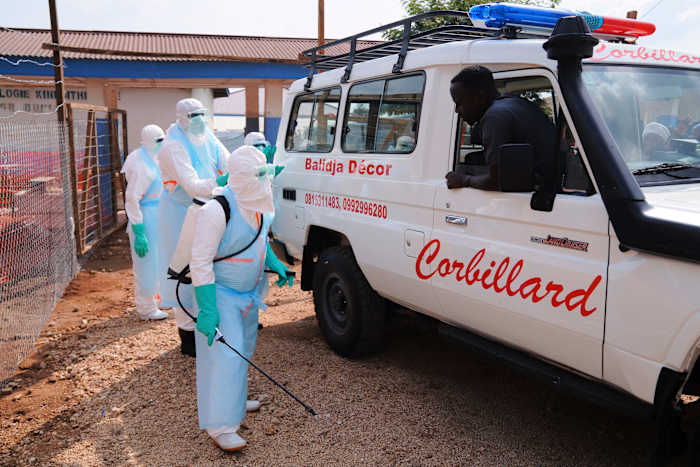
The operational footprint of an Ebola response requires an uninterrupted flow of single-use consumables. Tyvek suits, chlorine, sprayers, oral rehydration salts, and cold-chain storage units for experimental vaccines must be continuously replenished. When procurement relies on fragmented international aid disbursements rather than pre-positioned strategic reserves, supply shocks occur frequently.
Furthermore, human capital distribution suffers from severe spatial misallocation. Highly trained epidemiologists, logicians, and specialized clinicians concentrate in regional hubs or urban centers, leaving rural outposts—where zoonotic spillover events typically originate—understaffed and underequipped. This centralization creates a high-friction communication channel between ground zero and decision-making bodies, delaying tactical pivots by days or weeks.
The Transmission Multiplier: Urban Density and Mobility
Once an outbreak breaches rural isolation and enters transport corridors or dense urban environments, the mathematical nature of the crisis transforms. Rural containment relies on ring vaccination and localized quarantine, strategies that lose efficacy when population movement is continuous and untracked.
Bus terminals, open-air markets, and porous provincial borders act as high-speed distribution nodes for the pathogen. An asymptomatic individual can board a commercial transport vehicle and seed a new transmission chain hundreds of kilometers away before manifesting fevers. Contact tracers attempting to map these vectors face an impossible combinatoric explosion of potential contacts.
This mobility renders perimeter quarantines porous. Physical cordons or roadblocks can slow vehicular traffic, but informal pathways, waterways, and economic desperation bypass enforcement mechanisms. Without digital contact tracing infrastructure or decentralized rapid testing, containment efforts devolve into a reactive game of catch-up.
Strategic Realignment for Vector Suppression
Mitigating future catastrophic escalations requires abandoning purely clinical approaches in favor of systems engineering frameworks. Public health authorities must decouple surveillance from centralized bureaucracy by deploying decentralized, point-of-care diagnostic tools that deliver results in minutes rather than days.
Concurrently, operational architecture must integrate local leadership into the command structure from day one. Compliance cannot be enforced through coercion; it must be engineered by lowering the social and economic friction of isolation and safe burial. Financial compensation for lost wages during quarantine, culturally adapted treatment centers that allow family communication, and locally recruited response teams eliminate the adversarial dynamic between community and clinic.
The trajectory of a viral outbreak is not an act of nature beyond human control. It is a direct reflection of the resilience, speed, and design of the systems built to oppose it. When containment fails, the diagnostic metric is never just a rising death toll; it is an indicator of structural vulnerability waiting to be corrected.