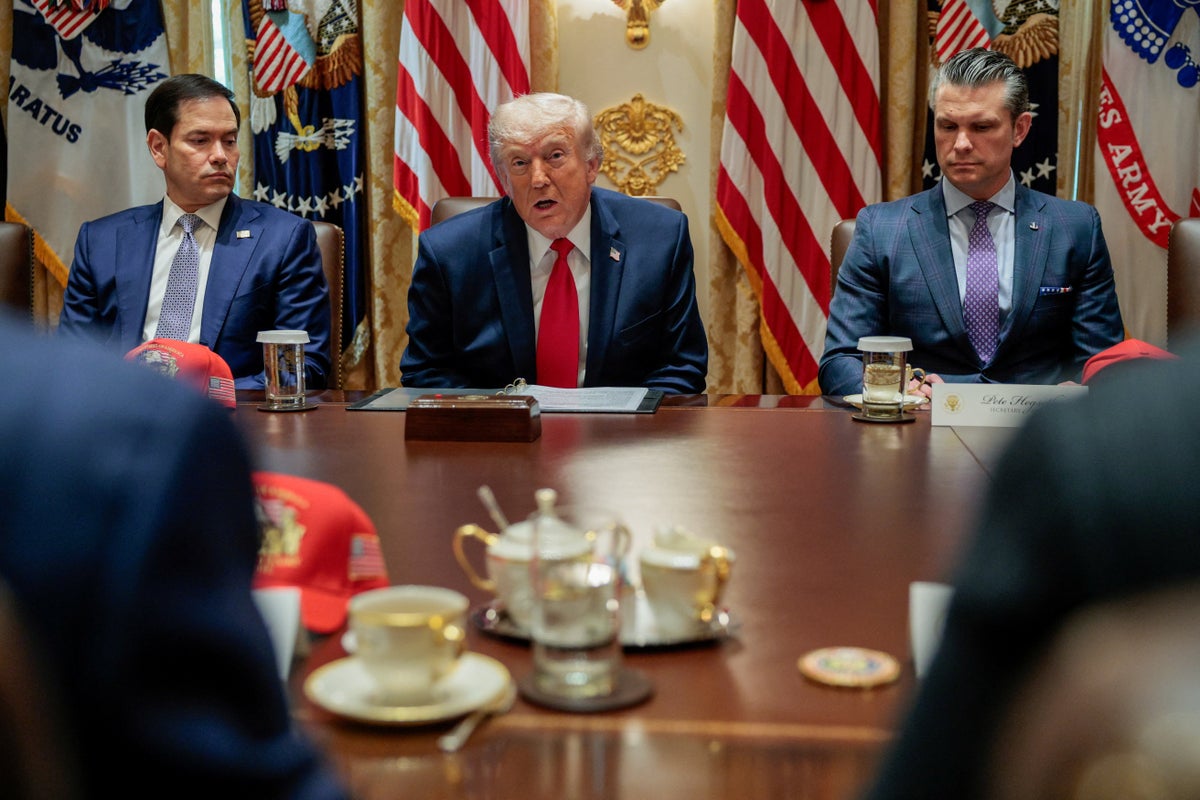
The coffee in the basement of the Vienna hotel had gone cold hours ago, forming a thin, oily skin under the harsh fluorescent lights. For the diplomats gathered there, the sludge in those paper cups was the only anchor to a world that still made sense. Outside, the Austrian winter was sharp and unforgiving. Inside, the air smelled of stale sweat, expensive wool, and the distinct, metallic tang of panic. They had been arguing over semicolons for sixteen hours.
When you strip away the flags, the motorcades, and the teleprompters, international diplomacy is just a high-stakes poker game played by exhausted people in windowless rooms. It is a fragile construction of words. If one word slips, the whole architecture crashes.
On that particular morning, the architecture didn't just slip. It evaporated.
Word leaked from Tehran that a draft agreement had been reached. A 165-page document, supposedly finalized, supposedly ready for signatures. The Iranian state media ran with it, painting a picture of a conflict resolved, sanctions lifted, and a new dawn breaking over the Persian Gulf. In the bazaar of Tehran, the value of the rial spiked slightly as ordinary merchants dared to breathe a sigh of relief. For a fleeting moment, the ghost of peace looked like flesh and blood.
Then the White House spoke.
With a few short sentences, Washington did not just deny the report; they incinerated it. "Complete fabrication," the National Security Council spokesperson said. Not an exaggeration. Not a premature announcement. A lie. A fiction cooked up from whole cloth.
In an instant, the phantom deal dissolved into the ether, leaving behind nothing but a deeper, darker chasm of distrust. The fallout was immediate, but the real damage wasn't done to the stock markets or the oil futures. It was done to the fragile human belief that words can still prevent wars.
The Mirage in the Desert
To understand how we arrived at this spectacular public collapse, we have to look at how these negotiations actually function. It is easy to think of a draft treaty as a static object, like a contract for a used car. You agree on a price, you sign the dotted line, you shake hands.
International statecraft is nothing like that. It is a liquid. It shifts shape depending on the temperature of the room and the political pressures back home.
Imagine two people holding opposite ends of a tightly coiled spring. If one person pulls too hard, the other has to dig their heels in just to stay upright. That spring is the domestic political reality for both Washington and Tehran. For the Iranian negotiators, returning home without a tangible promise of economic relief is a death sentence, sometimes literally, for their political careers. For the American team, appearing soft on a hostile regime is a one-way ticket to electoral ruin.
So, how do you bridge that gap? Often, you resort to constructive ambiguity. You use phrases that allow both sides to claim victory to their respective audiences.
But there is a dangerous line between ambiguity and delusion.
What happened with the leaked "draft" was a classic, albeit desperate, psychological gambit. When a nation senses that negotiations are stalling, or that the other side is about to walk away, they will sometimes manufacture a breakthrough. It is the diplomatic equivalent ofmanifesting a reality through sheer willpower. By telling the world that a deal is ninety percent done, you try to force the opponent's hand. You dare them to be the one who walks away from the table and takes the blame for the ensuing chaos.
The White House, however, refused to play along with the script. By calling it a fabrication, they chose maximum friction over a polite fiction. They didn't just turn down the volume; they smashed the speakers.
The Human Cost of High-Stakes Fiction
Behind every press release and every vitriolic tweet from a government ministry, there are real people whose lives are directly tied to the ink on these pages.
Consider a hypothetical merchant in Esfahan, let's call him Alireza. He doesn't care about the geopolitical chess match between Washington and Moscow, or the intricacies of centrifuge enrichment levels. He cares about the price of imported insulin for his daughter. He cares about whether he can keep his small textile business open for another six months without the crushing weight of sanctions suffocating his supply lines.
When the news of the draft deal broke, Alireza likely felt a surge of hope. It is the kind of hope that makes a person sleep a little better at night, that makes the future look like something other than a slow-motion wreck.
When the White House issued its brutal correction, that hope didn't just die; it turned to ash. The psychological whiplash of international diplomacy is a cruel thing. It breeds a profound, cynical nihilism among ordinary citizens. When peace is dangled like a carrot and then snatched away as a "fabrication," people stop believing in the possibility of any resolution at all. They brace for impact.
On the other side of the Atlantic, the stakes are different but no less human. For the families of American citizens detained in Iranian prisons, these negotiations are not abstract policy debates. They are a literal lifeline. Every time a deal enters "chaos," the cell doors click shut a little tighter. The families are left to parse the syntax of government spokespeople, looking for any shred of evidence that their loved ones haven't been forgotten in the shuffle of grand strategy.
This is the invisible toll of the diplomatic phantom. It creates a vacuum where trust used to live, and nature famously abhors a vacuum. In politics, that empty space is quickly filled by hawks, hardliners, and those who profit from perpetual conflict.
The Strategy of the Smokescreen
Why would Tehran release a detailed report of a draft that the Americans could so easily disprove? The answer lies in the audience they were trying to reach. It wasn't the politicians in Washington. It was the rest of the world.
Diplomacy is as much about theater as it is about substance. By publishing a narrative of a near-complete deal, Iran was attempting to position itself as the reasonable actor. They wanted to signal to Europe, China, and Russia that they were ready to sign, that they had compromised, and that the only obstacle to peace was American stubbornness.
It is a sophisticated form of blame-shifting. If the talks ultimately fail and the region slides toward a wider conflict, Tehran can point back to this moment and say, "We had a draft. We were at the finish line. The Americans walked away."
But this strategy carries an immense risk. When you build a house out of smoke, it only takes a light breeze to scatter it. The White House's blunt rejection was that breeze. By using the word "fabrication," the US administration signaled that they were no longer willing to indulge in the polite theater of diplomatic face-saving. They exposed the smokescreen for what it was, leaving the Iranian negotiators exposed on the international stage.
This leaves the entire process in a state of suspended animation. The old rules of engagement have been broken, but no one has written new ones yet.
The Silence That Follows the Scream
The immediate aftermath of a diplomatic explosion is rarely noisy. It is characterized by a heavy, suffocating silence. The microphones are packed away. The spokespeople retreat behind closed doors. The analysts on cable news dissect the rhetoric, searching for hidden meanings that probably don't exist.
We are left staring at the wreckage of a process that has consumed years of human effort, millions of dollars, and countless sleepless nights. It is easy to look at this failure and conclude that diplomacy itself is a useless relic of a simpler time. It is tempting to believe that power is the only language anyone understands, and that words are just a luxury for the naive.
That is the most dangerous takeaway possible.
The alternative to the tedious, frustrating, and often dishonest work of negotiation is not a cleaner, simpler solution. It is the unmitigated horror of unchecked escalation. When the talking stops, the machinery of destruction automatically starts grinding forward. There is no middle ground.
The current chaos surrounding the Iran peace deal is a stark reminder of how fragile our global stability truly is. It hangs by a thread woven from the credibility of the people sitting at those tables in Vienna. When that credibility is used as a weapon, the thread snaps.
The diplomats will eventually return to the room. The coffee will be just as bad, the lights just as bright, and the stakes even higher than before. They will have to sweep away the debris of this latest fabrication and begin the painful, agonizing process of finding words they can actually agree on.
They will do this because they have to. Because the alternative is too terrible to contemplate. But the ghost of this false draft will haunt the room, a silent reminder of how quickly a promise of peace can turn into a lie.


