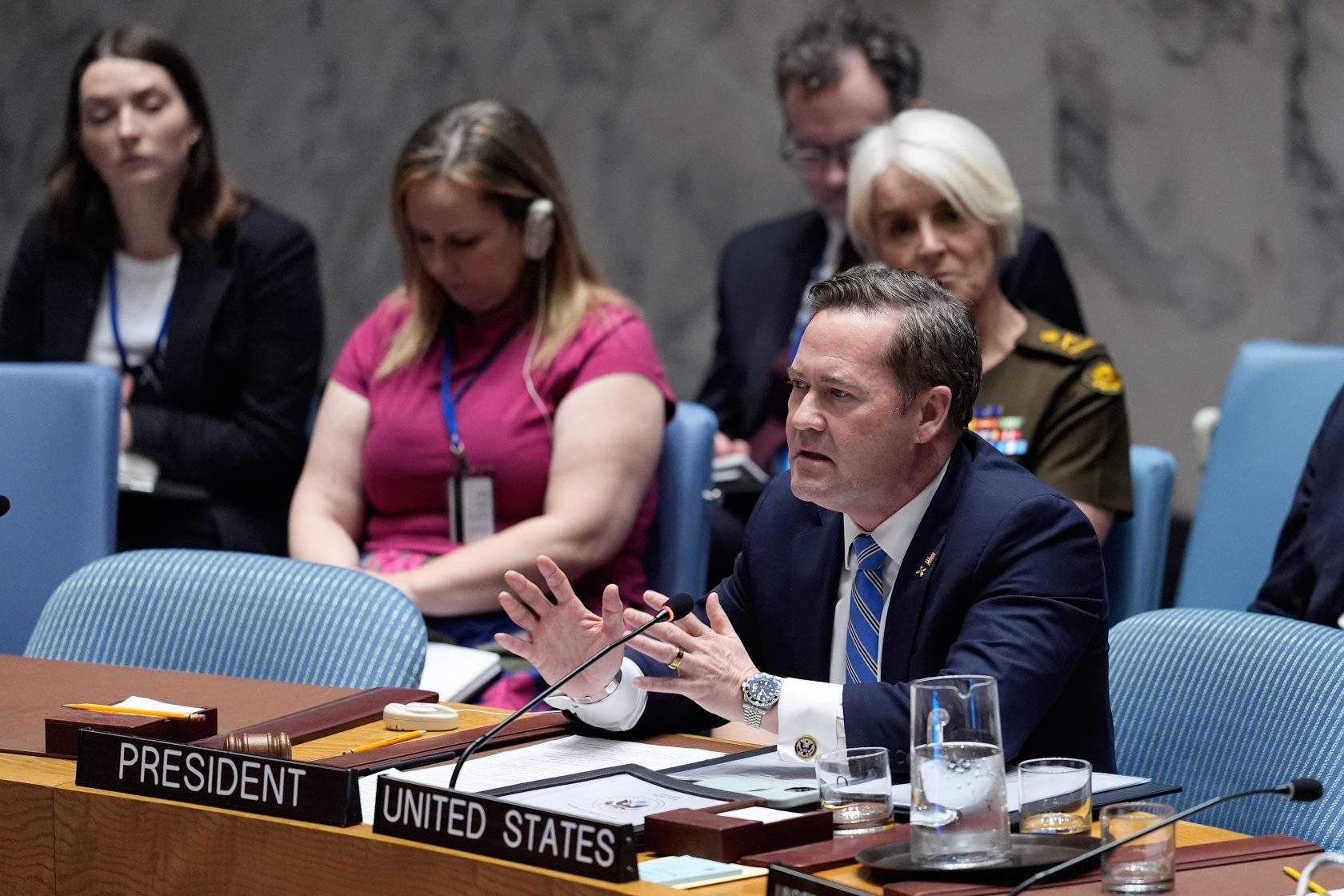
Multilateral institutions operate on an unwritten equilibrium of procedural compliance and shared behavioral norms. When Washington diplomats staged a physical exit from a United Nations Security Council session during an address by their French counterparts, the event signaled far more than a rhetorical flashpoint. It exposed structural decay in the transatlantic alliance, driven by misaligned voting calculus, institutional contestation over human rights mandates, and deep friction regarding European security autonomy. Deconstructing this diplomatic fracture requires mapping the institutional vectors, voting mechanics, and cost functions that turned a dispute over a bureaucrat's tenure into an open breach among permanent Security Council members.
The Institutional Catalyst and Voting Mechanics
The immediate friction point centered on the renewal vote for United Nations High Commissioner for Human Rights Volker Türk. The General Assembly confirmed Türk for a second four-year term via a 144 to 10 vote, with 13 abstentions. The United States stood among the minor faction registering a negative vote, aligning procedurally with states frequently targeted by Western sanctions and oversight, such as North Korea and Russia.
From an analytical standpoint, the American opposition derived from institutional pushback against what Washington termed procedural overreach and targeted criticism of democratic governance models. Conversely, Paris viewed Türk's tenure as an anchor of institutional impartiality. France voted in favor and subsequently weaponized the alignment on social media, publicly stating that American voting behavior mirrored isolated authoritarian regimes. This public rebuke crossed a diplomatic threshold, moving policy disagreement into the realm of moral delegitimization.
The Three Vectors of Transatlantic Divergence
The public walkout during the Security Council briefing on Ukraine was the symptom of three distinct structural pressures eroding bilateral coordination:
- Multilateral Compliance vs. Sovereignty Assertions: The current U.S. administration approaches international bodies through an intensely transactional lens, reducing funding and bypassing organizations perceived as counterproductive to national interests. European capitals, facing immediate geographic threats from the war in Ukraine, view multilateral continuity as an essential pillar of collective security.
- Security Burden-Sharing and Defense Architecture: Longstanding disputes over North Atlantic Treaty Organization commitments, American troop distributions across Europe, and unilateral U.S. military maneuvers outside consultation frameworks have left European leaders questioning reliance on Washington. In response, French leadership has accelerated initiatives for continental strategic autonomy and independent nuclear deterrence.
- Rhetorical Escalation and Diplomatic Protocols: Traditional diplomatic architecture relies on calculated ambiguity and private grievance management. By publicly leveling comparisons between Washington's voting record and oppressive regimes, French diplomatic missions in Geneva broke procedural norms, triggering an immediate retaliatory posture from American representatives who labeled the remarks as disingenuous grandstanding.
The Strategic Cost Function of Public Deterioration
When primary security partners engage in open public hostility within multilateral forums, the systemic costs distribute across several vectors. Adversarial states observe these fractures and exploit them to diminish the efficacy of Western sanctions and human rights resolutions. Within the Security Council, the normalization of retaliatory walkouts degrades the deliberative capacity required to manage active conflicts, such as the ongoing war in Ukraine.
The friction also accelerates structural decoupling. As European states invest heavier capital into independent defense frameworks and autonomous foreign policies, American diplomatic leverage over continental policy decisions diminishes proportionally. The walkout was not merely an emotional reaction to an insulting social media post; it was a calibrated demonstration of non-cooperation designed to signal that Washington will impose diplomatic costs on allies who publicly critique its domestic or international record.
Strategic Forecast
Expect bilateral coordination between Washington and Paris to remain transactional and strictly compartmentalized to mandatory security functions. European defense initiatives will continue to decouple from American oversight, while multilateral bodies will experience heightened procedural gridlock as member states prioritize regional blocs over unified Western consensus. The diplomatic architecture of the post-war era is shifting from value-based coalitions to variable-geometry alliances, where shared opposition to adversaries overrides internal ideological friction.
U.S. walks out during France's speech at UNSC
This video provides direct footage and primary reporting on the unfolding diplomatic dispute at the United Nations Security Council.


