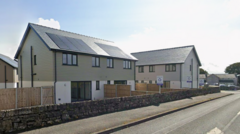
A completed residential asset that fails to transition from inventory to occupied capital represents a profound structural breakdown in real estate underwriting. When a newly constructed residential estate realizes a conversion rate of virtually zero over several fiscal cycles, the failure cannot be attributed merely to market fluctuations or poor aesthetic choices. Instead, it signals a systemic dislocation between the physical development, its regulatory framework, and capitalized financial structures.
The economic cost of an illiquid housing development is non-linear. Every month a unit remains vacant, it incurs structural maintenance overhead, compounding financing costs, and a mounting reputational discount. To understand how an entire asset class can sit vacant while surrounding regional markets experience persistent structural housing shortages, we must dissect the structural impediments using a rigorous tripartite diagnostic framework.
The Tripartite Framework of Real Estate Stagnation
Residential liquidity rests upon three independent variables: title clean-rooming, infrastructure integration, and equity capitalization. If any single variable drops to zero, the net liquidity of the entire development collapses.
1. The Regulatory and Title Bottleneck
In highly scrutinized real estate markets, a property cannot be legally transferred or collateralized without a definitive, unencumbered title and an absolute certificate of occupancy. Stagnation often occurs when developers build ahead of final administrative sign-offs.
- Section agreements and infrastructure adoption: Municipalities frequently demand that developers complete collateral infrastructure—such as access roads, drainage systems, or sustainable drainage basins—to an exact specification before adoption. If a developer faces insolvency or technical non-compliance midway through this phase, the local authority will refuse to adopt the infrastructure, withholding the final clearance required by mortgage lenders.
- Restrictive covenants and legal containment: Legacy land issues, historical rights of way, or unresolved environmental remediation liabilities can tie an entire parcel in litigation. While a developer may physically construct the framing, the underlying asset remains legally toxic, preventing retail buyers from securing clean title insurance.
2. Infrastructure Disconnection and Utility Asymmetry
A physical structure is merely a shell without active utility networks. The breakdown in new-build delivery frequently occurs at the intersection of private development and public or regulated utility monopolies.
- Grid capacity constraints: Substation capacity for electricity, water pressure thresholds, and wastewater treatment allocations are finite regional resources. Developers often underwrite projects assuming grid connections will scale concurrently with construction, only to discover that the local grid requires multimillion-dollar upstream upgrades before commissioning the site network.
- Digital and physical isolation: Modern residential demand treats high-speed fiber connectivity and functional arterial road access as non-negotiable baselines. A development severed from primary transit corridors or lacking telecommunications backhaul commands an functional utility value of zero for the target demographic.
3. Financial Cap-Table Dislocation and Lender Gridlock
When a development stalls, public perception blames the retail asking price. However, the pricing floor of a new-build asset is rarely determined by the developer; it is dictated by the senior debt provider and the underlying capitalization structure.
- The Debt-Equity Valuation Trap: If a developer takes on high-leverage mezzanine debt based on peak-market valuations, the lender establishes a minimum release price per unit to ensure loan amortization. If market conditions soften by 15%, the developer cannot simply lower prices to clear inventory. Doing so would trigger a technical default on the loan covenant, as the proceeds would fail to satisfy the senior lien.
- The Sunk-Cost Pricing Paradox: The developer is trapped between two ruinous options: hold inventory at an unrealistic price point while interest accrues, or liquidate at market value, trigger immediate bankruptcy, and forfeit all remaining equity. Lenders will often choose to leave the asset vacant rather than write down the loan value on their own balance sheets, preserving a fictional book value until forced into a structured receivership.
The Mechanics of Reputational Contagion
The physical deterioration of an unoccupied development operates as a feedback loop that accelerates asset devaluation. Real estate markets rely on social proof and momentum; a lack of initial absorption signals invisible defects to subsequent prospects.
[Zero Occupancy] ──> [Deferred Maintenance] ──> [Reputational Discount] ──> [Lender Capital Strike]
This causal chain introduces distinct vectors of capital destruction:
- Physical Degradation: Unheated, unventilated structures suffer rapid atmospheric degradation. Moisture ingress, concrete carbonation, and envelope failures occur at a significantly higher rate in vacant properties compared to occupied, conditioned spaces.
- The Stigma Multiplier: When only two units within an estate are occupied, those initial buyers become trapped in a non-functioning community. The lack of an active homeowners association or management company leads to common area neglect, driving the appraisal value of the remaining inventory down by an estimated 25% to 40% compared to equivalent active developments.
- The Sovereign Lender Strike: Once an estate gains notoriety for structural or legal gridlock, retail mortgage underwriters issue a blanket rejection on the entire postal code or development phase. At this juncture, the asset can no longer be acquired via conventional retail leverage, limiting the buyer pool exclusively to cash-rich institutional distressed-asset funds demanding a steep liquidity premium.
Strategic Interventions for Stalled Capital
Resolving an asset freeze of this magnitude requires a total restructuring of the capital stack and legal framework. Passive waiting yields zero ROI and compounding liability.
First, the senior debt must be aggressively severed from the equity layer via a pre-packaged insolvency mechanism or a consensual deed-in-lieu of foreclosure. The asset must be recapitalized at its current distressed market value, wiping out the legacy equity holders who are structurally incentivized to maintain the pricing gridlock.
Second, the new capital partner must execute a municipal workout strategy. This involves ring-fencing the capital necessary to complete outstanding infrastructure obligations, offering upfront cash bonds to local authorities in exchange for expedited unit certification and title clearance.
Finally, the remaining inventory should be pivoted from piecemeal retail sales to an institutional build-to-rent or affordable housing block sale. This wholesale liquidation strategy clears the entire inventory in a single transaction, absorbing the vacancy stigma through an institutional management footprint and re-establishing cash flow to service the restructured debt.