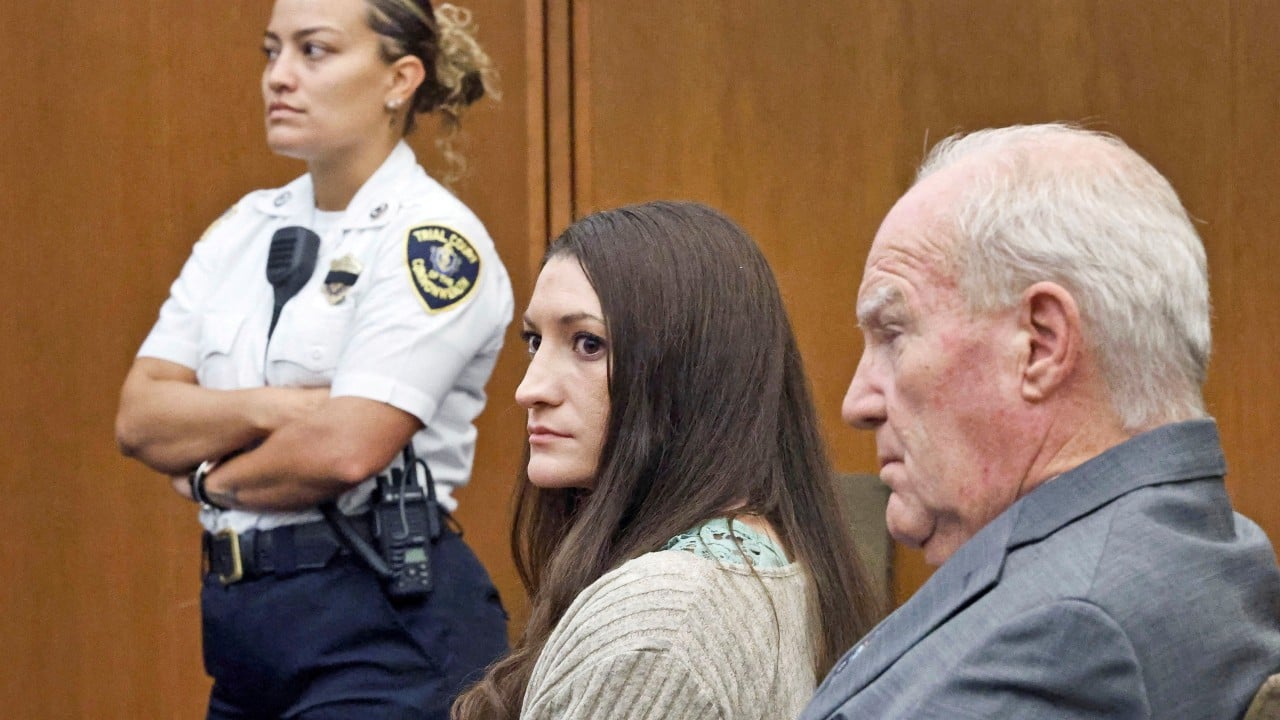
When a high-profile criminal trial reaches its sixth day of deliberations without a consensus, the breakdown of the jury room transforms from an internal private dispute into an open structural vulnerability. In the trial of Lindsay Clancy—the Massachusetts mother accused of killing her three children while mounting an insanity defense based on postpartum psychosis—the emergence of a single holdout juror has exposed the rigid mechanical limits of the American judicial deliberation model. The foreperson’s note indicating that one juror was refusing to follow instructions on reasonable doubt triggered an aggressive procedural response from the defense, illuminating how group psychology and legal thresholds interact under maximum pressure.
Understanding this impasse requires examining the core components that govern deadlocked panels: the burden of proof allocation, the friction of jury nullification or cognitive resistance, and the judicial threshold required to eject a deliberating member.
The Burden of Proof and the Insanity Defense Threshold
The architecture of a criminal trial relies entirely on the prosecution's absolute obligation to prove every element of an offense beyond a reasonable doubt. In jurisdictions where sanity is treated as an element or where the defense successfully raises an affirmative defense of lack of criminal responsibility due to mental disease or defect, the state must disprove that defense to secure a conviction.
The structural mechanics break down as follows:
- The defense introduces expert testimony and medical history regarding acute postpartum psychosis to establish a lack of cognitive capacity.
- The prosecution attempts to demonstrate sequential planning, rational motor execution, and awareness of consequences to establish criminal responsibility.
- The jury is tasked with converting complex psychiatric evaluations into a binary legal category: criminally responsible or not criminally responsible.
When 11 jurors arrive at a consensus while one resists, the friction usually stems from differing interpretations of what constitutes "reasonable" doubt versus speculative or emotional doubt. In this case, the defense’s urgent demand to remove the lone holdout—despite the holdout theoretically benefiting a non-guilty insanity outcome—indicates a fear that the resistance is unmoored from the actual legal instructions, risking an intractable mistrial rather than an acquittal.
The Cost Function of a Mistrial
A hung jury introduces a steep operational and economic cost function for the court system, the prosecution, and the defense. When a trial features over 80 witnesses and 300 exhibits, the resources consumed during the initial proceeding represent a massive capital and time investment.
A mistrial forces a recalculation of systemic variables:
- Prosecutorial Discretion: The district attorney must evaluate whether the state's evidence successfully persuaded a vast majority of the public, justifying the financial and emotional toll of a retrial.
- Evidentiary Evolution: Both legal teams would retain transcripts of every expert witness, modifying their cross-examination strategies based on how the first panel fractured.
- Defendant Status: The accused remains confined to a secure psychiatric facility pending the resolution of charges or a formal civil commitment evaluation.
The Judicial Threshold for Juror Removal
The refusal of Massachusetts Superior Court Judge William Sullivan to eject the holdout juror highlights the extreme legal barriers protecting the sanctity of the jury room. Under established jurisprudence, a judge cannot remove a juror during deliberations simply because that juror disagrees with the majority or refuses to yield. Ejection is legally permissible only if there is demonstrable evidence of bias, refusal to deliberate at all, or external misconduct—not merely because a juror is stubbornly holding fast to a distinct interpretation of the evidence or the law.
When a foreperson signals that a juror is refusing to listen to instructions regarding reasonable doubt, the line between "refusing to deliberate" and "disagreeing with the outcome" becomes dangerously blurred. If judges routinely removed jurors at the request of an frustrated majority, the constitutional guarantee of a unanimous verdict would effectively be converted into a majority-rule system.
The immediate path forward depends entirely on the upcoming judicial inquiry. If the targeted juror confirms an ability to follow the court's instructions under direct questioning, the court must sustain the deadlock framework, compelling the panel to either organically bridge the divide or face the eventual declaration of a mistrial.
The Lindsay Clancy Trial Explained
This video provides an in-depth breakdown of the courtroom dynamics and legal arguments unfolding around the jury deadlock in the Lindsay Clancy trial.