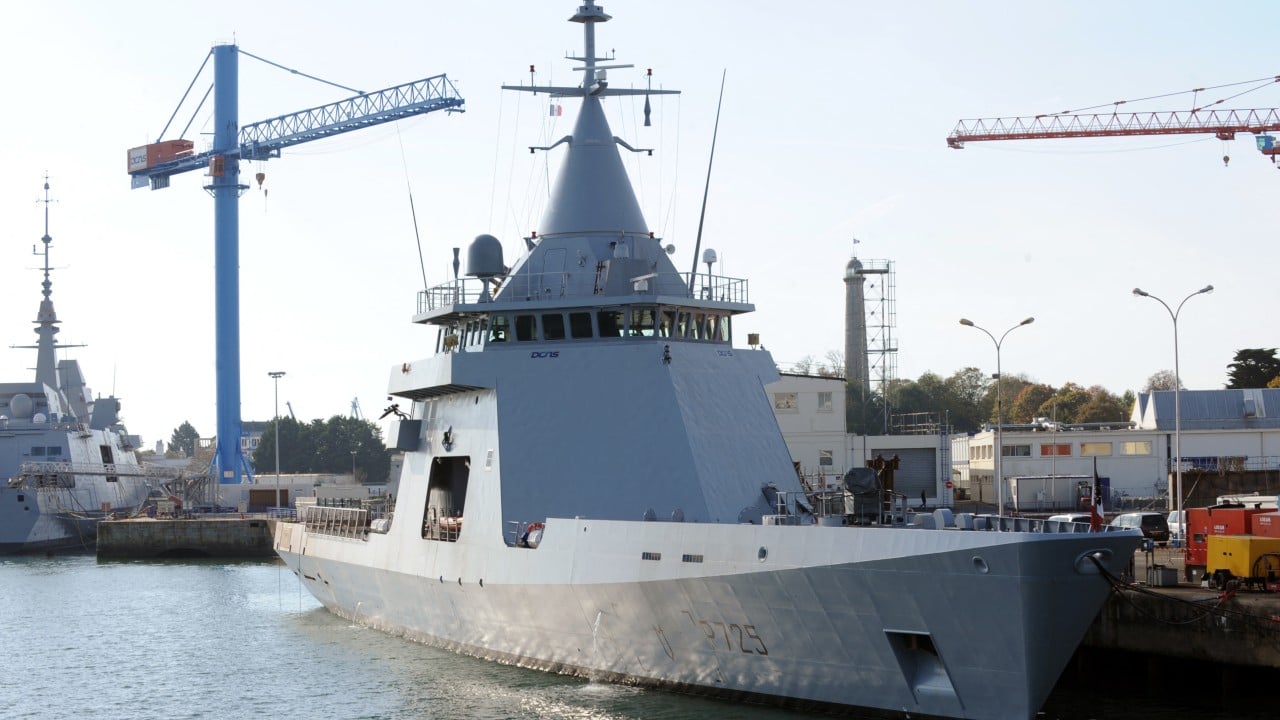
A navy that can find a target but cannot strike it is not an instrument of deterrence; it is a sensor platform waiting to be bypassed or destroyed.
The scheduled December 2026 delivery of the Royal Malaysian Navy’s (RMN) first Maharaja Lela-class Littoral Combat Ship (LCS) exposes a structural asymmetry in regional maritime security. While equipped with functional anti-submarine warfare (ASW) arrays and anti-air defense mechanisms, the lead vessel will arrive devoid of its primary offensive mechanism: the surface-to-surface missile (SSM) suite. The cancellation of the Naval Strike Missile (NSM) procurement contract by Norway—driven by a tightening of defense export regulations in the wake of shifting European security postures—strips the hull of its long-range offensive capability, forcing a reliance on legacy 57mm deck guns for surface combat.
This structural gap cannot be dismissed as a minor procurement delay. It represents a fundamental failure to align platform acquisition with supply-chain security. By mapping the strategic, financial, and operational realities of this defense transition, we can analyze the structural vulnerabilities inherent in non-aligned defense procurement within contested maritime zones.
The Strategic Trilemma of Non-Aligned Procurement
Neutral and non-aligned nations face a persistent operational trilemma in defense acquisition: they must balance technology access, geopolitical autonomy, and supply-chain resilience. For Malaysia, attempting to maintain cordial diplomatic ties with Western powers, China, Russia, and Middle Eastern states presents an unstable strategic equilibrium.
The structural failure of the NSM procurement reveals how this trilemma breaks down under geopolitical stress:
          [ Technology Access ]
                 /\
                /  \
               /    \
              /      \
             /________\
[ Geopolitical ]     [ Supply-Chain ]
  Autonomy             Resilience
- The Technology Access Barrier: High-end defense assets require highly specialized intellectual property. Norway's decision to restrict the NSM to NATO members and "closest partners" highlights that sovereign export control acts are inherently political instruments. When regional tensions rise, supplier states will prioritize their immediate alliance structures over commercial contracts.
- The Autonomy Penalty: Non-aligned states use diversified procurement (purchasing from European, Russian, Turkish, and Asian suppliers) to avoid single-source dependency. However, this diversity creates systemic integration risks and exposes the purchasing nation to regulatory changes from multiple, sometimes competing, jurisdictions.
- The Supply-Chain Bottleneck: Legally binding contracts offer little protection when a supplier state invokes national security or force majeure to halt deliveries. This leaves the purchasing state with custom-built hulls that cannot carry out their primary missions.
Quantifying the Integration Bottleneck
Replacing a primary weapon system on a modern combatant is not a modular "plug-and-play" process. It is a highly complex engineering task governed by rigid physical and digital constraints.
                                 [ PHYSICAL RECONFIG ]
                                 - Structural Re-decking
                                 - Deck Penetration
                                 - Weight & Center of Gravity
                                        |
                                        v
[ TARGET SPECIFICATION ] --------> [ FIRE CONTROL ] --------> [ COMBAT MANAGEMENT ]
- Replacement Missile              - Electrical Bus             - SETIS Architecture
- Launcher Envelopes               - Data Protocol              - Weapon-to-Sensor Loop
                                        ^
                                        |
                                 [ ELECTROMAGNETIC ]
                                 - RF Signature Profile
                                 - Co-site Interference
The transition from the cancelled NSM to an alternative, such as the French-designed Exocet, introduces significant integration bottlenecks:
Weight, Center of Gravity, and Deck Penetration
The Maharaja Lela-class design, derived from the Naval Group Gowind-class corvette, was structurally optimized for the lightweight, deck-mounted NSM canisters. Introducing an alternative missile system alters the ship’s center of gravity and windage area. Launcher footprints, structural deck reinforcements, and cable runs must be redesigned. The cost of removing the pre-installed NSM mounting structures and altering the physical deck layout is estimated to make up a large portion of Malaysia's RM1 billion ($251 million USD) compensation claim against Kongsberg Defence & Aerospace.
Combat Management System (CMS) Decoupling
Modern warships run on highly integrated Combat Management Systems—in this case, the French SETIS architecture. The CMS coordinates radar tracks, electro-optical sensors, and weapon systems. Changing the primary missile requires rewiring the fire-control software, creating new data-bus interfaces, and conducting extensive software integration testing. If the replacement missile uses different communication protocols, the navy must pay the CMS provider for custom software development, causing further delivery delays.
Fire-Control and Sensor Loop Synchronization
A surface-to-surface missile is only as effective as the ship's ability to provide mid-course guidance updates. The radar and electronic support measures (ESM) suites must be calibrated to match the target acquisition profile of the new missile. This requires extensive electromagnetic compatibility (EMC) testing to ensure that the new missile’s active seeker or radio frequency emissions do not interfere with the ship’s own sensors.
The Operational Reality of the Surface Warfare Gap
To mitigate the loss of the NSM, defense planners have suggested using legacy platforms and air-launched assets to cover the gap. However, an analysis of these workarounds reveals clear operational limitations:
- The 57mm Deck Gun Limitation: With the surface-to-surface missiles removed, the LCS must rely on its Bofors 57mm naval gun for surface engagements. While highly effective against asymmetric swarm threats, the gun has an effective range of less than 15 kilometers. This exposes the ship to modern anti-ship cruise missiles, which can be launched from hundreds of kilometers away.
- Air Support Vulnerabilities: Relying on the Royal Malaysian Air Force’s F/A-18D Hornets carrying Harpoon missiles to provide surface strike capabilities introduces significant coordination challenges. Air-to-sea coordination requires secure, high-bandwidth data links (such as Link 16) that can be easily jammed in contested environments. Furthermore, land-based aircraft cannot match the persistent presence of a surface warship in remote maritime zones.
- The LMS Batch 2 Transition: While the incoming Turkish-built Littoral Mission Ships (LMS Batch 2) will feature a 200km-range anti-ship missile system, these corvettes are not scheduled to enter service until late 2027. This leaves a clear operational window where Malaysia's premier surface combatants will lack long-range offensive capabilities.
Strategic Action Plan for Non-Aligned Fleet Modernization
To restore offensive credibility and manage procurement risks in an increasingly contested maritime environment, naval planners should focus on three key areas:
1. Enforce Strict Sovereign Procurement Offsets
Future defense acquisitions must include legally binding clauses that penalize suppliers for unilateral export license revocations. Contracts should require suppliers to place critical integration documentation and software source codes in secure, third-party escrows. This ensures that if export licenses are revoked, the purchasing nation retains the technical data needed to integrate alternative systems without starting from scratch.
2. Prioritize Open Architecture Combat Systems
Navies must avoid proprietary, single-vendor combat management software. By adopting open-architecture standards, defense forces can ensure that software interfaces are modular. This allows new sensors and weapons to be integrated without requiring expensive, sole-source contract modifications from the original shipbuilder.
3. Diversify Toward Geopolitically Resilient Suppliers
As Western and European export controls become increasingly restrictive, non-aligned states should look to emerging defense exporters with more flexible regulatory frameworks. Deepening partnerships with nations like Türkiye, which offer transfer-of-technology agreements and lack the restrictive export conditions of some NATO partners, provides a more reliable pathway to long-term fleet modernization.