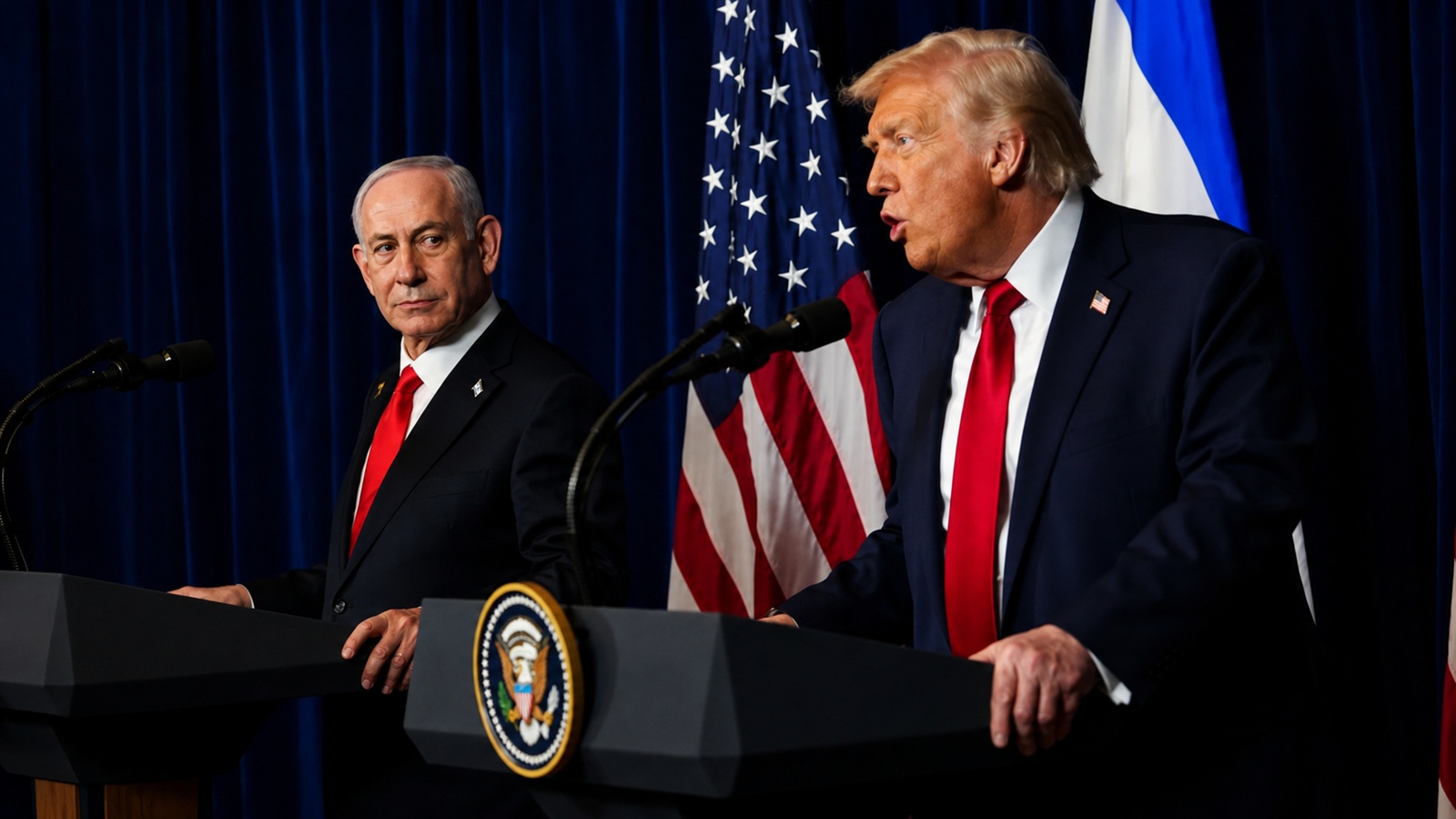
Political movements rarely die from external ideological opposition; they collapse when their internal incentive structures fail to deliver on the core value propositions that assembled their electoral coalition. The November 2026 United States midterm elections—marked by a sweeping Democratic takeover of both chambers of Congress and a precipitous drop in presidential approval ratings—represent a textbook case of coalition fracture. While standard commentary attributes this shift to cyclical midterm fatigue or charismatic Democratic challengers, a rigorous structural analysis reveals a deeper mechanical failure: the governing coalition violated the three foundational contracts that separated its populist brand from the traditional political establishment.
To understand whether the Make America Great Again (MAGA) movement has reached terminal exhaustion or is merely undergoing a painful market correction, strategists must separate brand loyalty (emotional attachment to a singular leader) from coalition utility (the tangible policy outcomes required to keep marginal, non-ideological voters inside the tent). In 2024, the coalition succeeded by uniting traditional conservatives with disaffected working-class voters, young men, and independent swing voters around a clear utility function: economic affordability, anti-interventionism, and anti-corruption. By November 2026, execution failures across all three variables triggered a mass defection of marginal voters, turning a governing mandate into a lame-duck presidency with over two years remaining. In similar news, take a look at: Twenty Million Dollars for a Whisper in the Dark.
The Three Broken Contracts of the 2024 Coalition
Every successful populist coalition operates as an asymmetric transaction. Core adherents trade unwavering loyalty for cultural validation and institutional disruption. Marginal voters—independents, first-time participants, and demographic swing blocs—trade their votes for specific, measurable material outcomes. When an administration prioritizes the ideological or personal preferences of its core over the material expectations of its margin, the coalition's mathematical foundation erodes.
1. The Anti-Interventionist Breach and the Cost of Foreign Entanglement
The defining differentiator of the modern populist right against the post-Cold War Republican establishment was an explicit rejection of foreign military interventionism. For a decade, this posture insulated the movement from traditional partisan attacks and attracted younger, skeptical voters. BBC News has analyzed this fascinating subject in extensive detail.
The initiation of direct military conflict with Iran in early 2026 shattered this equilibrium. In political economics, foreign wars impose an immediate, concentrated tax on domestic political capital while yielding diffuse, uncertain strategic returns. Exit polling from November 2026 demonstrates the exact mechanics of this defection: roughly three-quarters of the electorate cited the Iran conflict as a major or decisive factor in their vote, with a clear majority viewing the military action as an error.
This policy pivot created two simultaneous operational failures:
- Base Demoralization: Prominent non-interventionist voices within the movement's media ecosystem and congressional ranks were alienated or sidelined, stripping the coalition of its most effective validators among younger demographics.
- Swing Voter Reversion: Independent voters and military veterans who backed the movement in 2024 specifically to avoid prolonged Middle Eastern engagements reverted to the opposition. Voters under 30, who had split nearly evenly in 2024, swung toward Democratic House candidates by roughly a three-to-one margin.
2. The Affordability Deficit and Macroeconomic Friction
Populist movements survive on perceived economic velocity—the tangible sense among working-class households that their purchasing power is expanding relative to the cost of living. While macroeconomic indicators in late 2026 showed aggregate stability, the microeconomic reality for wage earners remained constrained by persistent cost-of-living pressures.
Voters evaluate incumbent administrations through a loss-aversion framework rather than an absolute-growth framework. When a movement campaigns on immediate, sweeping economic relief, incremental or mixed performance registers as a net loss. In 2026, working-class voters and non-college-educated demographics—particularly women under 50 and minority voters who had trended rightward two years prior—punished the incumbent party not out of newfound ideological affinity for Democratic platforms, but as a punitive accountability measure. High-propensity ideological voters absorbed the economic friction; low-propensity, transactional voters exited the coalition.
3. The Institutional Capture Paradox
The third pillar of the coalition's appeal rested on an anti-establishment critique: the promise to dismantle entrenched Washington patronage networks and curb elite self-enrichment. However, once a populist movement secures total institutional control, it faces an acute principal-agent problem. Without an external institutional check, the incentives of the governing apparatus shift from disrupting the system to extracting value from it.
By late 2026, visible symbols of elite insulation, executive patronage, and perceived ethical compromises neutralized the movement's anti-corruption credentials. When nine out of ten voters identify corruption as a primary driver of their midterm ballot, the insurgent brand has officially inverted. In the minds of swing voters, the movement ceased to be an external corrective force against a corrupt capital and instead became indistinguishable from the entrenched money culture it originally campaigned to overthrow.
Measuring Structural Decay Versus Cyclical Headwinds
A common analytical error following a wave election is conflating a cyclical setback with a structural realignment. Proponents of the cyclical theory point to historical precedents: the 2018 midterms, where the movement lost the House of Representatives only to recapture the presidency and both chambers of Congress six years later, or the 1994 and 2010 midterms under Democratic presidents.
That historical comparison fails under rigorous variable testing. Three structural anomalies distinguish November 2026 from 2018:
- Absence of a Unifying External Foil: In 2018, the movement was still in its insurgent phase, battling an entrenched bureaucratic and media establishment while presiding over a peacetime economy with accelerating real wage growth. In 2026, the movement held unified control of the executive and legislative branches. Voters had no secondary target to blame for policy outcomes.
- Collapse of Demographic Diversification: The strategic genius of the 2024 coalition was its ability to peel off statistically significant shares of Black, Hispanic, and young male voters, breaking the Democratic Party's structural demographic firewall. The 2026 data reveals a rapid snap-back. Defectors from the 2024 coalition disproportionately comprised Hispanic and Black voters who concluded that the administration's economic and foreign policies failed to serve their material interests. Rebuilding trust with a demographic that feels burned by a political experiment requires substantially higher capital than courting them the first time.
- Institutional Subpoena Exposure: Losing both the House and the Senate simultaneously strips the executive branch of its legislative shield. Beginning in January 2027, congressional oversight committees controlled by the opposition will possess unilateral subpoena power. For an administration already suffering from low approval ratings and internal staff turnover—evidenced by the post-election departure of Chief of Staff Susie Wiles and the elevation of hardline ideologue Stephen Miller—continuous investigative friction will consume operational bandwidth and prevent legislative pivots.
The Post-2026 Succession Matrix and Ideological Drift
Political movements anchored to a single charismatic executive face an inevitable succession crisis as that leader enters their final two years in office. Because constitutional term limits prevent the founder from running again in 2028, the movement's internal factions are already shifting from governance to internal capital allocation for the primary cycle.
This transition fractures the movement into three distinct competing archetypes:
- The Nationalist-Populist Purists: Represented by figures aligned with the incoming White House chief of staff and Vice President JD Vance, this faction argues that the 2026 defeat resulted from insufficient ideological commitment and sabotage by moderate remnants. Their strategic prescription is doubling down on cultural nationalism, strict immigration enforcement, and executive unilateralism. The limitation of this approach is mathematical: while it secures the primary base, it actively repels the independent voters required to win general elections in swing states.
- The America First Isolationists: Comprising younger activists, podcasters, and strict non-interventionist lawmakers, this group views the Iran war and foreign lobby influence as the original sin of the second term. They are actively decoupling the "America First" policy framework from the current administration's brand, positioning themselves to judge 2028 contenders on strict ideological purity regarding foreign wars and fiscal restraint.
- The Neo-Establishment Pragmatists: Led by traditional conservative governors and senators—such as Florida's Ron DeSantis and Senate figures like Marco Rubio—this faction views the 2026 wipeout as proof that personality-driven politics has reached diminishing returns. Their objective is to retain the working-class economic nationalism of the movement while stripping away the chaotic governance style and foreign policy missteps that alienated suburban moderates.
The friction between these three groups guarantees a protracted, resource-draining proxy war over the next 24 months. Unlike the 2016–2024 era, where a single leader could enforce discipline through primary endorsements and rally attendance, a lame-duck executive possesses rapidly depreciating leverage over ambitious successors who must distance themselves from an unpopular status quo to survive a general election.
The Opposition's Asymmetric Risk Profile
A structural decline in one political coalition does not automatically confer permanent hegemony on its rival. In two-party systems with high affective polarization, wave elections frequently reflect negative partisanship—a vote against the incumbent rather than an affirmative mandate for the challenger.
The Democratic Party enters the 110th Congress in January 2027 with a formidable new bench of younger, battle-tested leaders who outperformed national baselines in tough terrain, including figures in Texas, Georgia, Ohio, and Michigan. However, exit polling and post-election diagnostics expose a critical vulnerability: voters still rate the Democratic brand poorly on listening to average working people rather than coastal or academic elites, and a majority express skepticism toward overt democratic socialism.
If the incoming Democratic majority interprets its 2026 victory as a blank check for ideological overreach rather than a mandate to resolve economic affordability and reduce systemic polarization, it will inadvertently create the exact macroeconomic and cultural conditions required to resuscitate right-wing populism in 2028. History shows that populist movements do not vanish while the underlying socioeconomic grievances—wage stagnation, asset inequality, and institutional distrust—remain unresolved.
Strategic Directives for Navigating the Realignment
For political strategists, institutional analysts, and policy architects operating in the post-2026 environment, the data dictates a clear operational posture. The era of monolithic, personality-driven populism is transitioning into a fragmented, multi-polar battle over working-class economic policy.
- Decouple Policy Frameworks from Brand Labels: Analysts must stop treating "MAGA" as a unified voting bloc and begin modeling its components separately. Track economic nationalists (who prioritize tariffs, industrial policy, and domestic wage protection), non-interventionists (who oppose foreign military entanglements), and cultural traditionalists as distinct cohorts with diverging elasticities. The political label itself is experiencing severe brand dilution among swing demographics, even while specific policy planks retain majority support.
- Anchor Predictive Models to Microeconomic Affordability and Foreign Entanglement: Abandon traditional partisan identification metrics when forecasting 2028 battleground states. The primary leading indicators for the next presidential cycle are real household purchasing power relative to housing and healthcare costs, paired with the trajectory of US military involvement in the Middle East. Any candidate—regardless of party—who fails to present a credible mechanism for lowering baseline household expenses while extricating the US from prolonged foreign conflicts will forfeit the independent center.
- Prepare for Legislative Gridlock and Executive Unilateralism: With divided government returning in January 2027, major bipartisan statutory reform is dead on arrival. Operational planning should assume two years of high-visibility congressional investigations, executive orders aimed at satisfying the administration's core base, and heightened regulatory volatility. Organizations and policymakers must insulate their strategies against sudden executive trade or foreign policy shifts while discounting the likelihood of durable legislative changes until the 2028 realignment resolves the succession vacuum.