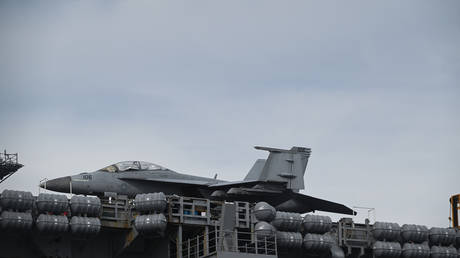
Geopolitical volatility in the Strait of Hormuz behaves as an artificial shift in the global oil supply schedule, compressing logistical capacity rather than permanently destroying geological reserves. The recent escalation—characterized by U.S. military strikes on Iranian installations near Bandar Abbas and Qeshm Island, followed by Iran's declaration of a total maritime closure of the strait—demonstrates that oil price spikes are driven by a quantifiable premium on transit risk and localized storage depletion, not an absolute scarcity of crude. When the primary chokepoint for 20 percent of global petroleum liquids is compromised, the immediate impact manifests as a sharp divergence between spot prices and long-term market balances.
To understand the macroeconomics of this conflict, analysts must move past sensationalized narratives of imminent war and evaluate the structural mechanics of the energy supply chain. The sudden increase in West Texas Intermediate (WTI) above $92 per barrel and Brent futures toward $95.40 is the direct consequence of a multi-variable disruption function. This pricing structure depends on three interrelated mechanisms: the physical insulation of maritime chokepoints, the acceleration of domestic inventory draws, and the operational timeline required to re-route or restore maritime transit. You might also find this connected coverage useful: The Quiet Architecture of a Handshake.
The Friction Function of Maritime Chokepoints
The Strait of Hormuz functions as the central logistical node for oil exporters in the Persian Gulf, including Saudi Arabia, the United Arab Emirates, Kuwait, Iraq, and Iran. Because alternative infrastructure possesses inadequate spare capacity to absorb the 20 million barrels per day (bpd) that typically pass through the waterway, any physical blockade or kinetic intervention introduces immediate structural friction.
This friction can be modeled through three operational variables: As discussed in recent coverage by Associated Press, the results are notable.
- The Insurance and Freight Risk Premium: Following kinetic actions, such as the targeting of the M/T Settebello and drone skirmishes affecting the U.S. Fifth Fleet, war-risk insurance premiums for commercial vessels spike exponentially. This increases the baseline cost of freight, which is immediately priced into spot crude contracts.
- The Capacity Constraints of Alternative Routing: While the East-West Pipeline in Saudi Arabia and the Abu Dhabi Crude Oil Pipeline offer bypass mechanisms, their combined underutilized capacity cannot accommodate more than 5 to 6 million bpd. The remaining volume faces a logistical bottleneck, stranding large quantities of crude within the Gulf.
- The Degradation of Export Volumes: The strict enforcement of a U.S. naval blockade has driven Iranian crude exports down to approximately 209,000 bpd. This represents a multi-year low that removes significant heavy sour crude supplies from Asian refiners, forcing them to look for alternative, more expensive grades.
The interaction of these variables creates a localized supply deficit. This deficit occurs even though oil fields outside the immediate conflict zone continue to operate at normal capacity.
The Destocking Squeeze and Domestic Inventory Elasticity
The market's vulnerability to these geopolitical shocks is compounded by a parallel contraction in domestic storage. Weekly data from the Energy Information Administration (EIA) revealed a steep 7.2 million barrel decline in U.S. commercial crude inventories, bringing total stockpiles down to 426.5 million barrels. This draw exceeded consensus market expectations of a 4 million barrel draw by 80 percent, signaling that physical markets were tightening well before the latest military escalation.
When macro geopolitical risk coincides with aggressive commercial inventory depletion, the elasticity of oil prices changes drastically. In an oversupplied environment with high inventory buffers, traders treat maritime skirmishes as temporary noise. However, when commercial inventories are low, the margin for safety disappears.
The depletion of the U.S. Strategic Petroleum Reserve (SPR) over recent cycles further limits the state's capacity to counter supply disruptions with emergency releases. The market is therefore left highly exposed to private destocking patterns. If international shipping through the strait remains frozen, refiners must draw down their localized operational inventories. This creates a backwardated futures curve where prompt physical barrels command a massive premium over future delivery dates.
The Temporality of Supply Bottlenecks vs. Structural Deficits
A critical analytical failure in standard commentary is treating a maritime blockade as a permanent loss of production capacity. Historical precedents and asset evaluation data indicate that Middle Eastern energy infrastructure features high structural resilience. For instance, the rapid recovery of Saudi Aramco assets following the 2019 Abqaiq attacks proved that physical damage to processing facilities can be mitigated and repaired within weeks, rather than months or years.
A comprehensive assessment by Fitch Ratings reinforces this view. The current market tightness is classified as a short-term logistical bottleneck rather than a fundamental degradation of global reserves. Global energy balances are projected to return to a state of structural surplus later in the year once the transit route reopens. This outlook relies on a clear operational sequence:
- Floating Storage Liquidation: The moment maritime transit becomes viable, millions of barrels of crude currently stranded in the Persian Gulf will hit the market simultaneously, easing immediate physical deficits.
- Non-OPEC Production Momentum: Robust output growth from independent producers in the Americas continues to expand baseline supply outside the OPEC sphere of influence.
- Rebound of Idle Infrastructure: Regional producers retain significant shut-in capacity that can be brought online rapidly to capitalize on high prices once shipping lanes clear.
Consequently, while the short-term price target for Brent crude remains skewed toward the $100 threshold due to active military posturing and threat declarations, the medium-term equilibrium price is anchored closer to $87 per barrel.
Strategic Exposure Management
For institutional asset managers and industrial energy consumers, managing this conflict requires ignoring political rhetoric and tracking quantifiable operational indicators. The primary metric to observe is the weekly change in global floating storage volumes outside the Persian Gulf, alongside the absolute draw rate of OECD commercial stockpiles.
The optimal strategic play under these parameters is to exploit the steepening backwardation of the futures curve. Organizations should hedge immediate volumetric requirements through short-dated options while avoiding long-dated long positions that assume a permanent shift in the structural floor of the oil market. The global supply curve has not broken; it has merely been rerouted through a higher-cost logistical channel. When the bottleneck clears, the return of stored inventory will quickly penalize overextended long positions.