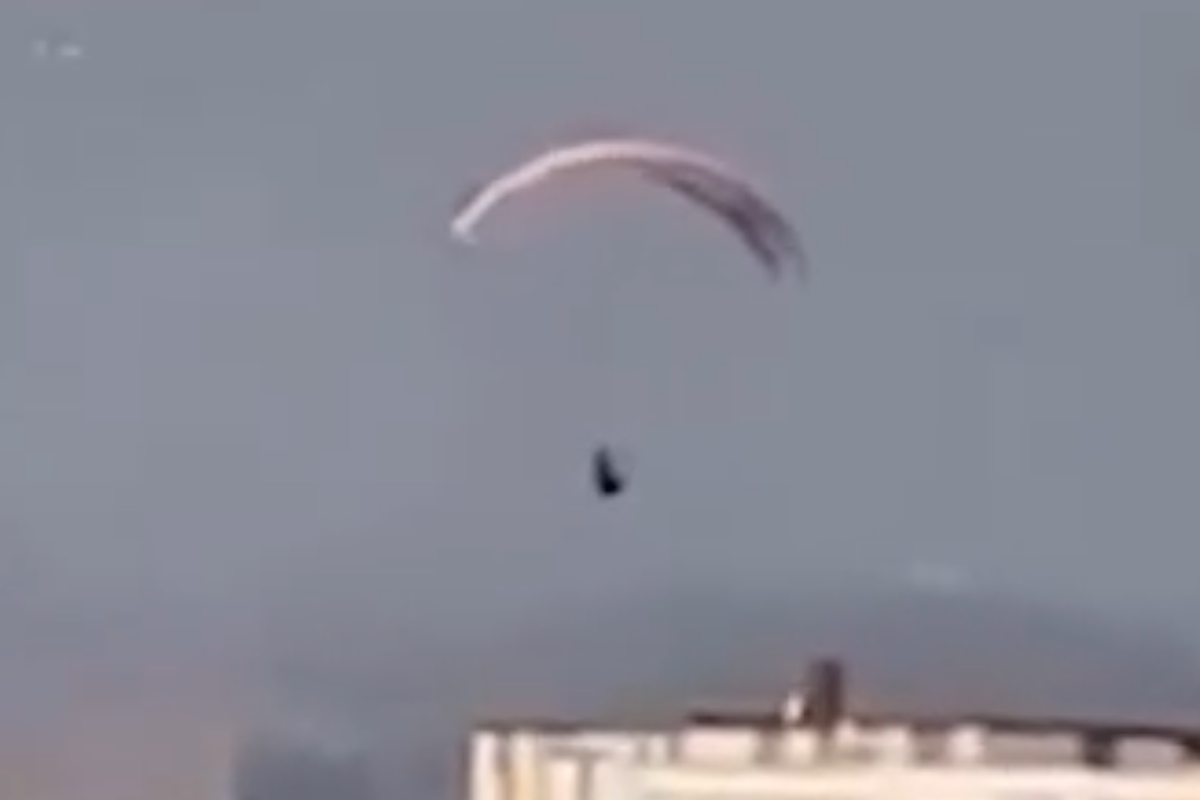
The fatal crash of a sub-Saharan migrant attempting an aerial crossing into the Spanish North African enclave of Ceuta marks a significant tactical escalation in irregular migration methods. Launching from the mountainous terrain near Benzú via a motorized paraglider, or paramotor, the operator lost control and descended into the sea, resulting in the first recorded fatality of this specific transit vector. Standard terrestrial and maritime surveillance architectures along the Morocco-Spain border have forced a structural shift toward airborne transport models, exposing severe operational risks inherent to makeshift aviation.
The Operational Mechanics of Aerial Border Infiltration
Border fortification operates on a matrix of physical exclusion, primarily optimized for terrestrial breaches, such as perimeter fence scaling, and maritime interceptions, such as rubber dinghy navigation. When border authorities harden these two vectors, the economic and logistical cost function for unauthorized entry spikes.
In response, transit networks adapt by seeking alternative vectors that bypass surface-level bottlenecks. The introduction of motorized paragliding represents a substitution strategy designed to exploit the vertical dimension of sovereignty.
[Moroccan High Terrain / Benzú]
       │
       ▼ (Aerial Vector Launch)
[Vertical Airspace Bypass]
       │
       ▼ (Aerodynamic Failure / Control Loss)
[Maritime Descent / Fatal Impact]
This substitution relies on three distinct variables:
- Capital accessibility to lightweight aviation equipment.
- Geographic topology, utilizing elevated launch sites like the hills surrounding Benzú to minimize required thrust on takeoff.
- The absence of integrated low-altitude radar or acoustic detection networks capable of neutralizing slow, low-flying aerial signatures in real time.
Despite these theoretical bypass mechanisms, the physical reality of operating uncertified aviation equipment introduces catastrophic failure points.
The Physics of Failure in Low-Altitude Transits
A paramotor combines a flexible paraglider wing with a back-mounted motor and propeller. While the system offers independent propulsion, it requires precise aerodynamic management, stable atmospheric conditions, and advanced piloting competence.
The fatal incident near Ceuta underscores the structural mismatch between the complexity of the machinery and the operator's experience level. Micro-meteorological conditions along the Strait of Gibraltar—characterized by sudden thermal shifts, wind shear off coastal mountains, and maritime downdrafts—create a hostile flight envelope for amateur operators.
Without instrumentation or formal training, a pilot navigating the Benzú sector faces immediate aerodynamic risks:
- Stall induction during low-speed ascents over high terrain.
- Loss of directional control due to maritime crosswinds.
- Immediate impact trauma or drowning upon water descent, given the weight of the motor assembly restricting self-recovery.
The Civil Guard's rapid response via maritime units confirms that while aerial vectors bypass static fencing, they remain vulnerable to rapid coastal interdiction and offer zero margin for error upon mechanical or pilot failure.
The Strategic Shift in Border Enforcement
The diversification into aerial infiltration forces a parallel evolution in border security resource allocation. Traditional infrastructure investments—fence height extensions, thermal imaging cameras focused on land routes, and surface patrol vessels—address linear pathways.
When migration patterns fragment into sporadic, high-risk aviation attempts, security architectures must pivot from perimeter defense to airspace monitoring. This requires deploying portable acoustic sensors, low-altitude optical tracking, and rapid-response intercept protocols tailored to ultra-light aircraft.
Interdicting these methods requires shifting focus upstream to intercept the procurement and staging of paragliding equipment before launch vectors are established. Supply chain tracking of motor units and training suppression on the Moroccan side remain the primary variables for reducing the frequency of airborne attempts.


