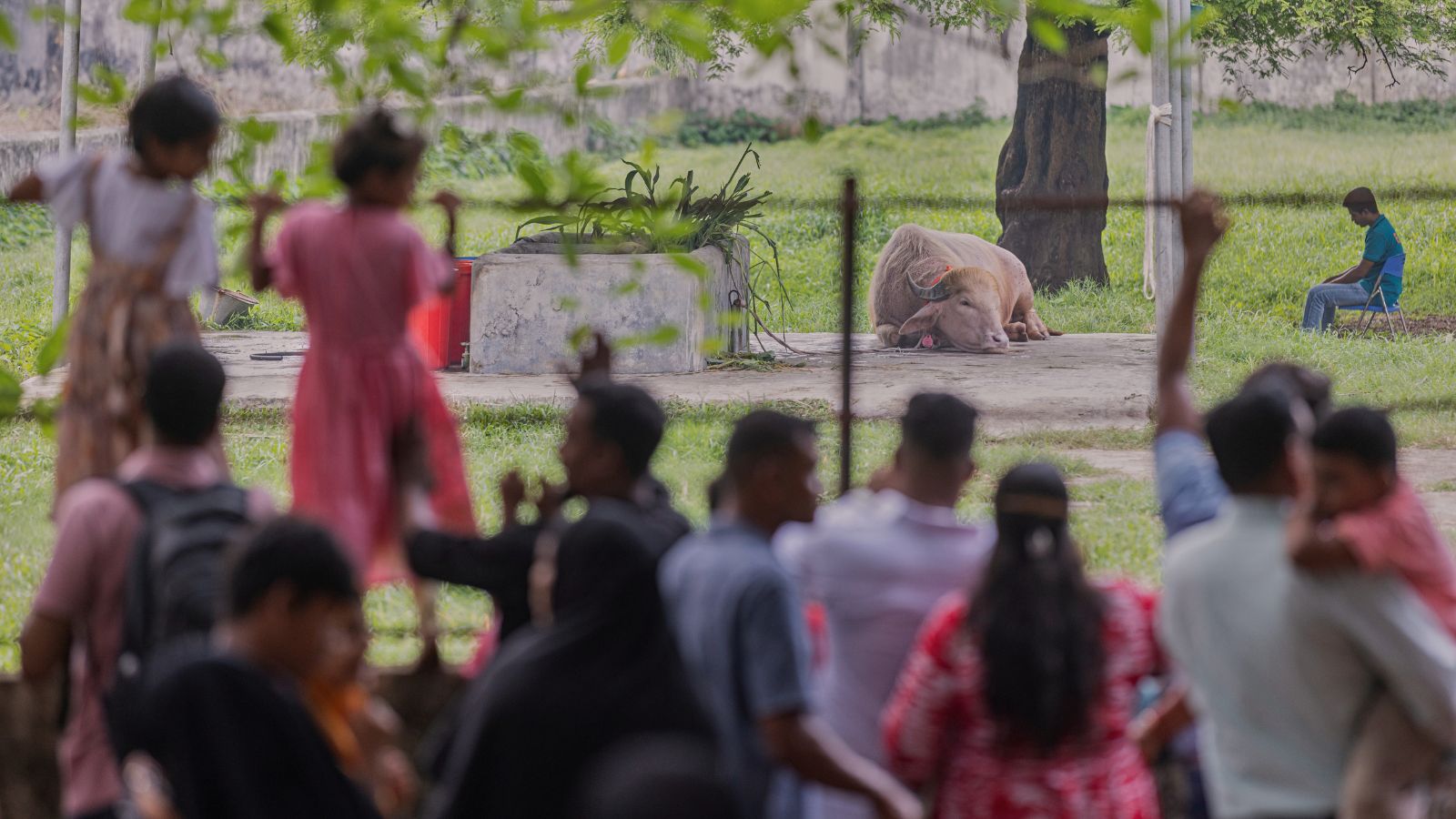
The transformation of a 700-kilogram albino water buffalo into a permanent public asset at the Bangladesh National Zoo reveals a complex intersection of viral mechanics, state market intervention, and institutional risk management. The animal, named "Donald Trump" due to a unique genetic expression that left it with a distinct blonde cranial tuft and pinkish skin tone, was originally integrated into the standard seasonal supply chain for the Eid al-Adha holiday.
The economic and structural disruption that followed demonstrates how digital virality can completely alter traditional commodity markets and force state-level intervention. This breakdown analyzes the underlying operational dynamics, systemic risks, and administrative costs generated by this event.
The Mechanistic Drivers of Digital Virality
The transition of the livestock from a standard agricultural asset to a high-value cultural phenomenon follows a clear three-stage framework of digital attention optimization.
[Phase 1: Visual Defamiliarization] -> [Phase 2: Geopolitical Labeling] -> [Phase 3: Network Effects]
1. Visual Defamiliarization
Water buffalo (Bubalus bubalis) populations in South Asia are predominantly dark gray or black due to standard melanin distribution. The genetic anomaly of albinism represents a severe statistical outlier. This visual contrast establishes immediate scroll-stopping potential on algorithmically driven short-form video feeds.
2. Geopolitical Labeling
The physical features—specifically the light-colored tuft and pinkish hue—allowed for an immediate, high-impact comparison to a globally recognized political figure. By assigning the name "Donald Trump," the farm operators created a major shortcut for audience engagement. This label successfully linked a local agricultural asset to global political imagery, massively broadening its potential audience.
3. Network Effects and the Attention Flywheel
Once digital distribution networks picked up the initial content, user engagement patterns triggered algorithmic amplification. This dynamic altered consumer behavior in the physical world, transforming an asset designed for private consumption into a crowded public attraction at Rabeya Agro Farm in Narayanganj.
State Intervention and Market Disruption Metrics
The decision by Home Minister Salahuddin Ahmed to order law enforcement to seize the animal and stop its scheduled ritual sale represents a direct state intervention in a private commercial transaction. This disruption can be quantified through distinct operational and economic mechanisms.
The Forced Liquidation and Reversal Cost Function
The asset had already completed its primary transactional cycle, having been sold on a liveweight basis to a private trader in Old Dhaka. To reverse this transaction, the state had to deploy a specific financial and regulatory framework:
$$C_{total} = R_{buyer} + L_{logistics} + P_{enforcement}$$
Where:
- $R_{buyer}$ represents the direct cash refund paid to the initial purchasing trader to clear the title of ownership.
- $L_{logistics}$ represents the specialized transport costs required to move a highly sensitive 700-kilogram animal under police escort.
- $P_{enforcement}$ represents the opportunity cost of deploying law enforcement personnel to secure an agricultural asset.
The state justified this unusual reallocation of public funds by citing "security concerns." In high-density regions like Dhaka, a massive influx of spectators to a single point creates severe public safety challenges. Crowds gathered at local farms and the livestock market clogged logistical pathways, posing a genuine crowd-control risk.
By stepping in, the Ministry of Home Affairs essentially decided that absorbing the transaction costs was cheaper than managing the unpredictable public safety risks of a viral crowd at a standard livestock market.
Zoo Operations and Institutional Friction
The arrival of the asset at the Bangladesh National Zoo in Mirpur shifted the operational burden from public safety management to long-term institutional care. This transition exposed significant friction within the zoo's administrative and operational structures.
The Specialized Upkeep Premium
The biological realities of an albino water buffalo require a strict resource allocation strategy that sets it apart from standard livestock. The zoo had to quickly implement a specialized care regimen:
- Thermoregulation Demands: Because the animal lacks protective skin melanin, it is highly sensitive to solar radiation and ambient heat. Maintaining homeostatic stability during peak summer temperatures required installing dedicated cooling fans and hosing the animal down four times a day.
- Labor Reallocation: Grooming requirements—such as styling the distinctive blonde hair to maintain its public image—demanded dedicated staff hours, pulling personnel away from other veterinary and husbandry duties.
Administrative Attrition and Political Risk
The intersection of public administration and politically charged satire created severe institutional strain. While the animal's name drove record foot traffic, it also exposed the organization to political and diplomatic sensitivities.
The installation of an official enclosure sign reading "Donald Trump" highlighted a clear conflict between driving short-term engagement and maintaining long-term institutional decorum.
[Official "Donald Trump" Signboard]
               │
               ▼ (Public Criticism & Diplomatic Sensitivity)
[Signage Rapidly Removed]
               │
               ▼ (Institutional Fallout)
[Dismissal of the Zoo Curator]
The removal of the signage and the sudden dismissal of the zoo curator emphasize the risks that public institutions face when trying to capitalize on volatile internet trends.
Long-Term Outlook for Public Asset Management
The acquisition of this viral asset highlights a unique challenge for public entertainment and zoological facilities: managing the rapid depreciation of internet fame against the fixed, long-term costs of animal care.
The facility is currently enjoying a major spike in ticket sales as visitors travel from distant regions, like Jashore, specifically to see the animal. However, historical data on viral trends suggest this public interest will eventually decline.
The zoo has permanently added a high-maintenance, 700-kilogram animal to its balance sheet, and its specialized care costs will remain constant long after the internet attention fades.
To manage this risk, the institution must transition the asset's positioning away from a fleeting political meme and toward an educational exhibit focused on the genetics of albinism in mammals. Failing to shift this narrative will leave the zoo holding a costly operational burden once the online hype cycle moves on to the next trend.
Bangladesh's 'Donald Trump' Buffalo Goes Viral Ahead Of Eid Sacrifice
This video provides an operational look at the albino buffalo's specific care requirements, its 700-kilogram build, and the initial market dynamics in Bangladesh before state intervention.