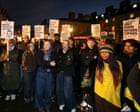
Institutional friction at elite universities follows a predictable structural pattern when legal free-speech mandates collide with internal community norms. The protests surrounding Nathan Cofnas’s scheduled address on Diversity, Equity, and Inclusion (DEI) at Oriel College, Oxford, demonstrate how decentralized university governance creates severe operational vulnerabilities. Rather than representing a localized dispute over a single speaker, this incident exposes a fundamental misalignment between statutory compliance, administrative risk management, and reputational capital within ancient collegiate institutions.
The Governance Architecture of Oxford Colleges
To understand the mechanics of the Oriel College confrontation, one must first analyze the federated structure of the University of Oxford. Unlike centralized corporate hierarchies or standard American universities, Oxford operates as a confederation of over thirty self-governing colleges alongside a central administrative body. Each college functions as an independent legal entity with its own endowment, governing body of fellows, and campus security apparatus.
This decentralization produces three distinct operational dynamics during contentious campus events:
- Fragmented Liability: When a student society or an external group books a room within a specific college, the legal and physical burden of hosting falls directly on that individual college’s administration, not the central university.
- Asymmetric Resource Allocation: Individual colleges lack the standing security infrastructure and crisis communications teams available to central university administrations, forcing them to rely on external police coordination or reactive administrative lockdowns when crowd sizes exceed local capacity.
- Jurisdictional Ambiguity: Protesters frequently target the central university brand, while legal accountability under United Kingdom statutory frameworks rests with the specific hosting entity.
At Oriel College, the decision to permit a talk critiquing DEI frameworks by Nathan Cofnas—a philosopher whose published views on race and intelligence have drawn sustained academic criticism—triggered a mobilization of hundreds of students and community members. Standard news coverage treats this mobilization as a binary clash between free expression and anti-racism advocacy. An operational analysis reveals a multi-variable governance failure where existing administrative protocols could not absorb the shock of ideological polarization.
The Statutory Mandate Versus Institutional Risk
Under United Kingdom law, specifically the Education (No. 2) Act 1986 and the reinforced provisions of the Higher Education (Freedom of Speech) Act 2023, universities and their constituent colleges face strict statutory duties to secure freedom of speech within the law. Administrators cannot legally cancel or block a scheduled event solely because the speaker’s views are offensive, controversial, or rejected by a majority of the student body.
This legal constraint alters the administrative decision matrix. In a standard corporate environment, an executive team evaluates a controversial public event through a reputational risk framework: if the projected brand damage outweighs the commercial or strategic benefit, the event is canceled. Collegiate administrators operating under UK higher education law do not possess this unilateral cancellation option.
Instead, college leadership must manage a constrained optimization problem characterized by competing liabilities:
- Regulatory Penalty Risk: Canceling or de-platforming a lawful speaker exposes the institution to formal complaints, regulatory investigation by the Office for Students (OfS), and financial penalties.
- Physical Security Cost: Hosting the speaker requires deploying private security, coordinating with Thames Valley Police, and restricting access to college grounds, incurring immediate financial overhead and disrupting daily academic operations.
- Internal Stakeholder Attrition: Proceeding with the event alienates resident students, junior research fellows, and faculty members who view the speaker's platforming as a direct contradiction of the college's stated inclusivity commitments.
When hundreds of protesters gathered outside Oriel College, the administration was executing the only legally compliant path available to it: facilitating the event while physically securing the perimeter. The resulting visual of police lines and locked college gates is not an accidental byproduct of poor planning; it is the direct operational cost of maintaining statutory compliance in a high-friction environment.
The Mechanics of Protest Mobilization and Counter-Signaling
The mobilization of several hundred individuals at Oriel College illustrates how modern campus activism operates as a signaling mechanism rather than a conventional negotiation. In traditional labor or political disputes, protests aim to extract a specific policy concession from decision-makers. When administrators are legally barred from granting the primary demand—canceling the speaker—the protest shifts its functional objective.
The protest serves three distinct functions for its participants and organizers:
- Reputational Decoupling: Students and faculty publicly separate their personal and academic identities from the hosting institution's decision. By occupying the physical space outside the venue, participants signal to external peers and future employers that they reject the speaker's premises.
- Cost Escalation: While protesters cannot force a legal cancellation, they can dramatically increase the financial and logistical cost of hosting future controversial speakers. Every subsequent invitation must now factor in heightened security budgets, crowd-control infrastructure, and administrative disruption.
- Narrative Framing: Physical protests shift media coverage from the substance of the speaker's lecture to the controversy surrounding their presence. In the Oriel case, public discourse focused overwhelmingly on the blockade and the surrounding ideological conflict rather than the specific arguments presented inside the hall.
Simultaneously, the speaker and their ideological allies derive strategic value from the opposition. Within the attention economy of modern political discourse, high-visibility protests validate the speaker's framing that their views are being suppressed by an ideological orthodoxy. The presence of hundreds of demonstrators transforms an otherwise routine academic seminar—which might ordinarily draw an audience of twenty specialists—into an international news event. Both sides achieve a form of narrative reinforcement through the confrontation, leaving the hosting institution to absorb the operational and reputational costs.
The Structural Vulnerability of DEI Frameworks in Academic Settings
The specific subject matter of the Oriel College talk—a critique of Diversity, Equity, and Inclusion policies—introduces an internal contradiction that exacerbates institutional stress. Over the past decade, UK universities have integrated DEI frameworks into faculty hiring, admissions outreach, and administrative governance. These frameworks are designed to promote demographic representation and mitigate systemic bias.
However, when DEI principles are institutionalized as administrative policy rather than treated as testable sociological hypotheses, they create friction with traditional academic norms of unfettered inquiry. A core tenet of academic methodology is that no administrative framework or philosophical consensus is immune from critique.
When a researcher challenges the theoretical foundations or empirical outcomes of DEI initiatives, administrators face an internal paradox:
- Policy Alignment: The institution's human resources and student welfare departments actively enforce DEI standards as operational policy.
- Academic Autonomy: The institution's academic charter protects the right of researchers to argue that those exact policies are flawed, counterproductive, or theoretically unsound.
This structural tension explains why critiques of DEI generate disproportionately intense reactions compared to standard political debates. For critics, challenging DEI is an essential exercise in institutional accountability. For defenders, particularly students from underrepresented backgrounds, questioning the legitimacy of equity frameworks is perceived as a direct challenge to their belonging and institutional protection within the university. Without clear administrative boundaries separating operational HR policies from open academic debate, every critique of DEI triggers an existential conflict over institutional legitimacy.
Comparative Models of Institutional Crisis Management
When evaluating how academic institutions respond to high-friction events, three distinct operational models emerge across higher education sectors:
The Containment Model (Oriel College Approach)
The institution upholds the booking, restricts campus access to registered attendees, deploys physical security, and allows the event to proceed behind closed doors.
- Advantage: Full compliance with statutory free-speech mandates and avoidance of regulatory fines.
- Limitation: High immediate security costs, severe disruption to normal campus life, and persistent visual optics of institutional siege.
The Preemptive Cancellation Model
The institution revokes the venue booking citing health and safety concerns, inability to guarantee crowd control, or breaches of internal harassment policies.
- Advantage: Eliminates immediate physical disruption and appeases internal student and faculty coalitions.
- Limitation: Triggers severe legal exposure under UK free-speech legislation, invites regulatory intervention, and establishes a precedent where the threat of protest dictates the academic calendar—commonly termed the "heckler's veto."
The Institutionalized Counter-Programming Model
The institution hosts the controversial speaker while simultaneously funding and promoting an official panel featuring opposing academic viewpoints, explicitly framing the event within a broader scholarly debate.
- Advantage: Reasserts the university's role as an arbiter of rigorous debate rather than a passive venue provider, reducing the incentive for external blockade protests.
- Limitation: Requires significant lead time, active participation from senior faculty willing to engage with controversial figures, and risks legitimizing views that segments of the faculty consider outside the bounds of respectable scholarship.
Oriel College defaulted to the Containment Model largely because the booking originated through a specific group rather than a central academic department, leaving college leadership with minimal lead time to construct a broader scholarly framework around the event.
Second-Order Effects on Academic Operations
The immediate aftermath of a major campus protest rarely captures the long-term operational adjustments made by university administrators. Following events like the Oriel College demonstration, institutions systematically alter their internal bureaucratic processes to reduce future friction without explicitly violating free-speech laws.
This bureaucratic adaptation manifests in three ways:
- Procedural Friction: Colleges introduce extended advance-notice requirements for external speaker bookings, mandatory risk assessments, and complex insurance prerequisites. While framed as neutral administrative updates, these requirements raise the transaction cost for student societies attempting to invite controversial guests.
- Venue Concentration: Individual colleges quietly discourage bookings that carry high security profiles, nudging event organizers toward larger, central university facilities equipped with dedicated security personnel. This shifts the operational burden away from smaller collegiate communities.
- Self-Censorship by Organizers: Faced with the prospect of navigating intense administrative scrutiny, police coordination, and social ostracization from peers, student organizers become less likely to extend invitations to polarizing figures, achieving a de facto reduction in contentious events without any formal administrative ban.
These second-order effects demonstrate that statutory mandates alone cannot guarantee a culture of open debate. While the law can prevent administrators from issuing formal cancellations, it cannot eliminate the social, financial, and logistical friction that shapes human behavior within a closed academic community.
Strategic Framework for Collegiate Administrators
To navigate the intersection of statutory free-speech requirements and intense campus polarization without defaulting to costly physical lockdowns, collegiate governing bodies must transition from reactive containment to proactive governance architecture.
Institutions should implement a three-part operational protocol before high-friction events occur:
First, decouple venue administration from ideological endorsement through standardized, transparent booking algorithms. Colleges must publish objective, non-discretionary criteria for room allocations and security cost absorption. When security expenses are covered by a pooled collegiate fund rather than charged to individual student societies, institutions eliminate the financial barrier that indirectly suppresses controversial speech while maintaining clear operational budgets.
Second, establish a rapid-response academic framing mechanism. When a scheduled talk involves a polarizing figure or a direct challenge to institutional norms such as DEI, the college's academic leadership—not its communications or security teams—should immediately offer a structured respondent format. Assigning a senior fellow to provide a rigorous, evidence-based critique immediately following the speaker's remarks channels opposition into scholarly refutation rather than physical blockade.
Third, enforce strict spatial and operational boundaries during demonstrations. Colleges must designate clear protest zones that guarantee visibility and audibility for demonstrators while preserving unimpeded physical access to academic buildings. By establishing predictable rules of engagement in advance with student unions and local law enforcement, administrators prevent protests from escalating into physical blockades that force institutional lockdowns.
Universities cannot eliminate ideological polarization among their students and faculty, nor can they alter the statutory frameworks governing public expression. Success in academic governance therefore depends on building institutional shock absorbers—clear procedural rules, pooled security resources, and structured scholarly debate—that allow contentious ideas to be examined and refuted without paralyzing the core operations of the college.