The Short Fuse in the Classroom
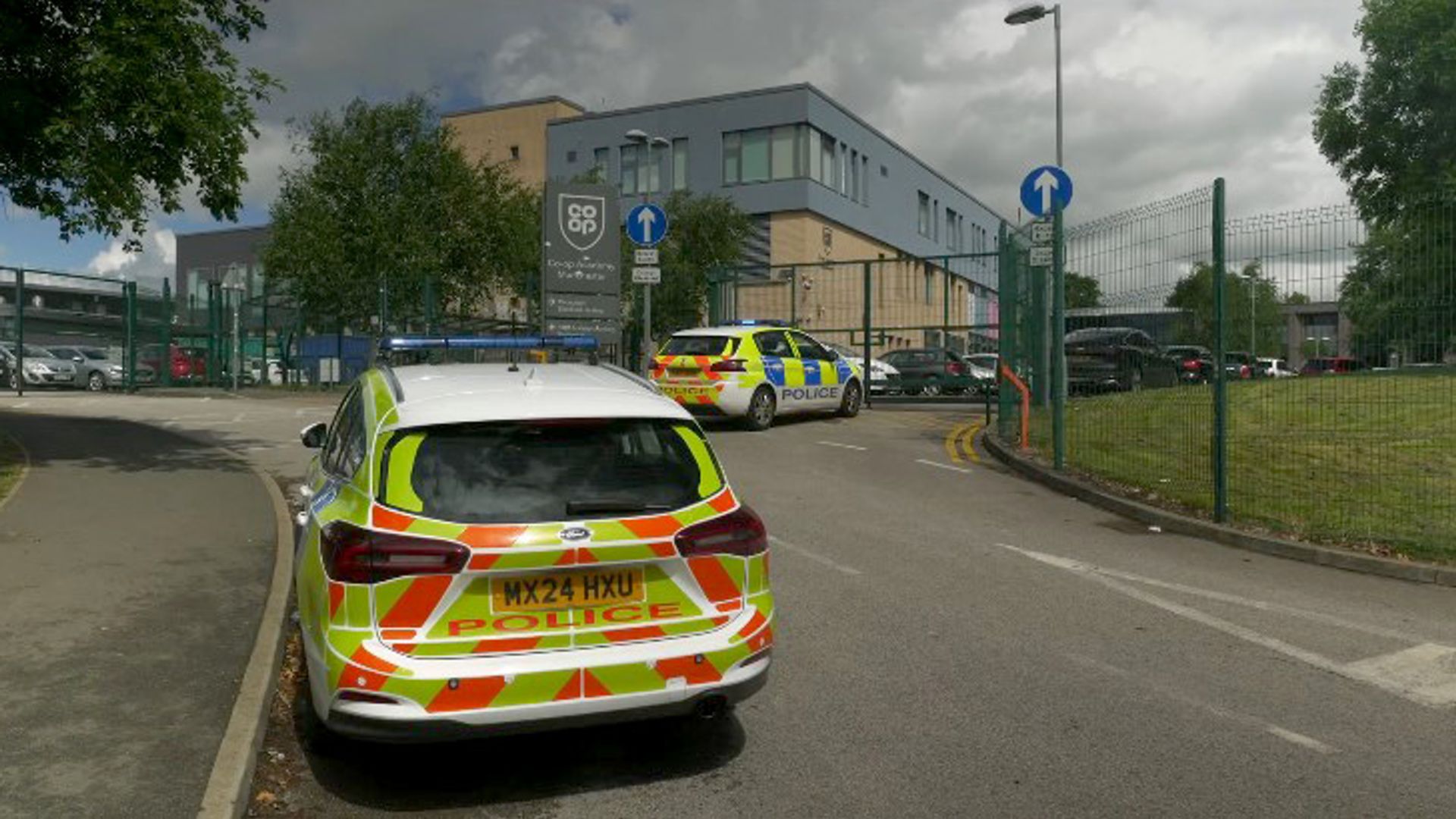
A fourteen-year-old girl faces attempted murder charges after a stabbing at Ysgol Dyffryn Aman in Ammanford, South Wales, leaving two teachers and a pupil injured. This is not an isolated flashpoint of schoolyard violence, but the predictable consequence of a systemic failure. When a child reaches the point of carrying a blade into a classroom, multiple institutional safety nets have already torn apart. The subsequent decision to detain the teenager under the Mental Health Act—colloquially known as sectioning—exposes a profound crisis in how the state monitors, treats, and manages acute psychiatric distress in minors.
For years, the public conversation around school stabbings has focused strictly on the mechanics of security. Communities demand metal detectors, knife arches, and increased police presence in corridors. These measures treat the symptom while completely ignoring the pathology. The reality is that the UK’s Child and Adolescent Mental Health Services (CAMHS) are operating under a backlog so severe that early intervention has become a functional impossibility. By the time a juvenile exhibits behaviors extreme enough to trigger emergency psychiatric detention, the window for preventative care has long since closed. For a deeper dive into this area, we recommend: this related article.
The Anatomy of a Red Flag
Security in modern education cannot be achieved through physical barriers alone. It requires an understanding of behavioral escalation. In the wake of the Ammanford attack, the immediate reaction followed a familiar script: shock, condemnation, and calls for harsher disciplinary frameworks. Yet, interviews with educational professionals and psychiatric analysts paint a far more complex picture of the weeks and months leading up to such events.
Children do not violently unravel without warning. They leave a trail of digital and behavioral indicators. The difficulty lies in the fact that teachers are currently functioning as surrogate social workers, crisis counselors, and security guards, all while stripped of the resources needed to escalate concerns effectively. To get more background on this topic, extensive coverage can also be found at Associated Press.
When a school identifies a pupil in psychological distress, the standard procedure is a referral to local mental health teams. In the current climate, those referrals enter a bureaucratic void.
The Waiting Room Crisis
The statistics governing youth psychiatric care are bleak. Across many local authorities, the average wait time for an initial assessment spans from several months to over a year. During this interim period, the child remains in the standard school environment, their condition deteriorating under the ordinary pressures of academic and social life.
Consider the mechanics of a typical referral. A teacher notices a sharp withdrawal, sudden drops in academic performance, or cryptic notes in a workbook. The school’s designated safeguarding lead files the paperwork. Under funded mandates, this referral is frequently categorized as non-urgent unless there is an explicit, immediate threat of self-harm or violence.
The threshold for "urgent" care has been pushed so high that young people must frequently attempt suicide or exhibit severe aggression before they receive meaningful clinical attention.
The Mechanics of Sectioning
Detention under the Mental Health Act is a legal mechanism designed for immediate containment, not long-term rehabilitation. When a juvenile is sectioned following a violent incident, they are removed from the criminal justice track and placed into a secure psychiatric facility. This process requires the assessment of two independent doctors and an approved mental health professional.
This measure represents a total failure of the primary care model. Sectioning a fourteen-year-old means the community, the school, and the local health board failed to intervene when the underlying illness was manageable. Secure youth psychiatric beds are critically scarce in the UK, often forcing authorities to place distressed minors in facilities hundreds of miles from their families, or worse, in adult wards under emergency conditions.
The Myth of the Sudden Outburst
Public narrative often frames these incidents as sudden, unprovoked acts of malice. It is a convenient fiction that absolves institutions of responsibility. If a child is deemed an "evil outlier," then no one has to look at the structural decay of the support networks surrounding them.
The truth is that violent behavior in adolescents is frequently the outward expression of unaddressed trauma, neurodivergence, or severe psychosis. When these conditions are ignored, they fester. The classroom becomes a pressure cooker.
[Early Behavioral Shifts] ➔ [School Referral Filed] ➔ [Months of Bureaucratic Delay] ➔ [Acute Crisis / Violence] ➔ [Emergency Sectioning]
To understand the trajectory, look at how schools handle disciplinary issues. Zero-tolerance policies often favor exclusion over investigation. A student who displays erratic or aggressive behavior is suspended, cutting off their access to the few pastoral staff members who might actually understand their situation. This isolation accelerates the downward spiral, pushing the individual toward online echo chambers or escalating self-harming tendencies that can eventually turn outward.
Defunding the Safety Net
The escalation of school-based violence sits directly alongside the systematic defunding of local government services over the past two decades. Youth clubs have been shuttered. Early intervention programs have been disbanded. School counselors have been replaced by automated online resources or self-help leaflets.
This systematic withdrawal of community support has shifted the entire burden onto the classroom teacher. A typical educator is trained to deliver a curriculum, manage classroom dynamics, and grade examinations. They are not clinicians. They cannot diagnose a brewing psychotic episode or safely de-escalate a teenager experiencing a profound break from reality.
The Breakdown of Inter-Agency Communication
One of the most damning aspects of these high-profile incidents is the consistent breakdown in communication between separate public bodies. Social services, NHS trusts, local education authorities, and the police routinely operate within siloed data networks.
- Social Services may hold a file detailing severe domestic instability or historical abuse.
- The NHS Trust may have a record of missed psychiatric appointments or medication non-compliance.
- The School might only see a disruptive student who refuses to follow instructions.
- The Police might have responded to domestic disturbances at the home address without the school ever being notified.
Because these agencies do not seamlessly share actionable intelligence, the full picture remains hidden until a crisis occurs. The school is left completely blind to the true level of risk sitting in the middle of the third-row desk.
The Illusion of School Security
Whenever an event like the Ammanford stabbing occurs, the immediate political response is to pivot toward hardware. Politicians promise more security cameras, knife sweeps, and even the stationing of permanent police officers within school boundaries.
These proposals miss the mark entirely. A student determined to cause harm can easily bypass a metal detector by using an alternative entry point, smuggling an implement in a gym bag, or executing the attack just outside the school gates. Furthermore, turning educational institutions into mini-prisons does nothing to de-escalate the psychological distress driving the behavior. It actively increases the baseline anxiety of the entire student body.
The focus must shift from physical containment to clinical intervention. If a fraction of the budget spent on reactive policing were redirected toward placing full-time, qualified mental health clinicians inside every secondary school, the trajectory of these cases would change. A clinician on site can spot the early signs of decompensation, bypass the standard CAMHS waiting list, and initiate immediate therapeutic or psychiatric management before a weapon is ever sought.
The Long-Term Failure of Crisis Management
Sectioning an individual provides a temporary pause. It removes the immediate threat from the classroom and places the individual in a controlled environment where they can be medicated and monitored. But it is a short-term fix for a chronic, structural problem.
Eventually, these young people must be discharged. If they return to the exact same under-resourced schools, the same fractured home lives, and the same broken community structures without continuous, intensive outpatient support, the cycle simply resets. The underlying psychiatric vulnerability remains, now compounded by the stigma of emergency detention and a criminal record.
The Ammanford stabbing should not be viewed through the narrow lens of criminal justice or school discipline. It is an indictment of a society that has allowed its youth psychiatric infrastructure to collapse to the point where a fourteen-year-old girl’s first meaningful interaction with a mental health professional occurs only after three people have been wounded in a classroom.
True accountability requires looking beyond the immediate horror of the attack and confronting the systemic neglect that allowed the situation to escalate to the point of bloodshed. We must overhaul the referral pipeline, eliminate the waiting lists that turn manageable conditions into acute crises, and break down the bureaucratic walls that keep schools in the dark about the volatile realities of the children under their care.