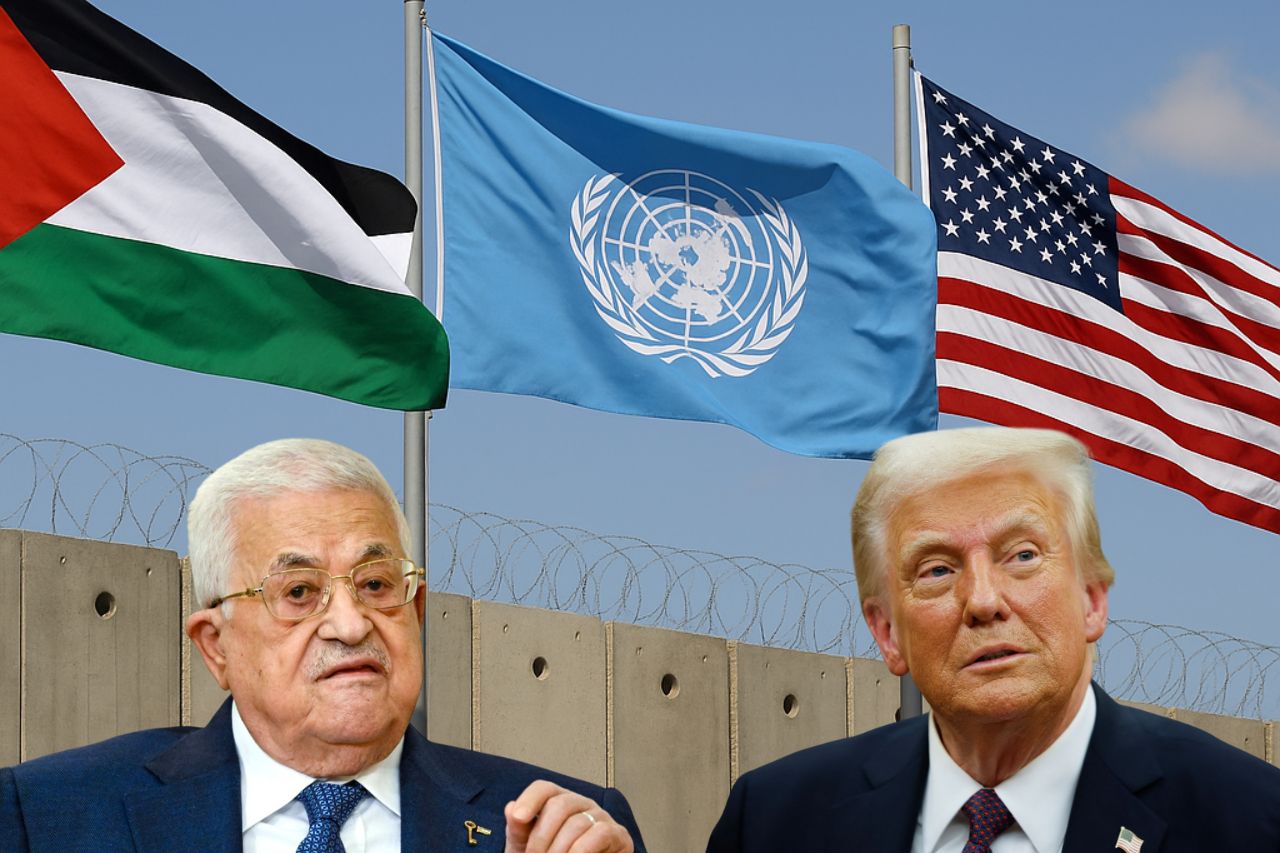
The foreign policy establishment is bored. When they get bored, they invent "crises" of disagreement to justify their own existence. The recent flurry of op-eds and think-tank panels claiming that the most influential Americans are "at odds" over Iran is a choreographed lie. It’s a performance designed to make you believe there is a spectrum of debate when, in reality, there is only a circle-jerk of shared assumptions that have failed for forty years.
They want you to think there is a "hawk" camp and a "dove" camp. There isn't. There is only a group of people who believe the United States has the divine right to micromanage the Persian Gulf and a group of people who believe we should do it with slightly different paperwork. While they bicker over the nuances of enrichment percentages and "red lines," they are missing the seismic shift in the actual mechanics of power.
The Myth of the Great Divide
Listen to the pundits and they’ll tell you the divide is between the "Maximum Pressure" crowd and the "Diplomacy First" advocates. This is a false binary. Both sides share the exact same hallucination: that Iran is a rational actor waiting for the right American incentive to change its core identity.
I’ve sat in rooms with these policy architects. I’ve seen them burn through millions in grant money to produce reports that essentially say, "If we just squeeze them more, they’ll break," or "If we just talk more, they’ll chill." They are both wrong. Iran’s ruling class isn't looking for a deal; they are looking for survival and regional hegemony. American "influence" isn't a dial you can turn; it’s a blunt instrument that has lost its edge.
The consensus view assumes that American domestic disagreement is the primary variable in the Middle East. It’s the ultimate vanity. We think our internal squabbles dictate the behavior of a 2,500-year-old civilization. They don't. While Washington argues about whether to use a stick or a carrot, Tehran is building a whole new garden.
Your Sanctions Are Actually a Gift
The "hawks" love sanctions. They think they are starving the beast. In reality, they are just refining it. Decades of isolation haven't collapsed the Iranian economy; they have created a "Resistance Economy" that is increasingly decoupled from Western financial systems.
When you kick a country out of SWIFT, you don't make them beg to come back. You force them to build an alternative. Iran, Russia, and China are currently architecting a parallel financial reality that makes the U.S. Treasury’s "influence" look like a VHS tape in a Netflix world.
- Misconception: Sanctions weaken the regime.
- The Reality: Sanctions kill the middle class—the only group that could actually push for internal change—while the IRGC (Islamic Revolutionary Guard Corps) seizes control of the black markets.
The IRGC doesn't hate sanctions. They thrive on them. When legal trade dies, the guys with the boats and the guns become the only wholesalers in town. We aren't weakening the regime; we are subsidizing its most radical elements by giving them a monopoly on the entire national economy.
The Diplomacy Trap
Then you have the "doves." These are the folks who believe the JCPOA (the Iran nuclear deal) was a masterpiece of statecraft. It wasn't. It was a temporary restraining order sold as a marriage certificate.
The diplomacy camp operates on the "Mirror Image" fallacy. They assume the Iranian leadership wants what a Silicon Valley executive wants: prosperity, integration, and a seat at the global table. They don't. The clerical establishment views "integration" as a Trojan horse for Western cultural infection. They don't want your banks; they want your absence.
The influential Americans pushing for a return to 2015-style diplomacy are ignoring the fact that the map has changed. Iran isn't the isolated pariah it was ten years ago. They are a senior partner in a new Eurasian bloc. They provide drones to Russia. They sell oil to China. They are a founding member of the "We Hate the Status Quo" club. You can't "incentivize" someone who has already found a better group of friends.
The Energy Illusion
The most influential voices in U.S. energy policy are still acting like it’s 1979. They talk about the Strait of Hormuz as if it’s the only jugular vein in the world. This obsession with "stability" at any cost is what keeps us tethered to a failed strategy.
The reality is that U.S. energy independence—though frequently debated and misrepresented—has fundamentally changed the math. We don't need the oil. We stay involved to protect the price of oil for our "allies" who often work against our interests. We are spending trillions in military overhead to subsidize the energy costs of Europe and Asia.
Why? Because the "influential" class is terrified of what happens if the U.S. stops being the global guarantor. They are addicted to the prestige of being the world's policeman, even when the precinct is on fire and the locals are throwing bricks at the cruisers.
The BRICS Pivot You're Ignoring
While the "influential" Americans are at odds over whether to tweet or Tomahawk, Iran joined BRICS. This isn't just a symbolic gesture. It’s a structural realignment.
The American debate is focused on "containing" Iran. But how do you contain water in a sieve? You can't isolate a country that is physically and economically integrated into the world's most populous continent. The U.S. policy elite is still playing Risk while the rest of the world is playing Go.
The internal American disagreement is actually a sign of weakness, not a vibrant democratic debate. It tells our adversaries that every four to eight years, the entire foreign policy of the United States will do a 180-degree turn. Why would any rational actor in Tehran make a long-term concession to an administration that might be replaced by its polar opposite in the next election cycle?
Our "influence" is being liquidated by our own volatility.
Stop Trying to "Solve" Iran
The fundamental mistake of the influential American class—both left and right—is the belief that Iran is a problem to be "solved." It isn't. It’s a reality to be managed.
The obsession with a "grand bargain" or "regime change" is a vanity project for DC think tanks. Real influence comes from knowing when to walk away from a losing game. The most radical, effective thing the U.S. could do is stop making Iran the center of its Middle East universe.
We have spent trillions of dollars and thousands of lives trying to balance the scales between Riyadh and Tehran. To what end? Both sides use American resources to fuel their own sectarian agendas, then blame us for the fallout.
The unconventional truth? The less we care about Iran, the less power they have. Their entire regional strategy is built on being the "Anti-America." When we stop playing the villain in their play, they have to face their own people without the "Great Satan" excuse.
The Actionable Pivot
If you want to actually move the needle, stop reading the "at odds" headlines. They are noise. Instead, look at the following:
- De-dollarization Metrics: Watch how Iran settles its energy debts with China. If it’s not in USD, the U.S. Treasury’s power is a ghost.
- Internal Demographics: Stop looking at the aging mullahs. Look at the 70% of the population under 30 who are disconnected from the revolution but also deeply nationalistic. They don't want a "pro-American" government; they want a "pro-Iran" government that works.
- Regional Rapprochement: Pay attention to the Saudi-Iran detente brokered by China. That was the sound of the American "influential" class being told they were no longer needed in the room.
The "experts" will tell you we are at a crossroads. We aren't. We passed the crossroads ten years ago while we were busy arguing about the GPS. The debate in Washington isn't about how to handle Iran; it’s a funeral for a version of American hegemony that no longer exists.
Accept the new reality: Iran is a regional power with its own agency, a resilient (if brutal) internal structure, and a new set of powerful friends. No amount of American "disagreement" or "consensus" changes those facts.
Stop looking for a leader to "fix" Iran. Start looking for a leader who can manage a world where we aren't the only ones at the table. Anything else is just expensive nostalgia.
The era of American dictation is over. The era of competition has begun. Act accordingly.