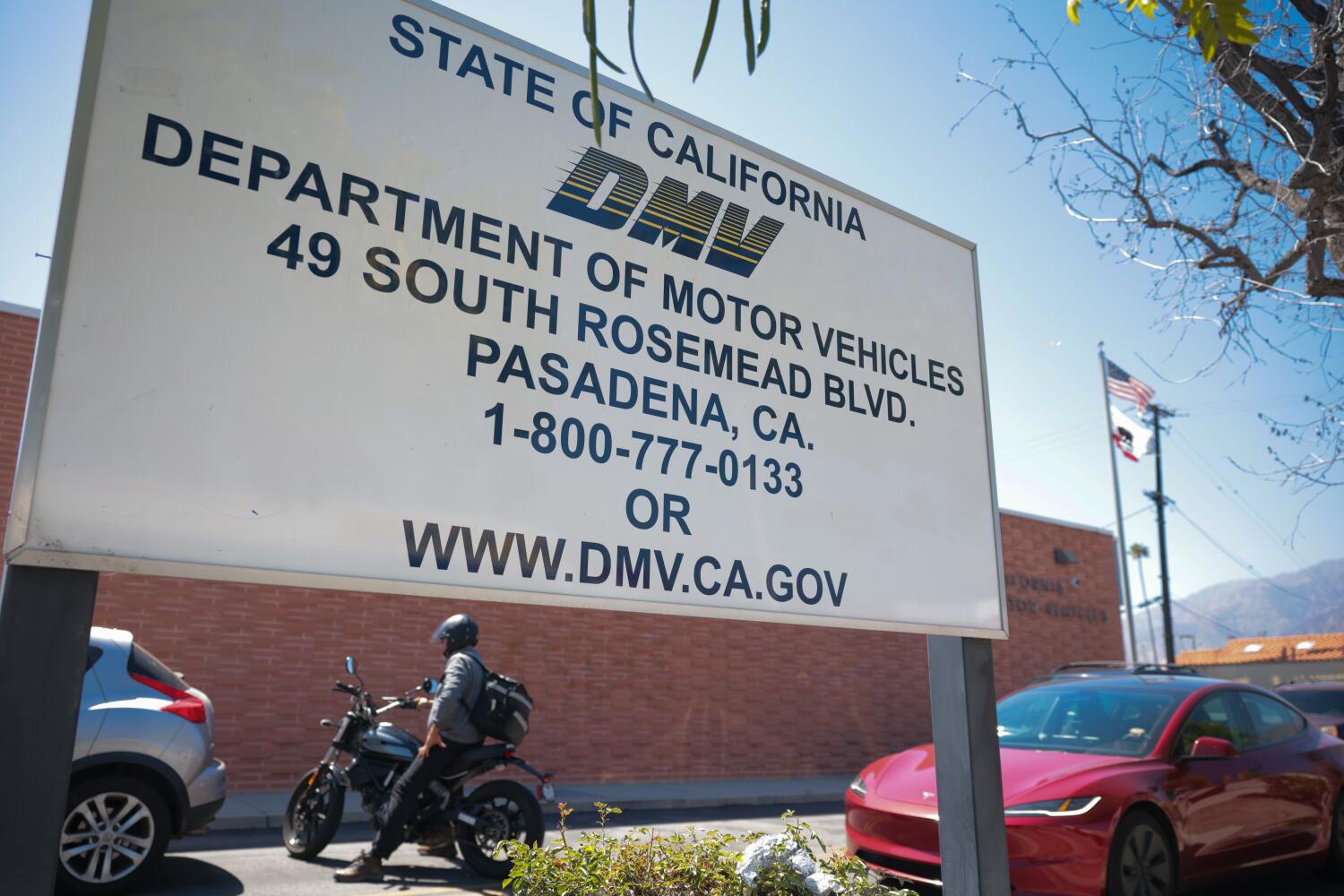
In July 2026, the California Department of Motor Vehicles (DMV) issued an administrative mandate forcing approximately 11,000 drivers to retake their written knowledge examinations within 30 days. Failure to comply results in immediate license revocation. The agency cited "anomalies" and "irregularities" in test data from exams administered between July 2025 and April 2026.
This unilateral directive is not merely a logistical bottleneck for thousands of motorists; it is a case study in how automated fraud-detection systems fail when deployed against human behavior. By examining the operational mechanisms of remote testing, the statistical profiles of the flagged cohort, and the administrative risk management strategy of the DMV, we can understand how algorithmic false positives transformed a targeted anti-cheating initiative into a systemic failure of state administration.
The Remote Testing Architecture: A Vector for Vulnerability
To understand the origin of the 11,000 anomalies, we must first analyze the transition of the driver testing environment. To streamline operations and reduce wait times, the California DMV introduced online, remote options for the written knowledge exam. This decentralized approach shifted the testing environment from a controlled physical branch to unmonitored home settings.
This operational pivot created a fundamental security trade-off. Remote testing architectures rely on digital proctoring or algorithmic monitoring to ensure exam integrity. Without physical proctors, the system must use automated telemetry to verify that the person taking the test is the applicant and that they are not utilizing external resources.
The vulnerabilities in this model are structural:
- Identity Verification Gaps: Standard webcams can confirm that a human is present, but they struggle to detect sophisticated proxy test-taking without continuous, intrusive biometric tracking.
- The Secondary-Device Exploit: Because browser lockdown software only controls the primary testing device, applicants can easily query search engines or consult physical reference materials just out of the camera's field of view.
- Generative AI Integration: The rise of consumer-grade optical character recognition (OCR) tools and background artificial intelligence assistants allows users to scrape on-screen text and receive real-time answers without triggering simple hardware-level browser locks.
These vulnerabilities forced the DMV to transition from preventive security to detective security. Rather than blocking cheating in real time, the agency implemented retrospective data audits to flag non-compliant behavior.
Deconstructing the Anomaly: The Telemetry of Suspicion
When the DMV spokesperson stated that the agency "reviewed multiple data points and found patterns suggesting that some individuals may have attempted to circumvent the testing process," they referenced specific telemetry captured during online exams.
The agency's detection system monitors three primary behavioral variables to establish a suspicion profile.
1. Velocity Analysis (The Time-to-Complete Metric)
A standard written knowledge test comprises 40 multiple-choice questions. An average human reader takes between 15 to 25 seconds to read, comprehend, and answer a single driver safety question.
If an applicant completes the entire exam in under three minutes—averaging fewer than 4.5 seconds per question—the system flags this as a temporal anomaly.
$$V = \frac{Q}{T}$$
Where $V$ represents velocity, $Q$ is the number of questions, and $T$ is the total time in seconds. A velocity value exceeding a mathematically established threshold indicates that the user is either not reading the prompts (indicative of script automation) or has immediate access to a pre-mapped answer key.
2. Clickstream Dynamics and Focus Loss
Browser-based exams track when the testing window loses focus. If an applicant frequently clicks away from the active tab or if the mouse trajectory exhibits highly mechanical, linear movements, the system logs a telemetry violation.
Frequent focus-loss events suggest the applicant is switching windows to consult digital cheat sheets or search engines.
3. Response Calibration and Outlier Patterns
The system compares the applicant's performance profile against historical distributions. If an applicant answers highly complex, rarely missed questions instantly while taking an unusually long time on basic questions, the statistical incongruity raises a red flag.
Furthermore, if thousands of tests completed across different geographic locations share identical sequences of incorrect answers and timing pauses down to the millisecond, it indicates the use of an identical, automated cheating exploit.
The False Positive Catch-22: Systemic Collateral Damage
The core failure of the DMV's retrospective audit lies in its inability to differentiate between malicious exploitation and high-performing, non-traditional users.
Consider the experience of a highly literate, experienced driver who recently relocated to California from another state. Because they have driven for years, they already possess a deep, intuitive grasp of traffic laws.
When presented with a standard written exam, this demographic exhibits the exact same telemetry footprint as an automated cheating tool:
- High Velocity: They read the questions rapidly and select correct answers in seconds.
- Low Cognitive Friction: They do not pause to contemplate options, resulting in a flat response-time distribution curve.
- Zero Error Rates: They achieve perfect or near-perfect scores without utilizing the full time limit.
Because the DMV's detection algorithm likely prioritized minimizing false negatives (ensuring no cheater went undetected), it widened its parameters so aggressively that it captured thousands of legitimate, high-velocity test-takers.
The agency has publicly stated that receiving a retest notice does not automatically mean an individual cheated, yet it offers no administrative path to appeal the designation. The burden of proof has been entirely shifted to the citizen.
The Logistics of Remediation: The 30-Day Operational Bottleneck
By forcing 11,000 citizens to retake the exam in person within a strict 30-day window, the DMV has created an acute administrative bottleneck.
Walk-ins are explicitly banned for this cohort; affected drivers must secure an appointment and present their physical physical notification letter at a physical branch.
               [ 11,000 Flagged Drivers ]
                           │
                           ▼
            [ Mandatory DMV Portal Log-In ]
                           │
                           ▼
            [ Strict 30-Day Booking Window ]
             /                           \
            /                             \
[ Successful Booking ]           [ Appointment Shortage ]
        │                                  │
        ▼                                  ▼
[ In-Person Retake Exam ]        [ License Revocation ]
This sudden demand spike exposes several structural vulnerabilities in the DMV's operational capacity:
- Supply-Demand Mismatch: DMV field offices already operate near maximum capacity. Injecting thousands of mandatory, high-priority appointments into local branches over a one-month span inevitably displaces standard service seekers.
- Socioeconomic Friction: The requirement disproportionately penalizes working-class citizens, single parents, and those without flexible work hours. The physical trip to a DMV office requires taking time off work, securing childcare, and arranging transportation—all to resolve a security false positive generated by the state's own automated system.
- The Risk of Unintended Unlicensed Driving: If an affected driver cannot secure an appointment within the 30-day limit due to systemic calendar shortages, their license is automatically revoked. This creates a class of technically unlicensed drivers who continue to commute out of economic necessity, shifting the risk from administrative non-compliance to active legal liability on public roads.
Tactical Playbook: How the DMV Must Calibrate Future Audits
To prevent future administrative failures of this scale, public agencies deploying automated testing must restructure their detection and remediation frameworks.
Implement a Multi-Tiered Triaging System
Instead of a binary "Pass" or "Retake" classification, the detection system should classify anomalous tests into three distinct risk tiers:
| Risk Tier | Indicator | Remediation Path |
|---|---|---|
| Low Risk | High velocity, zero focus loss, standard geographic IP. | Immediate license issuance. |
| Moderate Risk | Elevated velocity, minor telemetry flags (e.g., brief window defocus). | Virtual, live-proctored verbal verification (10 minutes) rather than an in-person retake. |
| High Risk | Clear coordinated script signatures, flagrant browser bypasses. | Mandatory in-person retake and referral to investigation units. |
Deploy Active, Low-Friction Proctoring
Instead of retrospective data audits that punish users months after they have received their licenses, the DMV should deploy real-time, low-friction integrity measures.
Implementing randomized, dynamic question pools—where the order, phrasing, and visual assets of questions change dynamically for every user—renders pre-packaged answer sheets and simple macro scripts useless. This mitigates the cheating vector at the source, eliminating the need for blunt algorithmic dragnets.


