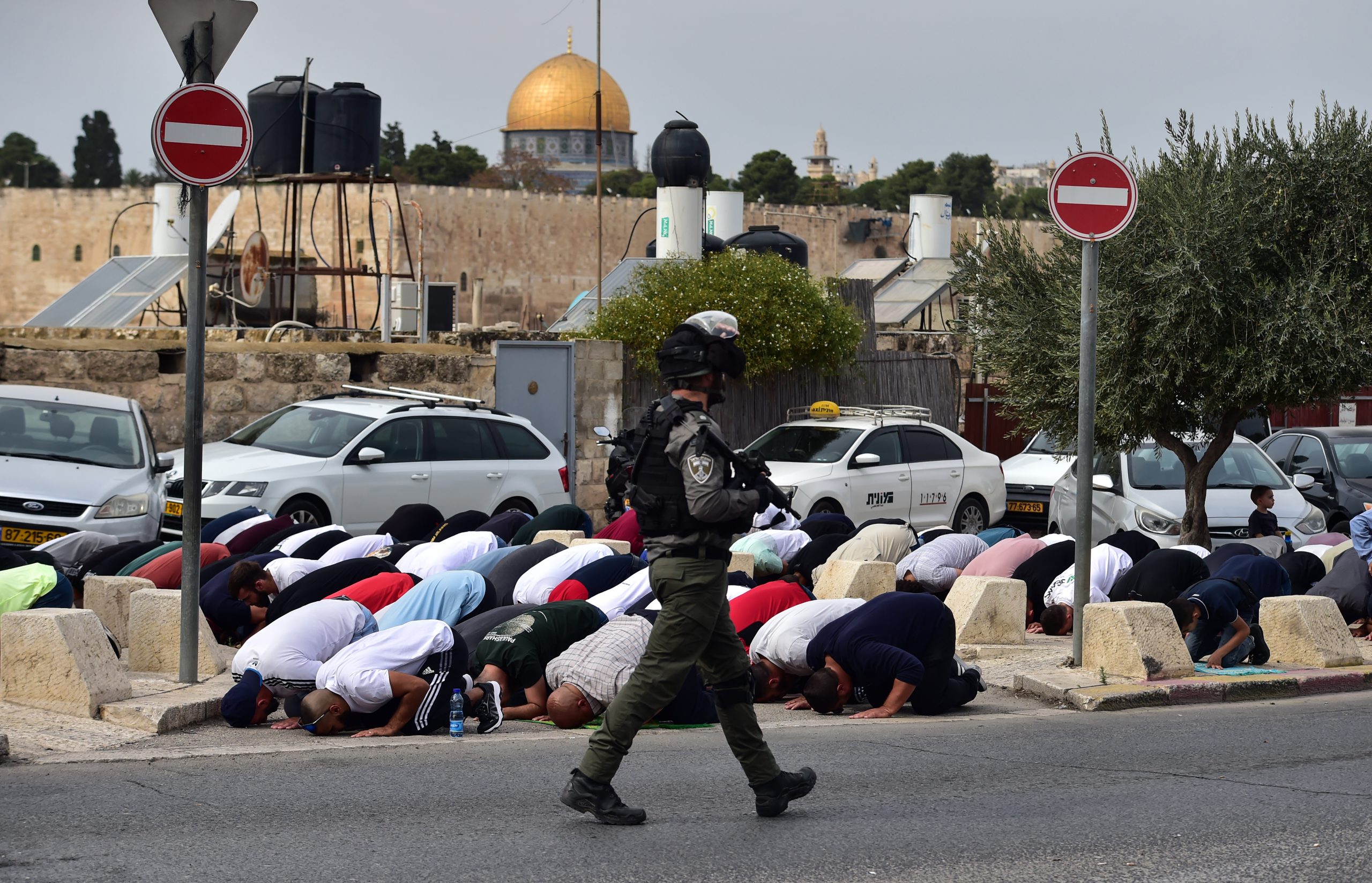
The gates opened, but peace didn't follow. After a period of closure that many hoped would de-escalate regional friction, Israeli settlers entered the Al-Aqsa Mosque compound under heavy police guard. It's a scene we've seen before. It's a scene that rarely ends well. For those living in East Jerusalem, the reopening of the site to non-Muslim visitors isn't just a procedural update from the Waqf or the Israeli police. It's a flashpoint.
When we talk about the Al-Aqsa compound, or the Temple Mount as it's known to Jews, we aren't just discussing a plot of land. We're discussing the most sensitive three dozen acres on the planet. The recent entry of hundreds of settlers, protected by armed officers, has reignited a debate that never truly went cold. Palestinians see these visits as a direct provocation and a threat to the long-standing status quo. Israelis argue it's about religious freedom and historical rights. Both sides are digging in.
The status quo is breaking down in real time
The "status quo" is a term people love to toss around in diplomatic circles. Basically, it refers to the 1967 agreement where Jordan’s Waqf manages the site while Israel handles security. Under these rules, non-Muslims can visit but not pray. But if you've been watching the ground lately, you know those rules are becoming blurry.
Settler groups have become increasingly bold. They don't just walk through anymore. Many now perform silent prayers or prostrate themselves on the stones, often while police look the other way. To a casual observer, a few people praying might not seem like a big deal. In the context of Jerusalem, it's an earthquake. It signals a shift toward Israeli sovereignty over a site that Muslims consider their third holiest.
The numbers tell a story. Over the last few years, the frequency and size of these groups have grown. When the compound reopened after the recent closure, the immediate influx of settlers wasn't an accident. It was a statement. The Israeli government, particularly its more right-wing elements, has been less inclined to restrain these visits. This isn't just about religion. It's about who owns the narrative of the city.
Why the timing of the reopening matters
Politics drives the calendar here. The decision to allow settlers back into the compound right after a period of intense violence or religious holidays is usually a recipe for disaster. You have to wonder what the planners are thinking. Or maybe we know exactly what they're thinking.
Palestinians often gather at the site in large numbers during these times to protect what they see as a besieged sanctuary. When Israeli police enter to clear a path for settler groups, the result is predictable. Tear gas. Rubber bullets. Stones. It’s a cycle that feeds itself. The reopening should have been a chance to reset. Instead, it felt like a resumption of hostilities.
The international community usually weighs in with the same tired scripts. The UN calls for "restraint." The US expresses "concern." But on the ground, the reality is much more visceral. For a young Palestinian in the Old City, seeing armed guards escorting settlers through the mosque plaza feels like a daily humiliation. For the settlers, it feels like a long-awaited return to their ancestral heartland. These two perspectives can't coexist easily.
The role of the Israeli police and security forces
Police don't just provide security; they set the tone. During the recent entries, the presence of security forces was massive. They didn't just stand at the gates. They moved deep into the plaza, sometimes entering the mosque buildings themselves.
The optics are terrible for anyone trying to maintain calm. When you see footage of boots on prayer rugs, the shockwaves travel far beyond Jerusalem. It hits Amman. It hits Cairo. It hits Riyadh. Israel argues that these measures are necessary to prevent riots. Critics argue the measures cause the riots.
Local impact on East Jerusalem residents
If you live in the surrounding neighborhoods like Silwan or Sheikh Jarrah, these "visits" mean more than just news headlines. They mean checkpoints. They mean your kids can't get to school because the streets are blocked. They mean living under a microscope.
- Increased surveillance via drones and cameras.
- Random ID checks at the Damascus Gate.
- Sudden closures of businesses near the compound entrances.
The psychological toll is heavy. Jerusalem is a city that lives on its nerves. When the compound is "stormed"—a word Palestinians use to describe these guarded entries—the tension spreads through the limestone alleys of the Old City like a physical weight.
Legal and religious arguments clashing
The legal battle over Al-Aqsa is a mess. Israeli law technically allows for freedom of worship, but the Supreme Court has historically deferred to the police on the Temple Mount to maintain public order. This created a loophole you could drive a truck through.
Religious leaders on both sides aren't helping. Some senior rabbis forbid Jews from entering the site because it's too holy to step on without ritual purity. Others say it's a commandment to be there. On the Muslim side, the Waqf maintains that any non-Muslim prayer is a violation of the sanctity of the mosque.
There's no middle ground here. You're either for the status quo or you're for changing it. Right now, the people who want to change it have the political wind at their backs. The current Israeli coalition includes ministers who have spent their entire careers advocating for more Jewish control over the site. That changes the math. It makes the police more aggressive and the settlers more confident.
The regional ripple effect
Don't think for a second this stays in Jerusalem. What happens at Al-Aqsa dictates the temperature of the entire Middle East. Jordan, as the custodian of the site, finds itself in an impossible position. Every time settlers enter, the Jordanian government has to lodge a protest to satisfy its own population, many of whom are of Palestinian descent.
It also affects the "normalization" deals Israel has been chasing. It's hard to sign peace treaties with Arab nations when images of clashes at Al-Aqsa are playing on loop on Al Jazeera. The mosque is a symbol that transcends borders. It's a rallying cry.
What happens when the cameras leave
The problem with the news cycle is that it focuses on the explosions. But the real story is the slow, grinding change that happens when the cameras aren't looking. The gradual increase in visiting hours for non-Muslims. The small, unnoticed prayers. The replacement of Waqf guards with Israeli officers in key spots.
These are the "facts on the ground" that eventually become the new reality. By the time the world wakes up to a major change, it's often already been cemented by months of small actions. The reopening of the compound and the subsequent settler entries are just the latest chapter in this long-form transformation.
You don't need a PhD in political science to see where this is going. Unless there's a serious, high-level diplomatic intervention that goes beyond "expressing concern," the friction at Al-Aqsa will continue to spark larger fires. The site is a barometer for the entire conflict. Right now, the needle is pointing straight at "stormy."
Pay attention to the specific gates used for entry and the timing of the next Jewish holidays. Those are the markers. Don't wait for the mainstream media to tell you it's a crisis. If you see the numbers of daily entries climbing, the crisis is already here. You should keep an eye on local sources and independent journalists in the Old City who see the shifts before they hit the wires. The situation won't stabilize until the underlying issue of sovereignty is addressed, which, let's be honest, isn't happening anytime soon.



