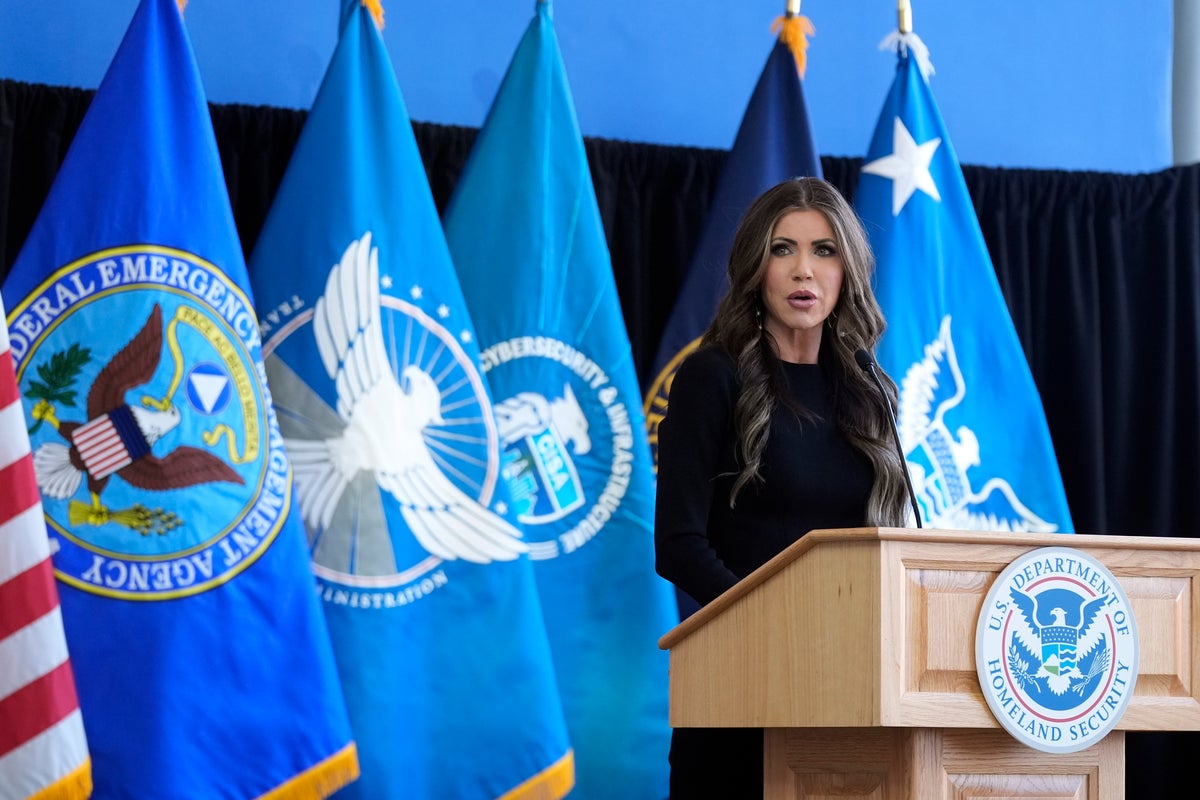
Imagine walking into a high-stakes meeting at the Department of Homeland Security. You’re expecting a briefing on border security, cyber threats, or national emergency protocols. Instead, the room turns into a surreal scene from a satirical cartoon. Kristi Noem’s debut as the Secretary of Homeland Security didn't just break the ice. It shattered any sense of traditional Washington decorum. Staffers reported that Noem made her entrance to the loud, thumping beat of "Hot Momma." It wasn't a mistake. It wasn't a background track from a nearby office. It was a deliberate, curated choice that left career professionals wondering if they’d accidentally wandered onto a movie set.
The Department of Homeland Security is often viewed as the most serious, grinding machine in the federal government. It handles everything from the Secret Service to TSA. It’s usually a place of drab suits and PowerPoint slides. When Noem entered to a song that highlights her status as a "hot momma," she signaled a massive cultural shift. This wasn't just about music. It was about brand. It was about showing that the old ways of doing business in D.C. are effectively dead.
Behind the Scenes of a South Park Reality
Federal employees are used to weirdness. They’ve seen administration changes and policy flips. But the feedback from those inside the room during Noem’s first big gathering describes an atmosphere of pure disbelief. One staffer literally compared the experience to being an extra in a South Park episode. That’s not a compliment about the production value. It’s a commentary on the absurdity of the situation.
Think about the psychology of that moment. You’ve spent twenty years in civil service. You’ve navigated the complexities of international law and domestic safety. Then, your new boss walks in like she’s appearing on a reality TV reunion special. It creates an immediate friction between the permanent "deep state" bureaucracy and the new political guard. This wasn't a failure of planning. It was a power move designed to unsettle the established order.
I’ve seen plenty of leaders try to "humanize" themselves. They’ll share a story about their kids or talk about their favorite sports team. But using a walk-out song in a secure government facility is next-level. It’s the kind of thing you do when you don't care about the existing culture because you intend to set fire to it. If you're a staffer there, you're not thinking about the next memo. You're thinking about how the hell you explain this to your colleagues at the water cooler.
The Impact on DHS Morale and Mission
DHS has always struggled with morale. It’s a massive, disjointed agency with a lot of moving parts. When a leader arrives, the first hundred days are usually spent trying to build trust. Noem’s approach did the opposite. It built a wall between her and the career experts who actually keep the lights on.
When you treat a department like a stage, the people working there start to feel like props. That's a dangerous game to play when you're dealing with national security. The mission of DHS requires precision and gravity. If the leadership is focused on optics and a "cool" persona, the technical details can slip through the cracks. It’s hard to take a briefing on fentanyl interdiction seriously when the person leading it just had a "Hot Momma" intro.
It’s also about the message sent to international partners. Imagine a foreign intelligence liaison hearing about this. It doesn't scream "competence" or "stability." It screams "distraction." Noem has always leaned into her image as a tough, photogenic leader from South Dakota. But what works on a campaign trail in the Midwest doesn't always translate to the brutalist architecture of the DHS headquarters in Washington.
Breaking the Washington Mold or Breaking the System
Some supporters argue this is exactly what’s needed. They’ll tell you that D.C. is too stuffy, too stuck in its ways, and needs a shock to the system. From that perspective, the "Hot Momma" entrance is a breath of fresh air. It’s a middle finger to the polite society of the beltway. It says, "I’m here, I’m different, and I’m not going to play by your boring rules."
But there’s a difference between being a disruptor and being a distraction. Disruption changes how things work for the better. Distraction just takes up space. If the goal is to secure the border or modernize the Coast Guard, a walk-out song doesn't help. It actually hinders the process because it makes every headline about the song instead of the policy.
Honestly, it’s a classic case of main character syndrome. When a public official starts believing their own hype more than the importance of their office, the office suffers. We’ve seen this pattern before. Political appointees arrive with a lot of flash, only to realize that the bureaucracy is a beast that eats flash for breakfast.
The Real Cost of Political Performance Art
We have to look at the long-term effects of turning governance into performance art. When the line between entertainment and executive leadership blurs, the public loses trust. People want to know that the person in charge of their safety isn't treating the job like a social media stunt.
Staffers who spoke out—mostly anonymously, for obvious reasons—expressed a sense of exhaustion. They’re tired of being part of a news cycle that revolves around personality quirks. They want to talk about logistics. They want to talk about funding. They don't want to talk about the playlist for the Secretary’s next town hall.
If you’re a manager in any other industry, you know that your first impression sets the tone for the entire year. If you show up on day one and act like a clown, nobody is going to give you their best work on day one hundred. You might get people to laugh, or you might get them to stare in shock, but you won't get them to respect you. Respect is earned through competence, not through a high-energy entrance.
What Happens When the Music Stops
Eventually, the music stops and the work has to start. Noem faces a mountain of challenges that won't be solved by a catchy tune or a defiant attitude. The DHS budget is a nightmare. The technology across the agencies is outdated. The workforce is burned out.
The real test for Noem isn't how she enters a room, but how she leaves it. Will she leave behind a more efficient department, or just a trail of bizarre anecdotes and frustrated career employees? If the "South Park" atmosphere continues, we can expect a mass exodus of talent. People with options don't stay in environments that feel like a joke. They leave for the private sector, taking decades of institutional knowledge with them.
For anyone watching this play out, the lesson is clear. You can't run a federal agency like a fan club. You have to lead with a sense of the gravity that the position demands. If you don't, you're not a leader. You're just a performer. And in the world of national security, performances don't keep people safe.
If you find yourself in a leadership position where the optics are outweighing the output, it's time to pivot. Stop focusing on the walk-out music and start focusing on the mission. Listen to the career staff who have been there through multiple administrations. They know where the bodies are buried and how the gears turn. Ignore them at your own peril. If you want to be taken seriously, start by acting like the job is serious. Drop the performance, cut the music, and get to work on the actual problems facing the country. The "Hot Momma" era of DHS might be good for a few clicks, but it's a disaster for actual governance.



