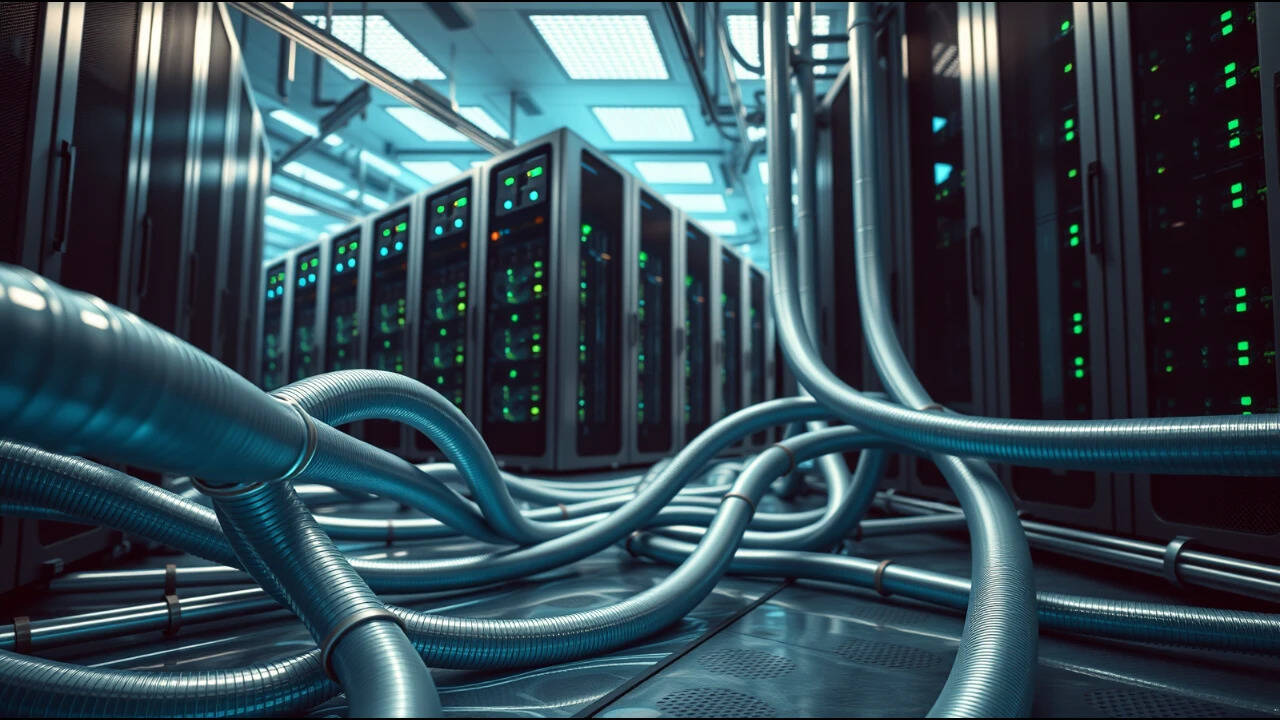
Data centres drink an absurd amount of water. If you look at massive tech operations run by giants like Alibaba, single-year disclosures show water consumption hitting tens of millions of cubic metres. As artificial intelligence workloads explode, server racks generate unprecedented heat. Traditional evaporative cooling towers gulp local municipal supplies, turning precious liquid into atmospheric steam and putting massive pressure on dry regional watersheds.
Tech companies are scrambling for alternatives. Some look to ocean water or closed-loop systems, but researchers in China have pointed toward a massive, hidden asset sitting right under our feet: abandoned and active coal mines.
The Underground Reservoir Nobody Talks About
Coal extraction creates a massive byproduct. As tunnels go deep below the water table, billions of cubic metres of water flood these subterranean voids. Traditionally, mining companies pump this water out just to keep operations safe, treating it as an expensive waste management headache.
Cities like Xuzhou have already started using this cool subterranean water to regulate residential temperatures during scorching summer heatwaves, cutting power bills and emissions. Turning that same logic toward data centres makes complete operational sense. Instead of pulling fresh municipal water to cool servers, server farms could tap into the billions of gallons sitting stagnant in nearby coal pits.
Why Raw Mine Water Destroys Hardware
You can't just drop a pipe into a flooded coal shaft and pump dirty mine water straight into sensitive server heat exchangers. Raw mine water is chemically hostile. It carries heavy mineral concentrations, suspended solids, and chemical signatures that cause calcium carbonate scaling, rapid pipe corrosion, and severe biofouling.
If you feed untreated mine water into high-end server cooling loops, your infrastructure will fail fast. Engineers must deploy advanced filtration, reverse osmosis, or electrochemical softening before the water touches any digital infrastructure.
The real challenge isn't finding the water. It's engineering treatment pipelines that match local water chemistry without driving energy costs through the roof.
Turning Industrial Waste Into Digital Infrastructure
The economics point toward a circular economy model. Coal-producing regions in northern and western provinces possess abundant mine water, but they also suffer from chronic water scarcity. By cleaning and redirecting mine drainage into data centre cooling loops, industrial hubs can repurpose a liability into an asset.
Alibaba and other major tech infrastructure operators track massive resource footprints. Shifting cooling demand away from municipal reservoirs protects local farming irrigation and stabilizes power grids during peak summer months.
Pilot projects are moving from mathematical models to reality. Municipalities are realizing that old industrial scars can fuel new digital architectures if managed with tight technical precision.
Look closely at where server hubs land next. The smartest operators won't build near pristine rivers. They'll build right on top of yesterday's coal mines.