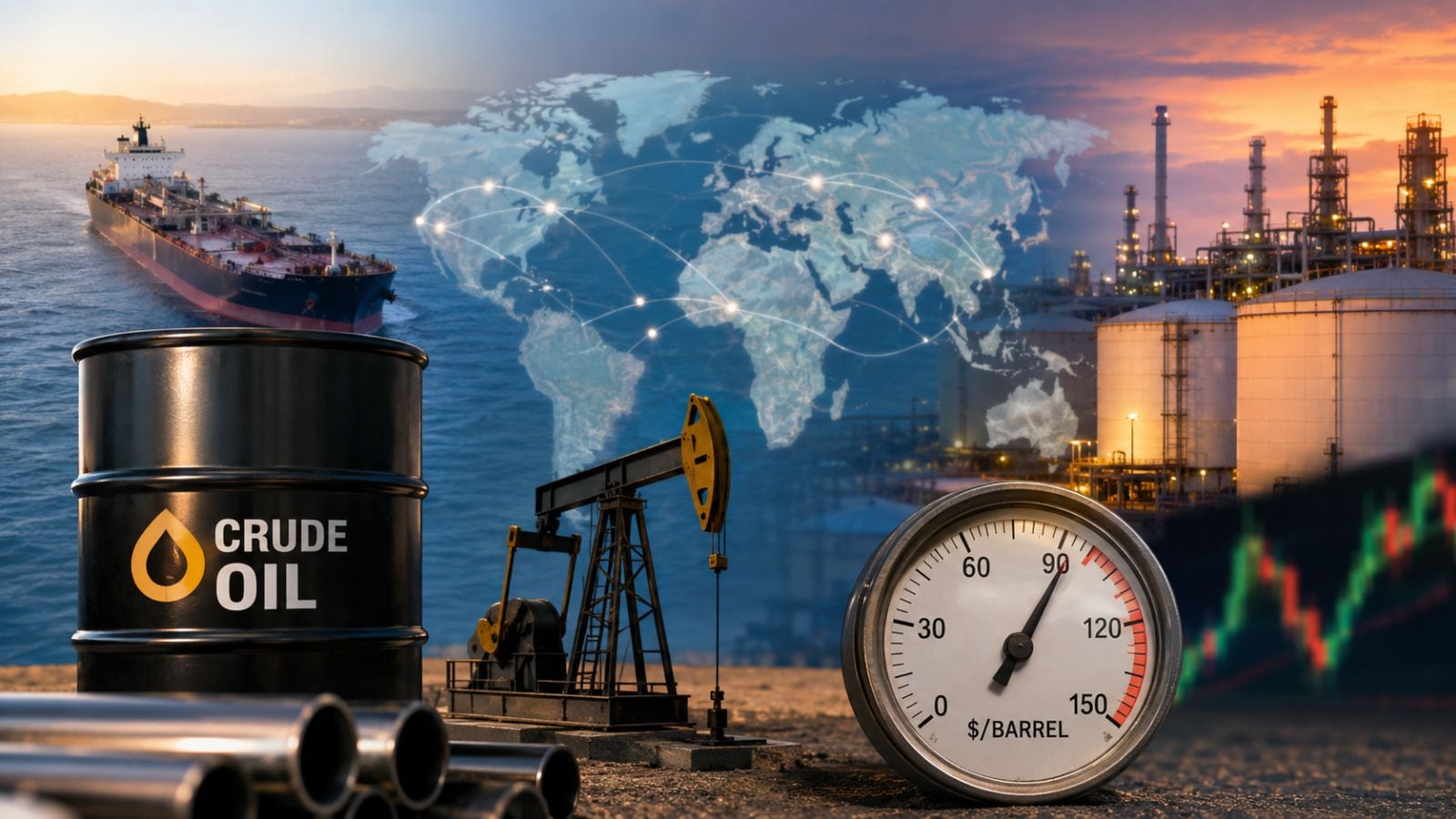
The financial press loves a tidy narrative. A headline flashes across the terminal—Iran signals openness to talks—and within hours, crude oil prices tumble 6%. Every mainstream outlet immediately runs the same lazy script: geopolitical risk is evaporating, the war premium is dead, and cheap energy is back on the menu.
They are completely wrong.
If you are trading energy markets, hedging corporate fuel costs, or adjusting your portfolio based on diplomatic whispers from Tehran, you are walking straight into a liquidity trap. A 6% drop on unverified peace feelers is not a fundamental shift in global supply and demand. It is an algorithmic knee-jerk reaction designed to liquidate over-leveraged long positions before physical reality reasserts itself.
I have spent nearly two decades watching commodity desks get wiped out by trading headlines instead of barrels. When geopolitical tension spikes, retail traders buy the top. When a diplomat clears their throat and mentions "dialogue," those same traders panic-sell the bottom.
Here is what the mainstream coverage completely missed about this 6% slump, why diplomatic signaling in the Middle East rarely translates to actual barrels on the water, and how real physical fundamentals dictate where crude goes next.
The Anatomy of an Algorithmic Flush
To understand why crude dropped 6% in a matter of hours, you have to stop looking at Tehran and start looking at New York and London. Modern oil markets are no longer priced solely by refiners buying physical cargoes for delivery in sixty days. They are dominated by Commodity Trading Advisors (CTAs), systematic trend-following funds, and high-frequency algorithms scanning news wires for specific keyword triggers.
When a wire service publishes a headline containing words like "Iran," "talks," and "end war," natural language processing algorithms execute massive sell orders in milliseconds. They do not read the third paragraph where an anonymous official clarifies that conditions remain non-negotiable. They do not analyze whether the Iranian Foreign Ministry actually holds authority over the Islamic Revolutionary Guard Corps (IRGC). They just sell.
Once that initial wave of algorithmic selling pushes Brent and West Texas Intermediate (WTI) below key technical moving averages, stop-loss orders trigger across the board. Margin calls force speculative bulls to dump contracts at any price. Within minutes, a minor diplomatic rumor snowballs into a 6% rout.
Look at the volume profile during these drops. You will see massive paper volume changing hands on the ICE and NYMEX exchanges, yet the physical market—measured by time spreads and Dated Brent differentials—barely flinches. When paper prices crash while physical premiums hold steady, you are not witnessing a bear market. You are witnessing a mechanical liquidation event.
Diplomatic Signaling Is Not a Ceasefire
The core flaw in the consensus reporting is treating "openness to talks" as synonymous with an imminent peace treaty. In Middle Eastern statecraft, signaling openness to negotiation is rarely an olive branch; it is a tactical maneuver used to buy time, fracture opposing coalitions, or relieve immediate economic pressure without making a single substantive concession.
Consider the structural reality of power in Iran. Statements coming from diplomatic channels often serve an external audience—specifically Washington, Brussels, and Asian energy buyers—to project reasonableness. Meanwhile, operational control over regional proxies, maritime chokepoints, and military escalation rests with security apparatuses that view prolonged asymmetric pressure as their primary deterrence.
Even if formal negotiations begin tomorrow, historical precedent shows that Middle Eastern diplomatic frameworks take months or years to hammer out, often punctuated by violent escalations designed to gain leverage at the negotiating table. During the 2013–2015 nuclear negotiations, talks repeatedly stalled, deadlines were extended multiple times, and regional proxy conflicts raged unabated while diplomats posed for cameras in Vienna and Geneva.
Banking on an immediate end to hostilities because a spokesperson mentioned talks is like canceling your homeowner's insurance because the hurricane slowed down from a Category 5 to a Category 4. The storm is still over the water, and your roof is still exposed.
The Myth of the Vanishing "War Premium"
Financial journalists throw around the term "war premium" as if it were a simple surcharge slapped onto a barrel of oil that can be peeled off like a price sticker. In reality, geopolitical risk embeds itself into the global energy supply chain in ways that take months to unwind, even after the shooting stops.
Let us break down the physical friction that remains intact regardless of today's headlines:
- Maritime Insurance and Freight Rates: War-risk insurance premiums for vessels transiting the Persian Gulf, the Strait of Hormuz, and the Red Sea do not drop because of a press release. Underwriters at Lloyd's of London price risk based on verified, sustained security on the water. Until naval threats are physically neutralized and verified over weeks, shipping costs remain elevated.
- Rerouted Supply Chains: Tankers diverted around the Cape of Good Hope add ten to fourteen days to transit times between Middle Eastern producers and European refineries. That extra time on the water effectively removes millions of barrels from available prompt supply, acting as floating storage that tightens the physical market.
- Sanctions Enforcement and Shadow Fleets: Iran's ability to export crude depends heavily on sanctions enforcement and the gray-market "shadow fleet" of aging tankers. A vague openness to talks does not lift secondary sanctions, nor does it instantly integrate Iranian barrels back into legitimate Western banking and insurance networks.
As veteran energy analysts like Jeff Currie and Amrita Sen have repeatedly pointed out across market cycles, physical commodity markets do not price probabilities—they price actual inventories and deliverable molecules. Until physical barrels flow freely through uncontested shipping lanes, the risk premium is merely discounted on paper, not eliminated in reality.
What Everyone Is Asking (And Why the Questions Are Wrong)
When oil experiences a violent 6% swing, search engines light up with predictable questions from anxious investors and consumers. Most of those questions are built on faulty premises.
Will gas prices at the pump drop immediately after a 6% oil crash?
No, and expecting them to reflects a fundamental misunderstanding of downstream refining economics. Retail gasoline prices are dictated by refinery utilization rates, seasonal blend transitions, and regional crack spreads—not just raw crude prices. Furthermore, retail stations exhibit what economists call "rockets and feathers" pricing: prices shoot up like a rocket when crude spikes, and float down like a feather when crude drops. Station owners use sharp crude pullbacks to recover retail margins that were compressed during the preceding rally.
Is this the start of a major bear market for energy stocks?
Judging equity valuations by a single day's futures flush is amateur hour. Major integrated oil companies and exploration-and-production firms do not budget their capital expenditure on $85 oil or $75 oil; most North American shale producers and Middle Eastern national oil companies model their free cash flow around $55 to $65 WTI. A 6% pullback leaves top-tier producers printing massive free cash flow, buying back shares, and paying down debt. Selling profitable energy equities because paper crude dipped on a rumor hands your shares directly to institutional value buyers.
Should OPEC+ intervene immediately to stop the price drop?
OPEC+ does not react to intraday volatility caused by headline-chasing algorithms. The cartel, led by Saudi Arabia and Russia, tracks physical inventory builds and forward demand curves across OECD nations and China. If anything, a sharp paper sell-off makes OPEC+ more cautious about unwinding voluntary production cuts, effectively reinforcing a hard floor underneath crude prices.
The Physical Reality Check: Inventories and Spare Capacity
If you want to know where oil is actually headed over the next six months, ignore the diplomatic wire and look at two hard metrics: global visible inventories and effective spare capacity.
Global crude inventories—tracked via Cushing, Oklahoma storage hubs, ARA (Amsterdam-Rotterdam-Antwerp) terminals, and satellite imagery of floating storage—have been running tighter than five-year seasonal averages. When inventories are lean, the market has zero shock absorber. Any unexpected disruption, whether a pipeline leak in Libya, a refinery outage on the U.S. Gulf Coast, or a renewed flare-up in the Strait of Hormuz, forces buyers to bid aggressively for prompt barrels.
Second, consider the illusion of spare capacity. Bears frequently argue that Saudi Arabia and the UAE sit on millions of barrels per day of spare production capacity that can be turned on at will. While that capacity exists on paper, bringing heavy and medium sour crude grades back online takes weeks of operational ramp-up—and crucially, those barrels still have to transit the exact same contested maritime chokepoints in the Persian Gulf. Spare capacity trapped behind a potential blockade is not spare capacity at all.
The Contrarian Playbook: How to Navigate Headline Volatility
I am not arguing that crude prices only go up. There is a clear downside risk to my thesis that any honest market participant must acknowledge: global demand destruction. If macroeconomic data from China, Europe, and the United States deteriorates faster than expected, weak industrial activity and sluggish manufacturing will cap oil rallies regardless of Middle Eastern geopolitics. If global GDP stalls, physical demand will eventually catch down to paper prices.
However, barring a synchronized global recession, trading the short side of oil on unconfirmed peace rumors is a low-probability gamble with asymmetric downside risk.
If you manage capital, run a business exposed to fuel costs, or actively trade energy markets, stop reacting to the ticker and follow three disciplined rules:
- Watch the Curve, Not the Spot Price: Look at the spread between the front-month futures contract and the six-month futures contract. If the market remains in steep backwardation (where prompt oil costs significantly more than future oil), physical supply is still tight. Ignore the spot price drop until the curve flattens into contango.
- Use Volatility to Hedge Operational Costs: If you run a logistics, aviation, or manufacturing business, a sudden 6% paper dip is a gift. Do not wait to see if peace talks succeed. Lock in forward fuel swaps or buy out-of-the-money call spreads while implied volatility compresses on the sell-off.
- Fade the First Headline, Wait for Physical Confirmation: Never enter a trade within the first four hours of a geopolitical breaking-news alert. Let the systematic funds finish their liquidation cycle. Wait forty-eight hours to see if tanker tracking data, war-risk insurance quotes, and physical cargo differentials confirm the headline.
Markets transfer wealth from the impatient to the disciplined. Right now, the financial media is selling a fairy tale that a single diplomatic signal has solved a structural geopolitical crisis. Let the algorithms sell the rumor—smart money is already counting the barrels.