The key smells faintly of brass and cold oil. It sits in a small plastic envelope on a kitchen table that does not belong to you, inside a subdivided flat where the kitchen sink doubles as your bathroom basin.
Clang.
That is the sound of the metal partition next door. Your neighbor is washing a teacup three inches from where your left ear rests against the plywood wall. You can hear every swallow, every sigh, every shift of weight on a cot that has seen better decades.
Wait.
That is the single word pinned to the bulletin board of your entire existence. Four point eight years. That is the average waiting time whispered in the corridors, printed in the quarterly housing reports, and tracked like a fever chart by tens of thousands of families across Hong Kong.
Numbers are clean. Numbers are orderly. A statistic does not sweat in a room with no windows. A statistic does not hold a crying toddler at two in the morning while water drips steadily from a rusted overhead pipe into a plastic bucket.
Let us step out of the abstract spreadsheet and look at a hypothetical scenario to understand the weight of that decimal point. Consider Mei. She is thirty-four, works the evening shift at a dried seafood shop in Sheung Wan, and shares a ninety-square-foot box with her mother and a daughter who is growing too fast for the clothes she wears. Every month, a portion of Mei’s wages vanishes into rent that swallows half her income. Every quarter, she checks the housing authority portal. The number inches up. Four point eight years. Sometimes four point seven. Sometimes it ticks higher, a silent betrayal rendered in digital ink.
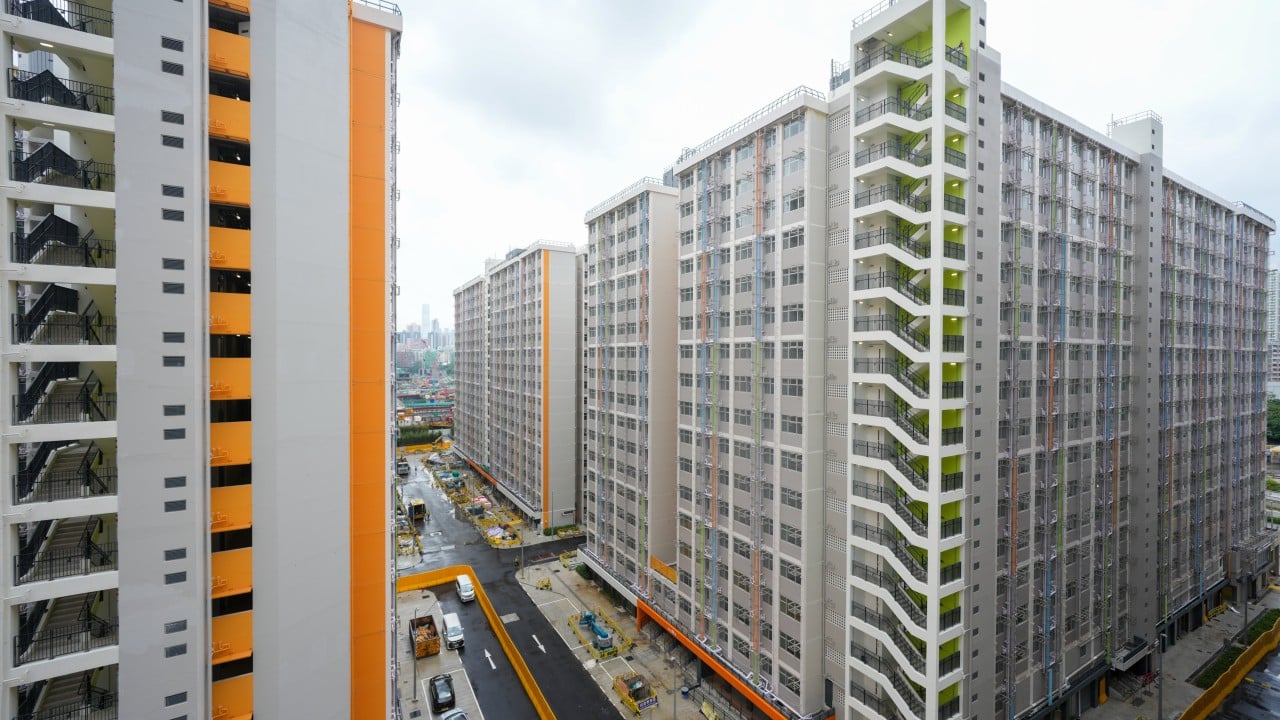
Yet, there is a curious countercurrent running beneath these figures. Urban allocations have actually risen. More families are crossing the threshold into permanent estates. More keys are being handed over in places like Kwun Tong, Sha Tin, and Tuen Mun.
Why, then, does the air feel so thin?
Because supply is a race against a horizon that keeps moving. When you build upward, stacking precast concrete panels against a bruised gray sky, you are fighting a gravity of human need that pulls faster than cranes can lift.
To grasp this, think of the city as a vast, breathing organism with a congested heart. The core remains tightly coiled. Land is not merely expensive here; it is an absolute physical limit, carved out of granite hills and crowded reclamation zones. Every square foot is contested territory. When the waiting list lengthens by a fraction of a month, it is not just a delay in processing paperwork. It is an extra season of bunk beds. It is another twelve months of listening to the stranger through the wall.
When the urban allocations rise, a strange alchemy occurs. Relief for some creates an acute, aching envy for those left behind in the queue. You hear that a friend of a cousin secured a flat near the harbor. You smile. You clap them on the back. Then you walk home to your ninety square feet and wonder which gear in the giant bureaucratic clock slipped to leave you behind.
The Housing Authority publishes its data with clinical precision. General applicants and elderly single persons occupy separate columns. The target remains three years, a benchmark that feels less like a promise and more like ancient history, a relic from an era when the rules of the game were different. Today, the reality hovers closer to that 4.8-year mark. It is a grueling marathon disguised as a bureaucratic queue.
Consider what happens inside the waiting rooms of district offices. The silence is heavy. People do not chat. They clutch manila folders like shields. Inside those folders are birth certificates, employment records, medical slips, and proof of every dollar earned and spent. To be poor in a dense metropolis is to have your life laid bare on a laminated desk for an official to stamp or set aside.
And yet, within this relentless machinery of concrete and compliance, something stubborn persists. Hope.
It sounds sentimental, almost foolish, to speak of hope in the context of public housing logistics. But watch an elderly man sweep the concrete landing outside his temporary shelter. Watch a mother teach her daughter multiplication tables on the edge of a narrow mattress because there is no desk. These are acts of architectural defiance. They are building a future out of thin air while they wait for concrete walls to cure.
The recent uptick in urban allocations tells us that the doors are opening, even if the hinges groan under the strain. More flats are coming online. Redevelopment projects are squeezing every last ounce of utility from aging estates. But the queue expands because the private rental market remains a roaring furnace, devouring low-income wages before the month is half gone. Families who never thought they would need public assistance find themselves sliding down the economic ladder, pushed by rising rents and shifting fortunes.
The wait is not passive. It is an active, exhausting endurance test.
Imagine tracking a decimal point as if it were a weather forecast predicting whether your roof will hold. That is what families do every three months when the new statistics drop. They look for the shift. They look for the sign.
The key, when it finally comes, does not look like much. It is stamped with a serial number, cold to the touch, resting in that small plastic envelope. But when you turn it in the lock for the very first time, the sound is not a clang.
It is a click.
And then, absolute silence.