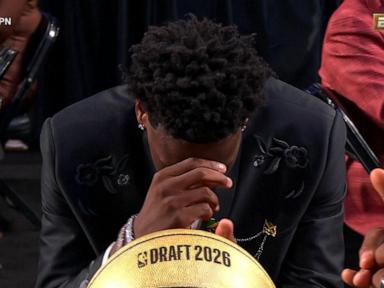
The era of the untouchable 3-and-D wing dominance just took a massive hit. If you watched the first round of the 2026 NBA draft unfold at the Barclays Center, you didn’t just see hats and handshakes. You witnessed an aggressive, league-wide shift in how front offices view roster construction. Everyone spent the last few years hunting for the next giant perimeter stopper, but the premium has officially swung back to explosive, primary ball-handlers and loaded, immediate-impact frontcourts.
We knew the top four was locked in stone, but the sheer volume of guards flying off the board in the top ten caught plenty of executives flat-footed. Blame it on the Jalen Brunson effect. After the New York Knicks secured their first championship in over five decades, every general manager in the lottery decided they needed a shifty, cold-blooded floor general who can destroy a drop coverage in the fourth quarter. You might also find this connected story insightful: The Newcastle Financial Bottleneck and the Reality of Elite Squad Architecture.
The Wizards Bet Big on AJ Dybantsa
Washington didn't overthink it. Taking BYU forward AJ Dybantsa at number one overall was the cleanest basketball decision made all night. At 6-foot-9 and 217 pounds, Dybantsa spent his freshman season torturing college defenses to the tune of 25.5 points per game. He isn't a project. He led the entire nation in free throw makes and attempts because he attacks the rim with zero regard for whoever is standing in the paint.
The fit in Washington is wild when you look at the timeline. The Wizards aren't starting from scratch with a bunch of teenagers. They traded for Anthony Davis back in February and just locked up Trae Young to a massive four-year, $212 million extension. Dybantsa steps into a situation where he won't be forced to carry an entire franchise on his back from day one. He can roam the baseline, slash off Young’s gravity, and let Davis anchor the backline. As reported in detailed reports by Yahoo Sports, the implications are widespread.
The only real knock on Dybantsa right now is his perimeter consistency. He shot just 33.1% from deep at BYU. If teams start packing the paint and daring him to beat them from the arc, the Wizards' halfcourt offense could get congested early in the season. But his physical tools are draw-dropping. He looks and moves like Kevin Durant, which is fitting since he grew up idolizing the local D.C. legend.
Utah Secures a Gift at Number Two
The Utah Jazz walked away from the podium laughing. Getting Kansas guard Darryn Peterson at number two is arguably the best value pick of the entire lottery. Plenty of scouts actually had Peterson rated as the top overall talent in this class, but a rocky medical file caused just enough hesitation for Washington to pass. Peterson missed 11 games with a mix of injuries and a bizarre preseason hospitalization for full-body cramping.
When he is on the floor, he is a problem. The 6-foot-5 combo guard averaged 20.2 points and shot over 38% from three. He gives Utah a massive, physical backcourt presence to pair alongside Keyonte George. Critics are already wondering how two ball-dominant guards are going to share the wealth in Salt Lake City, but Peterson’s size makes him a highly versatile defender who can guard three positions. The Jazz didn't need to win the draft lottery to get their franchise centerpiece, they just needed Washington to play it safe.
Memphis and Chicago Grab Elite Frontcourt Power
If the first two picks focused on perimeter scoring, the next two were all about interior dominance.
The Memphis Grizzlies grabbed Duke’s Cameron Boozer at number three. He didn't just look like his dad, Carlos Boozer, out there, he played with the exact same brute strength and high basketball IQ. Boozer was the national player of the year as a freshman, averaging 22.5 points and 10.2 rebounds. He doesn't have the absurd, modern vertical leap that makes TikTok highlights, but he finishes through absolute abuse under the rim. He also hit 39.1% of his threes. Pairing his elite passing out of double-teams with Ja Morant is going to give opposing Western Conference coaches nightmares.
Then came the Chicago Bulls at number four, selecting North Carolina’s Caleb Wilson. Talk about a polarizing prospect. Wilson is a 6-foot-9 athletic freak with a seven-foot wingspan and a motor that never shuts off. He ripped down 66 dunks before a broken left hand and a broken right thumb ruined his spring. The health concerns are real, and his 25.9% three-point shooting is genuinely ugly right now. But if Chicago can develop his jumper, his defensive versatility alone makes him a foundational piece.
The Guard Avalanche Destroys Mock Drafts
Once the consensus top four prospects left the green room, the draft turned into a pure guard gold rush. Six of the top ten picks were backcourt players, a massive departure from the wing-heavy drafts of the recent past.
Keaton Wagler went fifth to the Los Angeles Clippers via Indiana, bringing his lethal outside shot after a legendary Final Four run with Illinois. Mikel Brown Jr. went sixth to the Brooklyn Nets, a pick that had the local Barclays crowd screaming. Brown broke Cooper Flagg's ACC freshman scoring record with a 45-point game last season, though a lingering back issue kept him out of several midseason stretches.
By the time Kingston Flemings went eighth to the Atlanta Hawks and Brayden Burries went tenth to the Milwaukee Bucks, the message from NBA front offices was loud and clear. If you don't have multiple guys who can create their own shot from the perimeter, you're dead in the modern league.
The Blockbuster Trade that Shook the Lottery
You can't talk about draft night without talking about the absolute bomb the Miami Heat and Milwaukee Bucks dropped on the league. Giannis Antetokounmpo is officially a Miami Heat superstar.
The deal was agreed to on Monday, but the draft-night mechanics finalized the madness. Milwaukee used the number 10 pick on Brayden Burries and then pocketed Tennessee forward Nate Ament, who was taken 13th by Miami but immediately shipped to the Bucks as part of the massive Giannis return package. The Bucks are clearly pivoting to a younger, asset-heavy rebuild around these rookies, while Miami just created an absolute powerhouse in the Eastern Conference.
Surviving the Rookie Wall
Now the real work begins for these franchises. If you're managing a roster or betting on rookie of the year futures, don't just look at the summer league box scores next month. Keep a close eye on the physical durability of these top picks. Peterson and Wilson have major injury red flags from their college days, and Mikel Brown’s back is a ticking time bomb for a rookie playing an 82-game schedule.
Watch how Washington builds its initial sets in training camp. If they force Dybantsa to stand in the corner while Trae Young dances at the top of the key, his production will stall. The smart money is on Utah's Darryn Peterson pushing for early rookie honors simply because the Jazz have the minutes and the structural need to let him cook from day one. Get ready, because the league's competitive balance just got turned completely upside down.