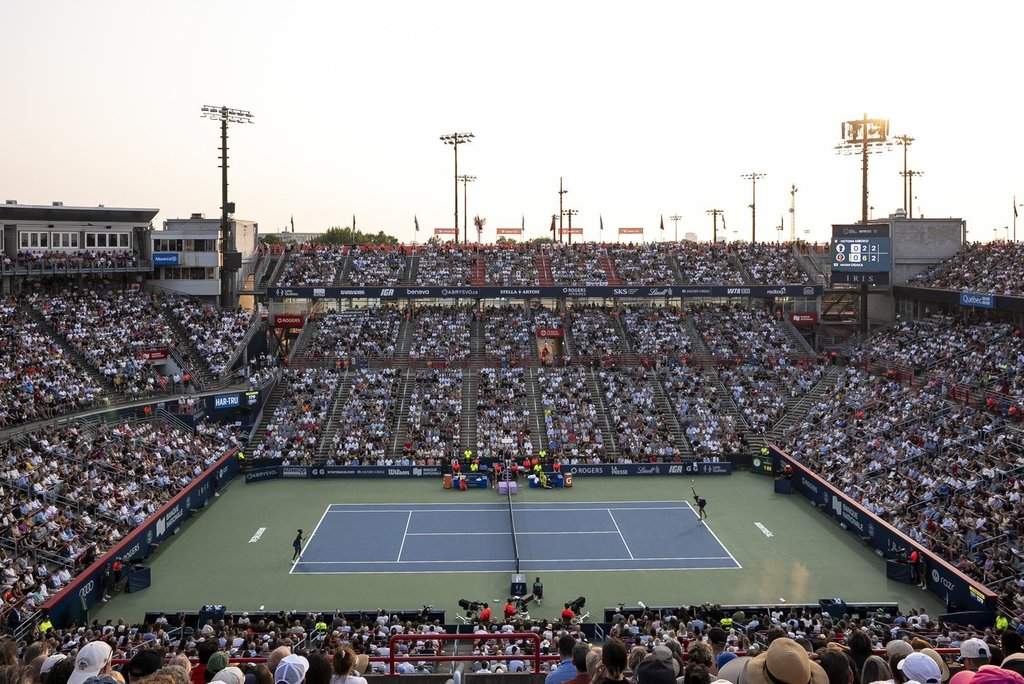
Tennis Canada just announced it wants to tear down part of its legacy to build a brand-new, 15,000-seat centre-court stadium complete with a retractable roof at Jarry Park. The narrative spinning out of their corporate offices is entirely predictable: we are "falling behind" the ATP and WTA tour standards, the project is "sustainable," and it will expand community access.
This is a classic sports-executive delusion.
The proposal to build a massive new stadium in Montreal is an expensive, short-sighted mistake disguised as modernization. It relies on a lazy consensus that bigger is always better, and that bowing to the escalating demands of international sports governing bodies is the only way to survive. I have watched sports federations blow millions of dollars on monument-building exercises under the guise of "keeping pace," only to leave local communities holding an empty bag and a massive maintenance bill.
Let us break down the flawed mechanics of this plan and look at the financial reality that Tennis Canada is actively ignoring.
The 12-Day Economic Fallacy
The absolute core of the justification for this new stadium is the expansion of the National Bank Open into a 12-day event. Organizers are panicking because they signed a 30-year agreement with the tours in 2022 and are now realizing the current 11,991-seat IGA Stadium apparently fails to meet the aesthetic desires of multi-millionaire tennis executives.
Think about the math here. You are proposing to spend hundreds of millions of dollars of mixed public and private capital to construct a 15,000-seat stadium that will operate at peak capacity for exactly two weeks out of the year.
To justify a three-season venue with a retractable roof, the venue must generate consistent, year-round revenue. Yet, Montreal already possesses an arena inventory that competes directly for mid-sized entertainment events. Place Bell in Laval sits at 10,000 seats. The Bell Centre handles the massive stadium tours. The idea that a retractable-roof tennis venue in Jarry Park will suddenly become a bustling hub for concerts during the freezing shoulder seasons of Montreal is a fantasy.
When you build specialized sports architecture, you are buying a sports asset. Tennis courts cannot easily be converted into high-yield multi-use configurations without incurring massive operational costs. The infrastructure will sit dark for the vast majority of its lifespan, quietly depreciating while draining municipal utility funds.
The Myth of Community Integration
Tennis Canada claims this project represents the "most sustainable, responsible, practical and forward-looking solution for the community." This is corporate speak at its finest.
Jarry Park is one of the few dense green spaces available to the residents of Villeray and Park Extension—neighborhoods that are already starved for accessible public space. Announcing a "comprehensive site redesign" to better integrate with the park is a euphemism for encroaching on public land to serve a corporate hospitality footprint.
Look at what actually happens during tournament week. The National Bank Open turns into what organizers openly call a "Culinary Playground" and an "Entertainment Playground," replete with premium poutine pop-ups, Mercedes-Benz interactive challenges, and VIP ticket packages offering access to exclusive bistros.
This is not a community asset; it is a corporate country club dropped into a public park.
Imagine a scenario where the local youth of Park Extension want to play a game of soccer or use casual park facilities, but find their space choked by security perimeters, corporate sponsorship tents, and parking structures designed to accommodate suburban commuters driving in for evening sessions. The argument that building a larger stadium helps the local community upside-down. Grassroots tennis does not require a 15,000-seat arena with a retractable roof. It requires dozens of simple, well-maintained municipal courts with cheap lighting across the entire province of Quebec.
Retractable Roofs Are a Money Pit
The phrase "retractable roof" carries a bizarre, почти mystical allure for Canadian sports executives. Montrealers, of all people, should be intensely allergic to this phrase. The ongoing saga of the Olympic Stadium roof replacement—a multi-decade, billion-dollar disaster—stands as a stark monument to architectural hubris.
Adding a retractable roof to a stadium complicates engineering by orders of magnitude. The mechanical components require constant upkeep, specialized technicians, and enormous amounts of power to operate. In a northern climate like Montreal, the structural load calculations for snow, ice, and thermal contraction mean the roof structure must be incredibly heavy and complex.
What is the return on investment for this roof? It prevents a handful of match delays during a two-week window in August. While rain delays are frustrating for television broadcasters and corporate suite holders, they are a fundamental reality of outdoor tennis. Tearing down an existing stadium and spending an astronomical premium just to ensure television schedules are met is the pinnacle of prioritizing billionaire media empires over local fiscal responsibility.
The downside to my contrarian view is obvious: without a roof, Montreal risks losing its Masters 1000 status if the ATP decides to strictly enforce its venue mandates. But instead of folding under that pressure and raiding public coffers for a new stadium, Tennis Canada should be calling the tour's bluff. Montreal is one of the highest-attended, most historic stops on the tour. The players love the crowd energy. The idea that the ATP would abandon one of its most successful markets over a few rain drops is a threat used to extort municipal funding, nothing more.
Where the Money Actually Belongs
If Tennis Canada secures the three levels of government funding they are currently chasing, they will lock up capital that could have transformed the sport at a foundational level.
True development of Canadian tennis talent does not happen in a luxury box at Jarry Park. It happens in indoor community hubs during the brutal winter months when young players have nowhere affordable to train. Quebec has a massive shortage of affordable indoor courts. The cost of court time in commercial clubs during December is a massive barrier to entry for lower-income families.
If you have tens of millions of dollars in public subsidies to spend, you do not build a single architectural marvel in Montreal to please international executives. You build twenty basic, fabric-covered indoor tennis hubs across smaller municipalities. You subsidize coaching clinics. You buy equipment for public schools.
The current plan chooses top-heavy prestige over bottom-up development. It ensures that the National Bank Open remains a glittering jewel for corporate sponsors, while the actual accessibility of the sport continues to erode for regular Canadians. We do not need a bigger stadium. We need a better strategy.