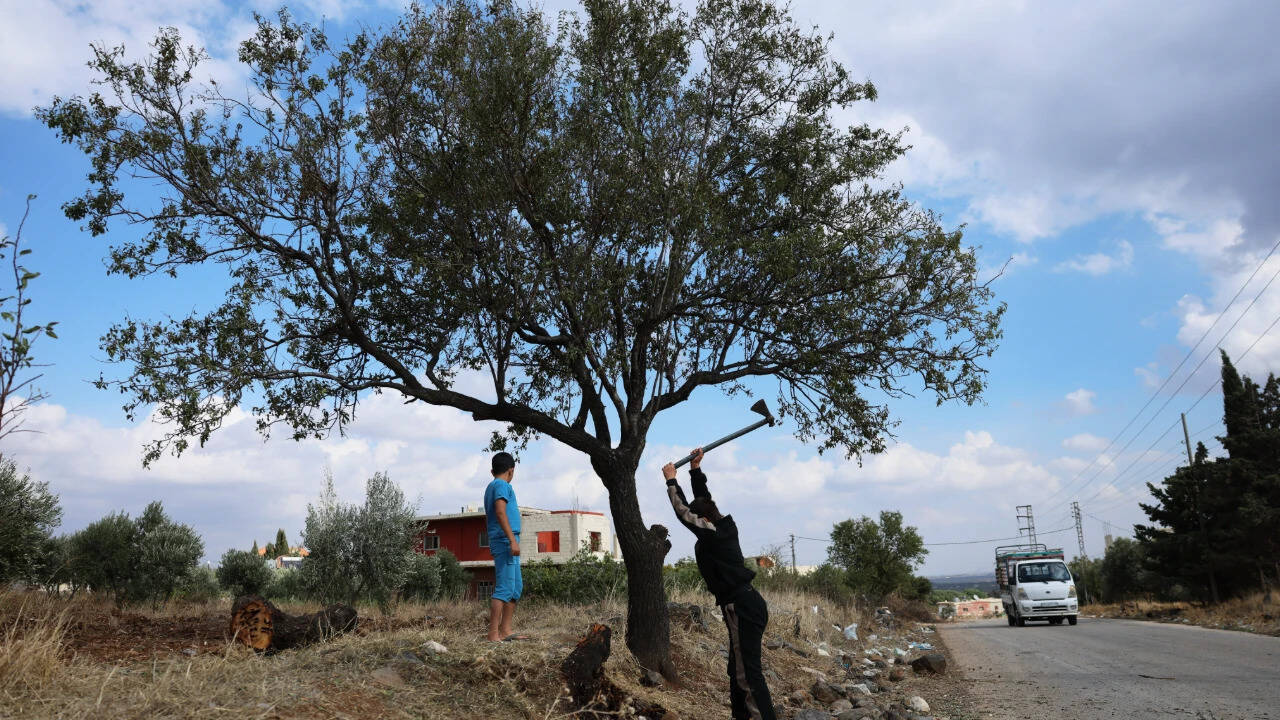
Everyone is celebrating the $1.65 million payout to those Ohio homeowners as a triumph of the little guy over corporate greed. They are wrong.
When a company clear-cuts mature, protected trees on private property without permission, a $1.65 million judgment is not a deterrent. For a mid-to-large developer or utility contractor, it is a rounding error. Worse, cheering for this verdict completely misses the rot at the center of American timber trespass law, municipal zoning enforcement, and corporate risk management.
The mainstream coverage treats this case like a heartwarming David-versus-Goliath fable. A company crossed a property line, destroyed irreplaceable old-growth canopy, and got slapped with a seven-figure bill. Justice served, right?
Hardly. I have spent two decades advising commercial developers, municipal planners, and property litigation teams on land-use disputes. I have watched billion-dollar firms treat statutory tree-cutting penalties as a line item in their pre-construction budgets. When you look closely at how damages are calculated, how insurance absorbs the blow, and what actually happens to the land afterward, that $1.65 million verdict starts looking less like a victory and more like a permission slip.
The Myth of the Seven-Figure Deterrent
Let us look at the math that newsrooms ignore because big numbers make better headlines.
In states like Ohio, timber trespass statutes—specifically Ohio Revised Code Section 901.51—allow for treble damages when someone recklessly cuts down trees or shrubs on another person's land. Treble damages sound terrifying. Three times the value of the loss.
Except the legal system is notoriously terrible at valuing a living tree.
If a contractor cuts down a 100-year-old white oak on your property, traditional appraisal methods often default to "stumpage value"—what that wood is worth as raw lumber at a local sawmill. A massive, healthy oak might fetch $800 to $1,500 in stumpage. Multiply that by three under treble damages, and the corporate offender owes you $4,500 for destroying a century of ecological history and tanking your property's shade, drainage, and privacy.
To get to $1.65 million, plaintiffs have to fight tooth and nail to apply the "trunk formula method" established by the Council of Tree and Landscape Appraisers (CTLA), combined with restoration costs, loss of aesthetic value, and severe emotional or punitive multipliers. That requires hiring certified consulting arborists, forensic surveyors, and environmental economists before a single deposition even happens.
Even when a jury awards $1.65 million, ask yourself: who actually pays it?
- Commercial General Liability (CGL) policies: Unless the plaintiff proves intentional, malicious fraud—which is a massive legal hurdle compared to "recklessness"—the company's insurer frequently steps in to settle or indemnify a massive chunk of the payout.
- Project margins: On a $40 million commercial development, a $1.65 million hit represents roughly 4% of the project cost. If clearing those trees accelerated the grading schedule by three months or opened up sightlines for higher-tier retail tenants, the developer still comes out ahead on internal rate of return.
- Tax write-offs: Compensatory damages paid out in the ordinary course of business are generally deductible as business expenses under Internal Revenue Code Section 162, softening the net cash impact by 21% or more.
When the dust settles, the company writes a check, adjusts its next pro forma, and moves on. Meanwhile, the homeowners are left staring at a barren mud pit that will not look like their yard again until their grandchildren are retired.
Why Protected Tree Ordinances Are Paper Tigers
The competitor's framing leans heavily on the word "protected." Those trees were supposed to be untouchable. Local ordinances, conservation easements, and buffer zones existed on paper to keep chainsaws away from them.
Here is the dirty secret of municipal land-use law: tree protection ordinances are almost universally under-enforced until after the damage is irreversible.
Cities and counties love passing environmental preservation codes. It plays great at town halls. Yet those same municipalities rarely fund the code enforcement officers required to patrol active construction zones or verify boundary staking before heavy machinery rolls in.
Imagine a scenario where a site superintendent is staring at a $15,000-a-day liquidated damages penalty for falling behind on a commercial build schedule. Between his bulldozer and the grading target stands a row of protected maples sitting five feet over a poorly marked property line. Waiting for a municipal arborist to review a variance request takes six weeks. Cutting them down takes forty-five minutes.
What does the superintendent do? He cuts them down.
He knows the city's administrative fine for violating a local tree ordinance is usually capped at a few hundred or a few thousand dollars per infraction. Even if the neighboring residents sue—which fewer than 10% of affected property owners actually have the cash and stamina to do—the litigation will drag out for three to five years. By the time a jury hands down a verdict, the building is finished, leased, and generating cash flow.
In legal circles, this is known as efficient breach. When the penalty for breaking a rule is cheaper or slower than the cost of obeying it, rational economic actors break the rule every single time.
The Flawed Premise Behind Property Owner Lawsuits
If you search online for advice after a neighbor or contractor destroys your trees, you will immediately run into standard "People Also Ask" queries: How much can I sue for if someone cuts down my trees? and Can I get triple damages for destroyed trees?
Asking how much money you can get after your trees are dead is asking the wrong question entirely.
By the time you are calculating damages, you have already lost. You cannot buy a 90-year-old canopy at a nursery. You can buy a 15-foot "specimen" tree for $10,000, hire a crane to drop it into a hole, and watch it spend the next five years suffering from transplant shock while providing a fraction of the shade and stormwater absorption of the tree you lost.
Furthermore, the litigation process itself is a brutal meat grinder that favors corporate defendants. To survive summary judgment and maximize recovery, a homeowner has to front tens of thousands of dollars in expert witness fees.
Let us be brutally honest about the downsides of aggressive tree litigation, even when you win:
- Appellate hair-splitting: Defense attorneys routinely appeal CTLA trunk-formula valuations, arguing that replacement costs cannot exceed the fair market value of the entire underlying real estate. In several jurisdictions, courts agree, slashing seven-figure jury verdicts down to the difference in property value before and after the cutting—which might only be $40,000.
- Collectability nightmares: Small-to-midsize tree service subcontractors frequently operate as thinly capitalized LLCs. If a prime developer successfully shifts liability onto a rogue sub-contractor during trial, your $1.65 million judgment might be against an entity whose only assets are two beat-up woodchippers and a leased pickup truck.
- The discovery invasion: Suing for diminution of value and emotional distress opens your entire financial life, property maintenance history, and personal records to defense counsel subpoenas.
Celebrating a $1.65 million headline ignores the years of stress, the legal fees eating 33% to 40% of the recovery, and the reality that money cannot restore an ecosystem within a human lifespan.
How to Actually Stop Corporate Chainsaws Before They Start
If statutory fines and post-hoc lawsuits do not stop aggressive developers or careless utility crews, what does?
You have to invert the risk equation before the engines start. You have to make cutting your trees an immediate, existential operational threat to the company—not a future legal annoyance.
1. Weaponize Temporary Restraining Orders (TROs)
Do not call a city code inspector when you see surveyors tying pink ribbons near your boundary line or bulldozers staging next door. Code inspectors issue citations; judges issue injunctions.
If a neighboring project poses an imminent threat to boundary trees, an environmental litigator can file for an emergency Temporary Restraining Order within 24 to 48 hours. Unlike money damages, a TRO stops work dead in its tracks. When a commercial lender sees an active injunction slapped on a construction site, they freeze draw requests immediately. Nothing terrifies a developer more than frozen capital.
2. Establish Pre-Loss Baseline Valuations
Companies win timber trespass battles by arguing that your trees were already diseased, hollow, or structurally unsound—turning a $50,000 asset into a $0 liability.
If you own property bordering commercial zoning, utility corridors, or active subdivisions, hire an International Society of Arboriculture (ISA) Board Certified Master Arborist to conduct a formal inventory and appraisal now. Document the species, diameter at breast height (DBH), health rating, and appraised replacement value of every major boundary tree, backed by geo-tagged high-resolution photography. When a company knows you already hold a court-admissible valuation report, their insurance adjuster will force them to put up protective fencing rather than risk an indefensible claim.
3. Demand Performance Bonds for Buffer Zones
When developers seek zoning variances or site-plan approvals near residential properties, residents usually show up to planning commission meetings and beg the board to protect the trees. Planning boards nod sympathetically and add a boilerplate condition to the permit.
Stop begging for permit language. Demand that the municipality require a dedicated tree-preservation performance bond held in escrow until three years after construction finishes.
Roots do not die the day a bulldozer compacts the soil over them; the tree slowly suffocates and dies 18 to 36 months later. A three-year performance bond forces the developer to keep real cash locked up until the trees prove they survived the construction trauma. If a tree dies in year two, the city automatically forfeits the bond to fund immediate remediation—no lawsuit required.
4. Shift from Tort Claims to Criminal Trespass and Conversion
Civil lawsuits are slow. Criminal complaints and regulatory stop-work orders are fast.
When a crew crosses a clearly marked property line and cuts timber, they are not just committing a civil tort; in many jurisdictions, they are committing criminal trespass and theft by conversion. Simultaneously, if the cleared area disturbs more than one acre of soil—or impacts wetlands and riparian buffers—the contractor has likely violated their federal Clean Water Act Stormwater Pollution Prevention Plan (SWPPP). Reporting an unpermitted clearing violation to the state environmental protection agency triggers mandatory site-wide shutdowns and federal fine exposure that corporate insurers explicitly exclude from coverage.
Stop Cheering for Autopsies
The Ohio residents who won $1.65 million deserved every cent they got, and probably five times more. Their persistence forced a corporate offender to pay far above standard lumber value.
But treating their payout as a systemic victory is dangerous. A lawsuit is a legal autopsy. It only happens after the patient is dead.
Until municipalities tie tree-cutting violations to immediate permit revocation, criminal liability for site supervisors, and uninsurable punitive penalties, developers will keep treating your property line as a minor inconvenience. Do not rely on the courts to avenge your trees after they hit the ground. Make sure the cost of touching them kills the project before the first blade spins.


